Dewatering Vibrating Screen Tips to Reduce Tailings
If you’ve ever stood by the discharge end of your dewatering circuit after a full shift of heavy seasonal rain, watching thick waterlogged tailings slurry drip so much free fluid off the deck that the resulting wet cake leaks water all over your site’s haul roads, making it impossible to transport and stack safely without creating new environmental runoff risks, you know exactly how much poor dewatering performance can turn your whole tailings management workflow into a costly, messy operational headache. After years of chatting with operations leads across iron ore concentrators, rare earth processing sites and coal washing plants across southern China, nearly every single one shared that they struggled for months to hit their target 15% final cake moisture, until they adopted a handful of simple field-tested tweaks that pushed their dewatering performance far beyond what their original factory setup could deliver. This no-fluff practical guide breaks down the highest-impact actionable tips you can implement on a Dewatering Vibrating Screen to drastically boost tailings cake dryness, no overcomplicated technical jargon, just insights pulled straight from hundreds of real on-site operational logs.
Pre-Thicken Slurry Feeds 10-15 Minutes Before Entering Deck
The first highest-return low-effort tip that immediately boosts final cake dryness by 3-4 percentage points is routing your raw tailings slurry through a small dedicated cyclone or static thickener 10 to 15 minutes before it flows onto the deck of your Dewatering Vibrating Screen, to drain off all free standing excess water before the material even touches the screen surface. Most sites pump raw dilute slurry straight onto the dewatering deck, where a huge pool of free water sits on the feed zone and can never fully drain through the apertures before the slurry flows to the discharge end, creating a thin soupy cake that still holds massive amounts of trapped free moisture. The pre-thickening step removes more than half the free water before the material hits the deck, so the screen only needs to drain the residual moisture locked inside the solid particle bed instead of processing a huge excess volume of free standing water. Multiple large lateritic bauxite mines shared that this simple pre-thickening adjustment alone cut their final tailings cake moisture by more than 4% overnight.
Adjust Deck Negative Incline to 3-5 Degrees for Extended Drainage Time
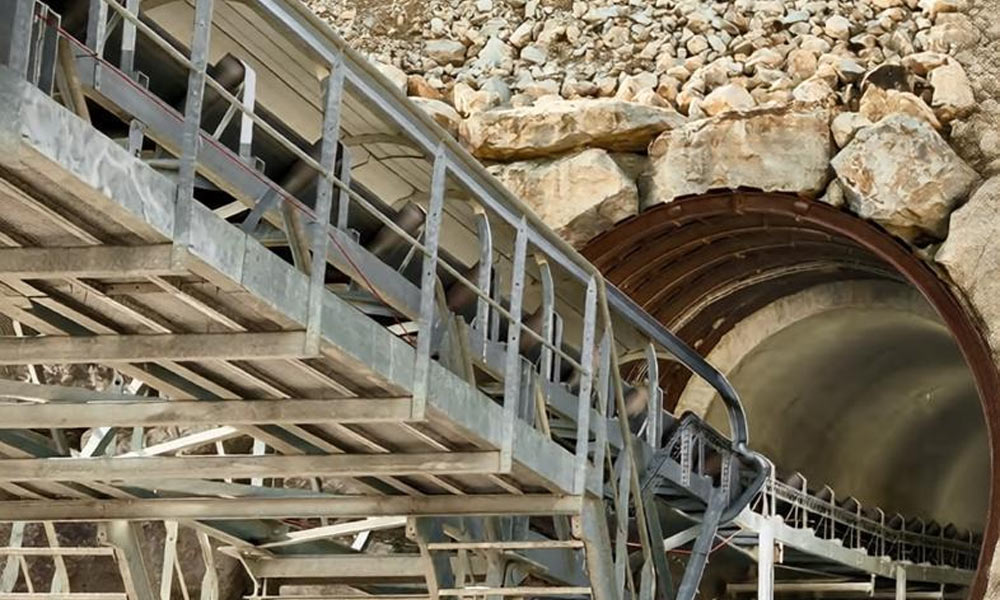
The second easy structural tweak that drastically extends effective drainage time on your Dewatering Vibrating Screen is adjusting the deck’s negative incline to a precise 3 to 5 degree upward angle from feed end to discharge end, instead of running it completely flat or at a steeper 7+ degree incline. Most sites run their dewatering decks at a steep incline to push material toward the discharge end as fast as possible, which means the thin slurry layer slides across the full deck in less than 30 seconds, far too fast for all trapped interstitial water to fully drain down through the apertures. The 3-5 degree negative incline slows the material travel speed down to 2 to 3 minutes across the full deck, giving every single fine particle far more contact time with the open screen surface to release all trapped moisture. Multiple fine coal tailings treatment plants shared that this small incline adjustment added 3 extra percentage points of dryness to their final dewatered cake.
Tune Vibration Stroke and Frequency for Cake Compaction
The third critical performance adjustment that squeezes out extra locked-in moisture is tuning your Dewatering Vibrating Screen’s vibration stroke and frequency to match your specific tailings particle size distribution, instead of running it on the default factory setting that is calibrated for generic aggregate dewatering. For fine tailings below 0.5mm, you want a low 1-2mm stroke paired with a high 28-30Hz frequency to create a gentle consistent compaction force that squeezes trapped water out of the gaps between fine particles, instead of a high-amplitude low-frequency setting that throws fine particles high up into the air and breaks apart the forming solid cake. This tuned vibration pattern gradually compacts the solid bed into a dense uniform filter cake that pushes all remaining free water down toward the apertures, instead of creating loose fluffy pockets that lock moisture inside. Multiple iron ore tailings reclamation sites shared that this custom vibration tuning squeezed an extra 2-3 percentage points of moisture out of their final tailings cake.
Install Side Baffles to Build a 50mm Thick Stable Filter Bed
The final high-impact simple modification that delivers consistent long-term dryness improvement is installing 50mm tall adjustable side baffles along both edges of your Dewatering Vibrating Screen, to help build and maintain a stable 50mm thick uniform filter bed across the full deck surface. On an unmodified open deck, fine tailings slurry flows straight to the outer edges of the screen, creating a thin 10mm thick material layer that cannot form a proper stable filter bed, so fine particles wash through with the filtrate water and the thin layer cannot hold back trapped moisture. The side baffles contain the material flow and let a thick uniform filter cake form quickly at the feed zone, which acts as a natural self-filtering layer that catches fine particles and pushes all excess water down through the screen apertures. Multiple rare earth tailings processing sites shared that these low-cost baffles boosted their final cake dryness by another 2 percentage points, while also reducing fine solid loss to their underflow water recovery system.
When you combine all these practical field-tested adjustments, you can reliably push your final tailings cake moisture down to 12-15% even in the wettest high-moisture mining conditions, turning a messy untransportable waterlogged slurry into a dry stable material that you can safely convey, stack and even repurpose for mine reclamation without any extra handling steps.