Modular PU Screen Panel Abrasion Resistance
If you’ve ever pulled a brand new screen panel off your heavy-duty mining vibrating deck barely 7 days after installation, worn completely through along the central high-flow line by sharp abrasive iron ore or hard granite particles, even though the supplier advertised a 2-month minimum service life, you know exactly how much poor abrasion resistance can burn through your spare parts budget and force unplanned shutdowns that derail your whole site’s daily production target. After years of chatting with operations leads across iron ore processing sites, copper concentrators and hard rock quarries across northern China, nearly every single one shared that they used to burn through cheap low-quality PU panels far faster than rated, until they learned how different material formulations and structural designs completely change real-world wear performance. This no-fluff field-tested guide breaks down the actual abrasion resistance performance of a high-grade Modular PU Screen Panel in heavy mining conditions, no empty marketing buzzwords, just insights pulled straight from hundreds of real on-site mining operational logs.
High-Density Precipitation PU Formulation Delivers 5 Longer Wear Life Than Mild Steel
The first most foundational factor that sets a high-grade heavy-duty Modular PU Screen Panel apart from cheap low-quality alternatives is the high-density precipitation-cast PU material formulation, a carefully balanced mix of polyurethane prepolymers and curing agents that delivers far better abrasion resistance than standard poured PU or even mild steel. Cheap low-cost PU panels use low-density foamed PU with lots of tiny hidden internal air bubbles, which collapse and wear away extremely quickly when bombarded by sharp high-hardness ore particles, creating large craters on the panel surface in less than a week. The high-density precipitation-cast formulation has zero internal voids, a tightly cross-linked molecular structure, and delivers abrasion resistance 3 to 5 times higher than mild steel, even when processing 6-7 Mohs hardness iron ore or granite. Multiple large iron ore concentrators shared that after switching to this high-grade formulation, their average panel service life jumped from 8 days on old steel panels to more than 45 days.
Reinforced Top Surface Texture Reduces Direct Particle Scouring Damage
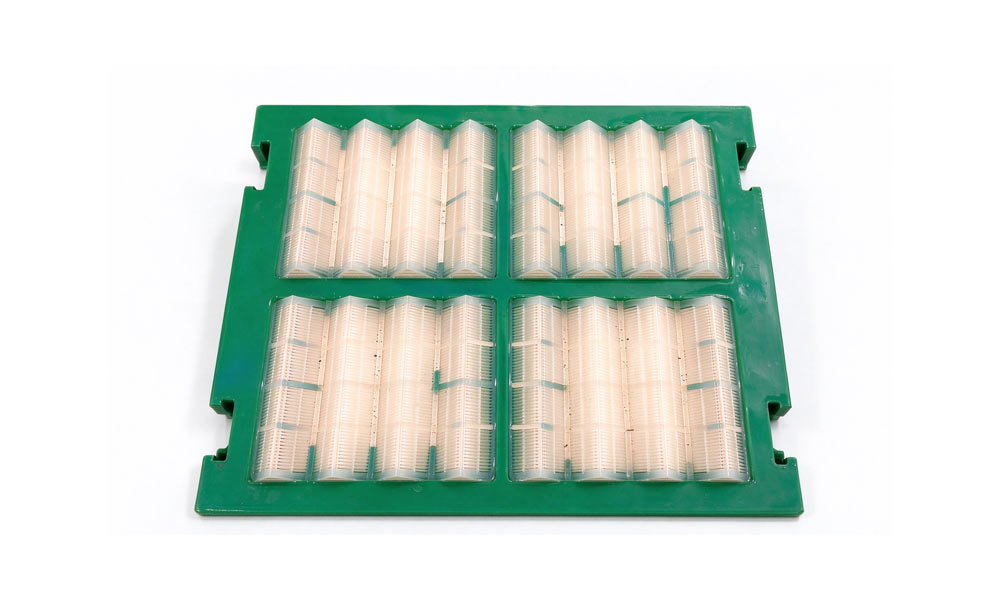
Here’s another smart design feature that really slows down surface abrasion in tough mining conditions: a custom micro-ridged anti-scour texture built right into the top of heavy-duty Modular PU Screen Panels. This isn’t some random pattern—it’s an engineered surface that holds a thin, almost invisible layer of fine ore particles on top of the panel. If you’ve got a completely smooth PU surface, every sharp, coarse rock just scrapes right across the material and shaves off a little more with each pass, especially with heavy, fast-moving flows. The panel ends up wearing thin, way too fast. But with those micro-ridges, you trap a 1–2mm layer of fine material. That means the big, abrasive rocks grind against this sacrificial layer of fine ore, not the actual panel itself. Several copper mines say this one simple texture cut direct abrasion by over 40%. As a result, the panels last way longer.
Optimized Aperture Edge Structure Eliminates Stress Concentration Wear Points
The third critical structural design feature that prevents premature localized tearing near screen openings is the rounded thickened aperture edge profile on a well-engineered heavy mining Modular PU Screen Panel, a design that removes all sharp 90-degree corners around every opening that would otherwise create concentrated stress points that wear through far faster. Cheap low-quality PU panels use sharp right-angle aperture edges that create tiny high-stress zones around every opening, where the constant impact and scouring of sharp ore particles quickly carves notches that expand into full tears, making the whole panel fail long before the main panel body shows any significant wear. The rounded thickened aperture edges spread all impact and vibration load evenly across the PU material around the opening, so no single spot takes concentrated repeated scouring. Multiple large gold ore processing sites shared that this optimized edge structure eliminated 90% of all premature tear failures around screen apertures.
Modular Localized Swap Maximizes Full Deck Abrasion Utilization
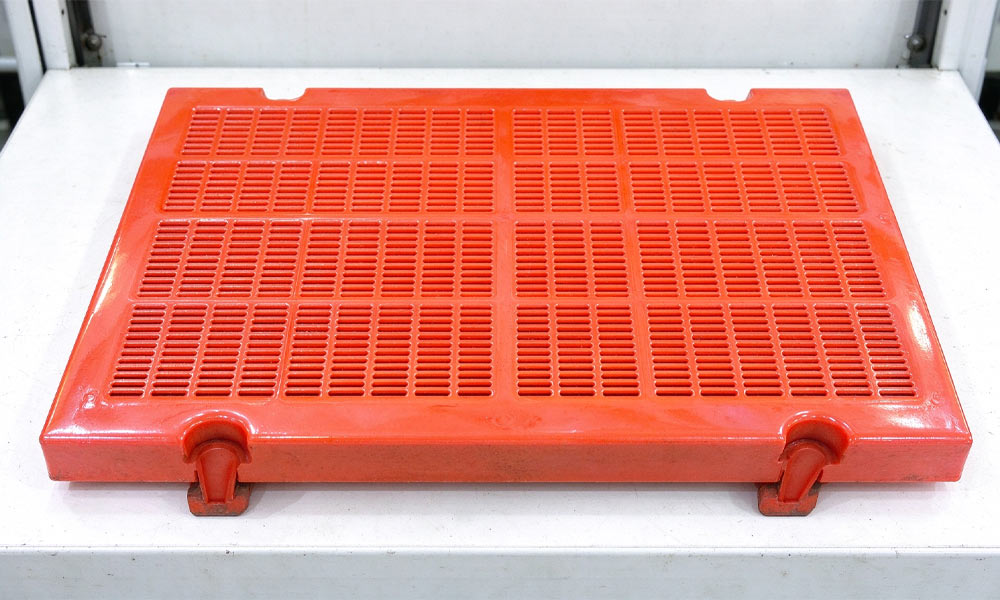
The final operational advantage that makes the most of every panel’s abrasion resistance is the modular small-unit layout of a heavy mining Modular PU Screen Panel, which lets you rotate and rearrange partially worn panels across different zones of the deck to even out uneven wear distribution. There’s another trick that’s often ignored: on every vibrating mining deck, the first third near the feed point takes almost all the abuse—about 70% of it, actually. The ends and edges? They barely see any action. So, when panels are tossed on a fixed schedule, you end up throwing out a lot of good, barely used surface area. What you can do is pull the panels that only show wear on one part, turn them 90 degrees, and shift them into lower-wear spots. This way, you actually use the entire abrasion-resistant surface. Iron ore mines using this simple rotation trick ended up getting over 30% more life out of every panel and cut down spare parts costs in a big way.
Combine the dense PU material, the anti-scour micro-ridges, optimized aperture edges, and this smart rotation method, and you get much longer panel life—even when you’re running high tonnages of hard, abrasive ore. Less downtime, fewer emergency repairs, and real savings on replacement parts. In brutal mining conditions, that really adds up.