Modular Polyurethane Screens For Combined Dewatering And Classification
There is a moment in most plant upgrades where the maintenance team stops talking about screen media as a consumable and starts treating it as part of the process design. That shift usually happens after a few painful experiences with panels that were cheap to buy and expensive to live with, and it is often what pushes an operation toward modular systems. Modular media has been standard in mining for a long time, but it has become increasingly common in aggregate and mineral processing plants that need to handle both dewatering and classification duty on the same circuit. This article looks at what a modular polyurethane screen actually offers in those two roles, where it makes sense, and what to watch out for when specifying and installing it.
Why Modular Design Changes The Maintenance Equation
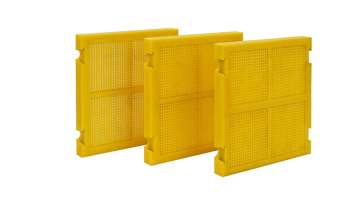
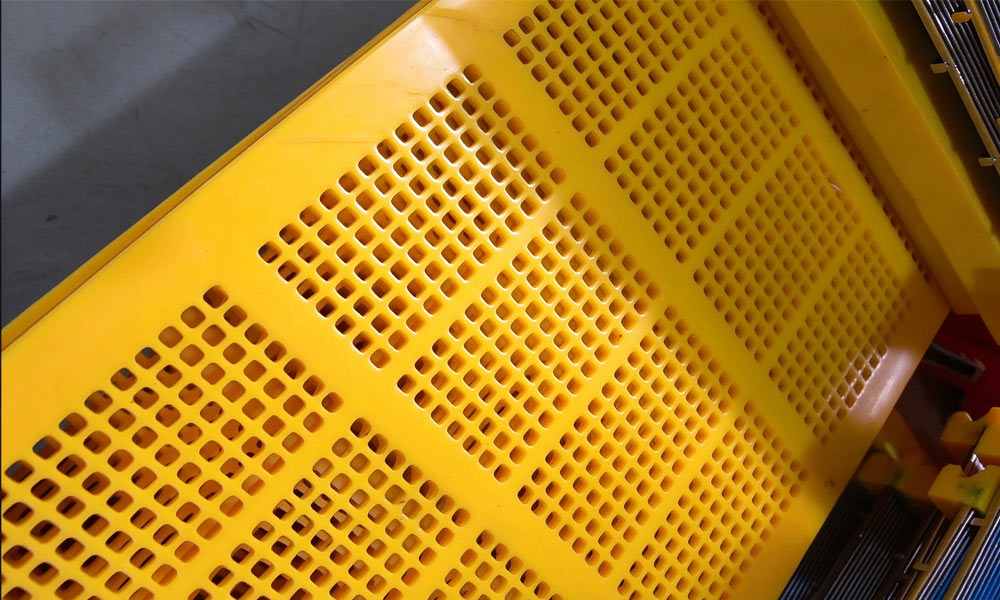
The single biggest practical advantage of modular media is that you replace a small section rather than an entire deck. On a side tensioned deck, a worn patch near the feed end means pulling a full panel that may still be perfectly good across most of its area, which is both wasteful and slow. A Modular Polyurethane Screen system breaks the deck into individual tiles that lock into a common frame, so a damaged or worn section can be swapped out in minutes with hand tools and no need to release tension across the whole deck. That matters most in high-wear zones, which in most plants are the first metre or two of the deck where the feed lands and the bed depth is highest. Being able to rotate tiles from low-wear to high-wear positions also stretches the effective service life of the whole set, and it turns screen maintenance from a shutdown event into something that can be done during a normal production break.
Dewatering Duty: Drainage, Bed Depth And Open Area
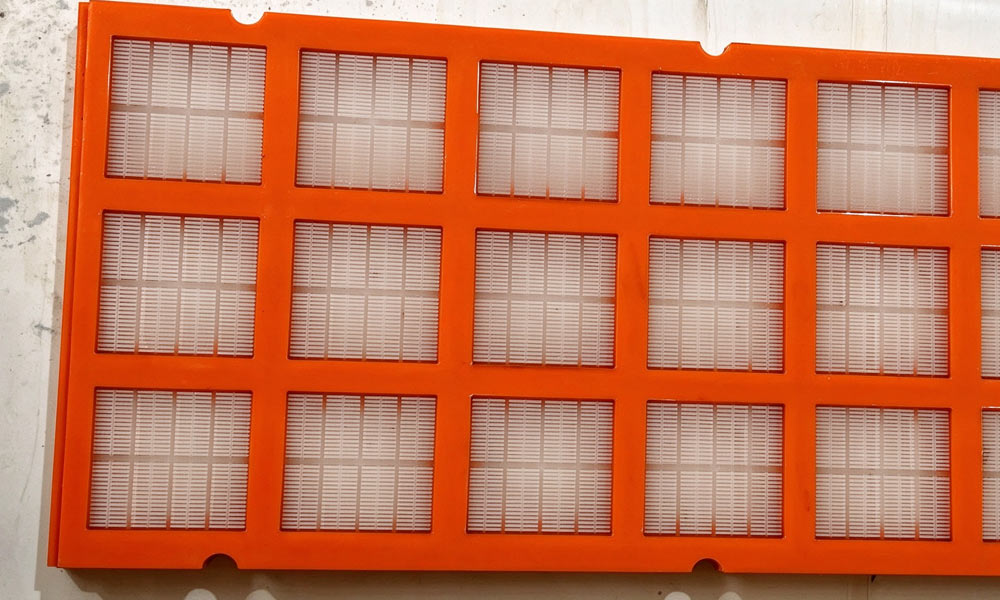
Dewatering is a capacity-limited process, and the limiting factor is almost always how quickly water can pass through the apertures before the material leaves the deck. A Modular Polyurethane Screen panel supports this because the modular format allows apertures to be moulded with a drainage-friendly profile, typically with a wider entry and a tapered throat that encourages water to pass while retaining the solids. The modular frame also allows different aperture sizes to be used in different sections of the same deck, which is useful on dewatering applications where the feed end needs a coarser opening to handle the initial water load and the discharge end can run finer to polish the product. Open area is the number that matters most here, and it is worth checking the actual figure rather than the nominal one, because frame coverage and fixing geometry both reduce the effective open area compared to the moulded aperture count.
Classification Duty: Cut Point Stability And Wear Life
On classification duty the priority shifts from drainage to cut point accuracy, and this is where modular polyurethane earns its place in mineral processing circuits. A Modular Polyurethane Screen panel holds its aperture dimensions through the wear life far better than wire, because the openings are moulded into an elastic material that wears evenly rather than eroding at the edges. That stability means the cut point you commission is the cut point you still have six months later, which is critical when you are producing a specification product or feeding a downstream process that is sensitive to size distribution. The modular format also allows different aperture sizes to be combined on a single deck, so a plant can run a coarser section at the feed end and a finer section toward the discharge without needing two separate screens. Wear life in hard rock classification duty is typically several times that of wire, and the low-stick surface reduces blinding on damp or clay-bearing feeds.
Specification, Frame Compatibility And Installation Practice
Modular media only performs as intended when the frame and the panels are treated as a single system, and this is where a lot of installations go wrong. A Modular Polyurethane Screen panel needs a frame that is straight, square, and set at the correct height, because the tiles rely on the frame for support and any deviation shows up as movement, noise, and premature wear. Check that the fixing system is compatible with the panel type, since there are several pin and rail configurations in common use and mixing them causes problems. During installation, seat each tile fully and confirm that the locking mechanism has engaged before moving on, because a partially seated tile will work loose under vibration and can damage neighbouring sections. It is also worth keeping a small stock of spare tiles on site and recording where each one is fitted, so that wear patterns can be tracked and rotation planned rather than done reactively.
Modular polyurethane screen media is not the right answer for every application, and there are still decks where side tensioned panels make more sense on cost or change-out speed. But for plants running combined dewatering and classification duty, particularly where wear is uneven and product specification matters, the modular format offers a level of control that is hard to match with any other media type. It lets you replace only what is worn, tune apertures section by section, and hold a stable cut point through the wear life, all of which add up to lower operating cost and more consistent output. Get the frame right, install it properly, and keep track of wear, and the system will quietly do its job for a long time.