4 Practical Steps to Select the Right Screen for Mineral Processing
If you’ve ever stood in your mineral processing plant’s control room staring at a live feed of your vibrating screen deck, watching tons of off-spec ore slip through a poorly selected screen that can’t keep up with your tonnage targets, you know exactly how much a bad purchasing decision can wreck your whole operation’s ore recovery and monthly profit numbers. I’ve spent hours walking through plant sites with process engineers across iron, copper and lithium mine operations, and more often than not, they picked their last set of Mining Screens based only on the lowest upfront price, not realizing that the wrong configuration would cost them tens of thousands of dollars in lost throughput and unplanned downtime over the next 12 months. This practical, field-tested selection guide skips all the overcomplicated engineering jargon and empty marketing buzzwords, breaking down the four simple, actionable steps you can follow to pick high-performance Mining Screens that perfectly match your plant’s unique operational conditions, no fancy specialized knowledge required.
Match Deck Configuration to Your Exact Feed Material Characteristics
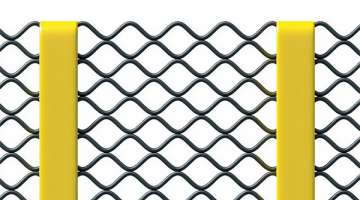
The first most important step to pick high-performance Mining Screens is to fully match the deck’s structural configuration to the unique physical characteristics of your plant’s specific feed material, not just copy a generic setup from another mine site. If your plant processes high-abrasion, sharp high-silica hard rock with large 200mm+ lumps, you need a heavy reinforced side frame and thick high-impact woven wire panels that can absorb heavy falling boulder blows without denting or tearing, instead of a light-duty frame with thin polyurethane panels that will puncture and fail in less than a week. If your plant processes damp, sticky fine coal or clay-rich ore, you need a high-frequency low-amplitude vibration setup with non-clogging tapered apertures, instead of a heavy high-amplitude scalping setup that will make blinding far worse and drop your screening efficiency below 60%. Most mineral processing plants that take the time to fully map their feed’s abrasion index, maximum lump size and moisture content before ordering their Mining Screens find that their total average service life jumps by more than 60% right out of the gate.
Align Aperture Size and Open Area Ratio to Your Target Cut Point
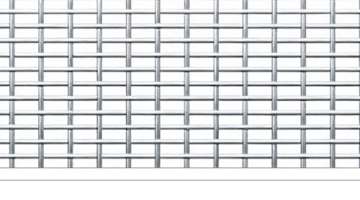
The second critical selection step that most teams get wrong is aligning your screen’s aperture shape, size and total open area ratio exactly to your required final product cut point, instead of just picking the closest standard square aperture size off the supplier’s shelf. If your target cut point is 3mm for fine ore flotation feed, a standard 3mm square aperture will let far too many near-size particles wedge themselves permanently inside the openings, reducing your effective open area by 30% in less than a week, but a 2.8mm rectangular slotted aperture with a 20% higher total open area will deliver far higher throughput and far less blinding, while still keeping your final product gradation perfectly within specification. For coarse aggregate scalping applications, a larger rectangular aperture can boost your total deck throughput by 25% without letting any oversize material slip through, as long as you calculate the exact particle trajectory through the deck under your machine’s specific vibration parameters. Operations that fine-tune this parameter instead of picking generic standard sizes find that their total screening throughput jumps by 20% to 30% without any other major circuit upgrades.
Vibration Stroke and Frequency Tuning for Your Tonnage Target
The third easily overlooked selection factor that makes a massive difference in real-world performance is picking Mining Screens with a fully adjustable vibration stroke and frequency range that you can tune perfectly to hit your plant’s specific hourly tonnage target, instead of buying a fixed-spec machine that locks you into one single operating setting. A fixed 12mm stroke at 800 RPM works great for heavy coarse rock scalping at 500 tons per hour, but it will deliver terrible efficiency and massive blinding when you switch to processing 2mm fine ore sizing at 200 tons per hour, forcing you to run far slower than your circuit’s designed capacity. A fully adjustable setup lets you tweak stroke anywhere from 2mm to 15mm and frequency anywhere from 700 to 1200 RPM, so you can reconfigure the exact same machine to handle coarse scalping, mid-range classification and fine sizing across different stages of your mine’s life. Most plants that choose this adjustable configuration find that they can extend the useful working life of their Mining Screens by 5+ years, even as their ore body characteristics change over time.
Build in Modular Quick-Change Panel Design to Cut Downtime
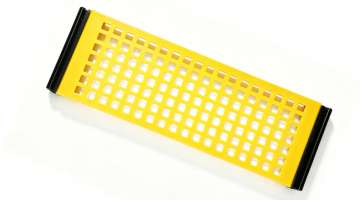
The final high-impact selection choice that most teams completely ignore during purchasing is prioritizing Mining Screens with a full modular quick-change panel design, instead of a traditional one-piece stretched mesh deck that requires hours of work to replace a single worn section. Traditional one-piece decks force your maintenance crew to spend 4 to 6 hours pulling tension rails, stripping off the old full-size mesh and stretching on a brand new full panel every time one small localized spot wears through, wasting an entire full shift of production time. The modular quick-change design splits the full deck into small 300x300mm independent panels that you can swap out with a simple wrench in less than 15 minutes, so you never have to shut down the whole circuit for a full panel change just because one small section wore through. Operations that pick this modular design find that their total annual screen-related unplanned downtime drops by more than 70%, drastically boosting their total annual plant throughput.
By following these four simple, actionable steps instead of just picking the lowest upfront price option from the first supplier you find, you can select high-performance Mining Screens that perfectly match your plant’s unique operational conditions, drastically cut your total long-term operating costs, and keep your whole mineral separation circuit running at peak consistent efficiency year after year.