Scientifically evaluate, monitor, and predict the wear cycle and service life of mining screens
Mining screens are not merely consumables to be replaced haphazardly. Relying on visual inspection often leads to errors: replacing them too early wastes remaining service life, while replacing them too late can result in the screen surface wearing through,allowing substandard particles to contaminate the final product and hindering operational efficiency. Scientifically assessing, monitoring, and predicting the wear cycles and service life of mining screens allows for optimal replacement timing, maximizing cost-effectiveness.
Pre-production Laboratory Assessment: Establishing the Service Life
Before full-scale production, conducting a dry sand or rubber wheel abrasion test is essential. By simulating the hardness, impact angle, and feed rate of the actual ore, the baseline wear resistance and service life of mining screens made from different materials can be determined in advance. Placing screen samples in a wear testing machine for 72 hours of continuous operation and measuring the material loss allows for the precise calculation of theoretical wear cycles. This enables the immediate elimination of inferior suppliers whose products fail to meet durability standards, preventing the hassle of frequent screen replacements down the line.
Baseline: Lab Wear Test and New-Panel Mapping
You cannot predict decay if you never measured the patient when it was healthy. Before a new mining screen goes into full service, the plant should map it: record alloy or compound, wire diameter, crimp type, nominal aperture, average measured aperture, open area, crown or ridge height, hook profile, support-bar pitch, and the deck position it will occupy. In the lab, dry-sand/rubber-wheel abrasion rigs, impact simulators, or slurry-loop testers can rank candidate media by material loss under controlled hardness, angle, and feed rate, but the real baseline is still site commissioning data. Measure the panel at marked points after the first 100–250 operating hours, because the first wear curve almost always surprises people: the feed end may lose crown three times faster than the discharge zone, the near-size deck may peg before it abrades, and the support-bar line may fatigue long before the aperture grows. A mining screen with a documented new-state fingerprint turns every later inspection into a comparison instead of a guess, and that comparison is the seed of every useful life prediction.
Field Monitoring: Measure the Signal, Not the Superstition
The metrics that actually predict failure are physical and countable, not adjectives. For woven metal, the big ones are average aperture growth, worst single-hole deviation, wire crown loss, crimp relaxation, hook/strip condition, and broken intersections above the support bar. For polyurethane or rubber, it is ridge or crown height, slot width drift, surface micro-tearing, UV/ozone chalking, delamination from the steel insert, and edge creep at the clamp rail. Process signals matter just as much: bed depth rising, blinding area after washdown, moisture in the dewatered product creeping up, undersize reporting to oversize, vibrator amperage drifting because the deck load changed, and crown-curve sag spotted with the old string test across the deck. A mining screen should be logged per panel position, not per deck, because “the screen is fine” usually means the discharge zone is fine while the feed-end module is already shipping off-spec fines. Industrial cameras, embedded thickness sensors, and AI photo-analysis tools now let crews measure the whole panel face instead of poking three random spots with a caliper, which is the difference between seeing wear and imagining it.
Modeling the Wear Curve and the Replacement Window
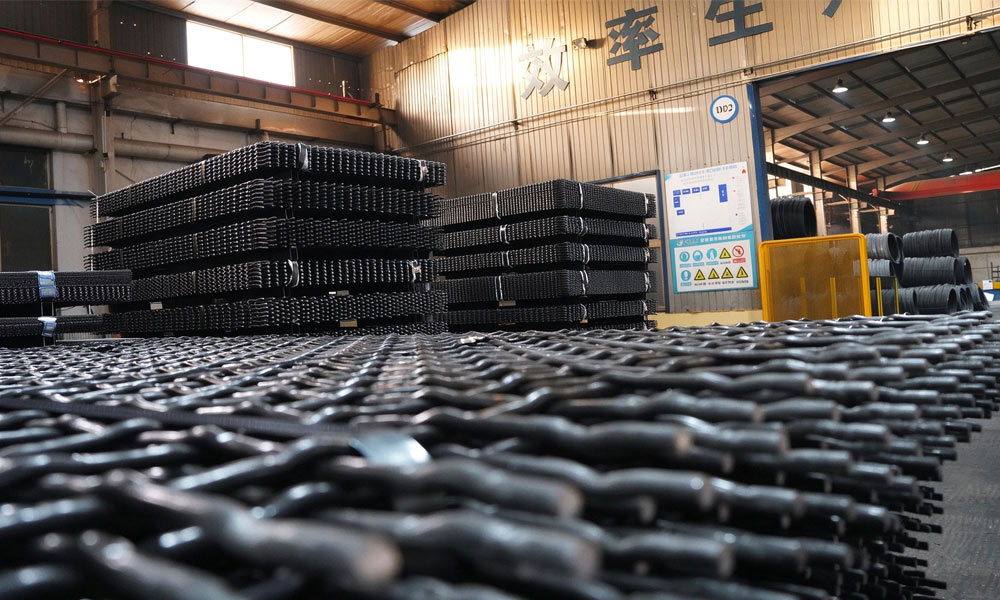
One measurement is an observation; ten campaigns are a model. The useful life of a mining screen is rarely random—it is a function of tonnes screened, ore abrasiveness, moisture and slime load, feed top size, deck stroke, G-force, support-bar condition, spray water, and how honestly the panel was tensioned. Plot crown loss or aperture growth against screened tonnage, fit a linear or piecewise curve, and the replacement window appears: a soft alert at 80% consumed life, a hard alert at 95%, and a stores reservation so the correct SKU is already allocated before the maintenance supervisor starts texting the supplier at midnight. A copper scalping deck may show 0.8 mm crown loss per 100 hours; a coal-dewatering PU zone may lose 0.4 mm per 1,000 tonnes; an iron-ore coarse deck may hold aperture for 60,000 tonnes and then drift fast in the last 10%. The mining screen does not owe you a date—it owes you a curve, and the curve owes you a planned shutdown instead of a broken one.
Assessing Wear Without Dismantling the Screen
Manual inspections requiring personnel to work at heights and physically touch the screen surface,it is not only dangerous but also prone to missing hidden, localized wear spots. Non-contact wear monitoring solutions have now become widely adopted. High-definition industrial cameras mounted on the screen machine's side plates, paired with AI-based visual recognition systems, capture wear-mark depths and aperture deformations in real-time, syncing data directly to the central control room. Additionally, miniature wear sensors can be embedded in critical wear zones, allowing for the remote reading of remaining screen thickness without halting operations.
Pinpointing the Replacement Window Seven Days in Advance
By integrating operational data such as feed hardness, processing volume, and vibration frequency with historical wear records, a customized service life prediction model can be established. Many aggregate plants now utilize mature systems that automatically calculate the screen's remaining service life based on current wear rates. A reminder to replace the mining screens will be sent 7 days in advance, allowing the task to be scheduled during routine maintenance windows and eliminating the need for unplanned shutdowns. Field tests at numerous mining sites demonstrate that implementing this predictive approach significantly boosts overall screen utilization and cuts unplanned downtime by more than half.
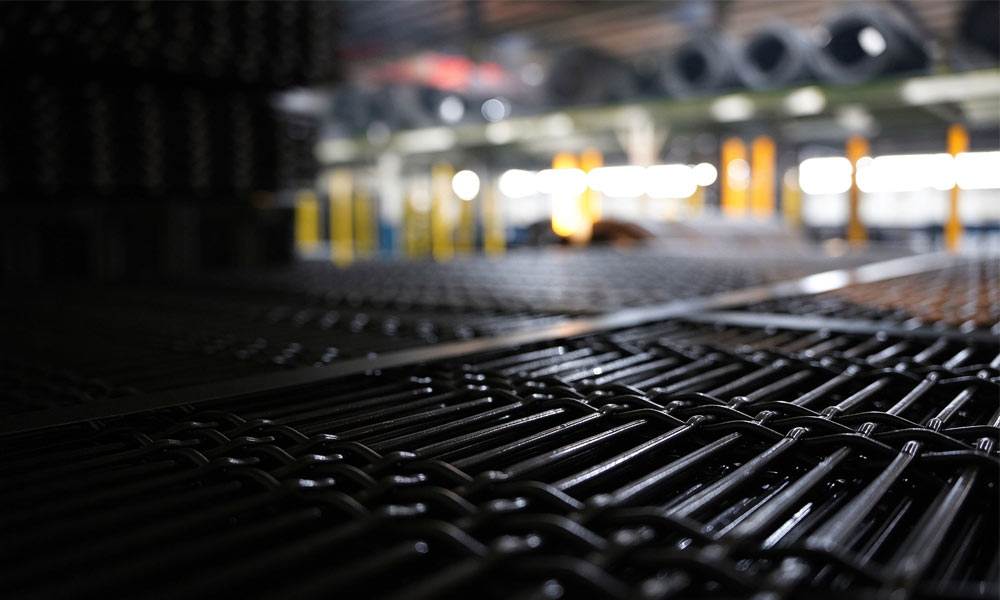
Scientifically assessing, monitoring, and predicting the wear cycles and service lives of mining screens is not fundamentally about saving on the cost of the screens themselves; rather, it is about transforming the operation and maintenance of the entire screening process from reactive "firefighting" into proactive planning. This represents one of the most readily implementable and high-return strategies for reducing costs and boosting efficiency in global mining operations today.