Mining Screen Mesh: Field-Proven Design for Extended Service Life
If you’ve ever yanked out a screen panel after just ten days of continuous operation, only to find half the openings completely scoured through by sharp, angular ore particles, well, you know exactly how much of a costly, frustrating headache that creates for your whole mineral processing team. Sharp, abrasive hard rock ore eats low-quality generic mesh unbelievably fast, and it doesn’t just mess with your carefully calibrated ore recovery targets—you end up wasting hours of unplanned mid-shift downtime, scrambling to rig up temporary patches or swap out a failed panel while your whole fine sizing circuit sits idle. I’ve sat through dozens of post-failure debriefs with maintenance teams at iron, copper, and lithium mine sites, listening to the exact same story over and over: everyone on the operations team used to chase the cheapest possible panels to hit their short-term consumable cost targets. But after running the full annual cost math, they realized those bargain screens were costing them triple in wasted labor, lost throughput and missed delivery deadlines, compared to the tiny little bit they’d saved upfront. So forget all the empty marketing buzzwords and overhyped niche features that no one actually uses on real mine sites. Here’s a practical, field-tested guide to what actually makes a heavy-duty Mining Screen Mesh last under non-stop, brutal all day ore screening conditions, with insights pulled from hundreds of real on-site panel performance logs.
High-Chromium Alloy Wire Stops Micro-Scouring
The first non-negotiable, must-have foundation for any truly long-wearing panel is wire made with carefully calibrated high-chromium alloy. It’s not just a fancy marketing label—it’s a material formulation engineered specifically to stand up to the relentless, fine micro-grinding effect from sharp, angular ore particles that wears standard mild steel away millimeter by millimeter. Ordinary low-cost mild steel gets shredded completely in less than two weeks when high-velocity crushed iron ore, copper ore, or silica-rich lithium ore slides across its surface at 500+ tons per hour. But mesh made with 12-15% chromium content, then hardened by a multi-stage cryogenic heat treatment process that locks its surface hardness at over 58 HRC, easily shrugs off this constant micro-scouring without wearing thin unevenly or developing random wire breaks. Mines that switched over to this alloy formulation saw their panels’ average lifespan jump from 10 days to somewhere between 8 and 10 weeks, even when handling extremely tough, silica-heavy raw ore pulled straight from the mine face with zero pre-washing or pre-scalping.
Smooth Ceramic-Infused Coating Blocks Abrasive Anchors
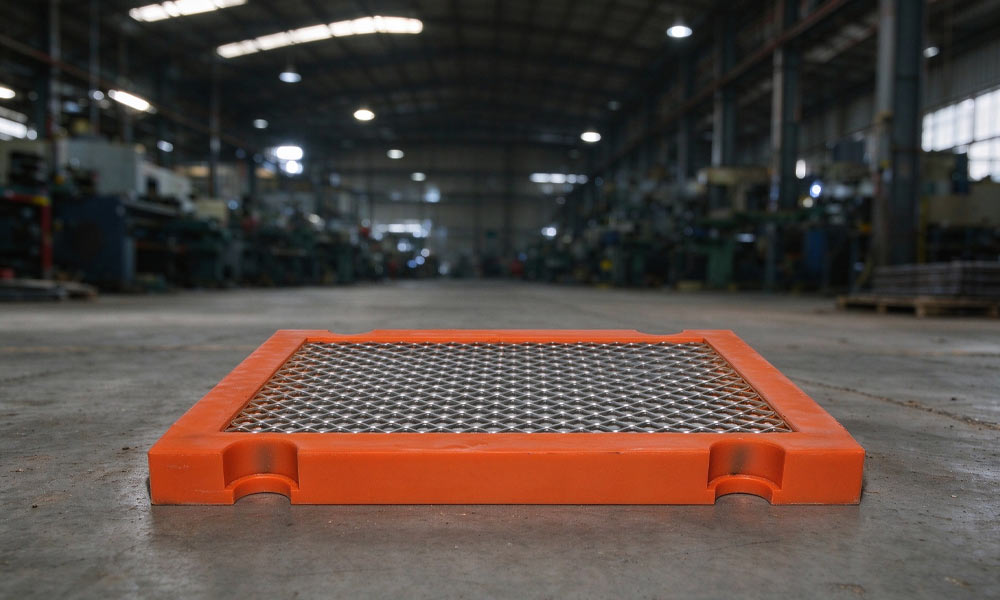
The next game-changing durability feature almost no budget mesh manufacturer bothers to implement is all about the final surface finish of the wire. Cheap generic mesh skips the ceramic-infused polymer coating entirely to cut a tiny bit of production cost, but that leaves the bare metal full of tiny micro-pits, rough weld spots and sharp surface imperfections—perfect little places for sharp abrasive particles to dig in, wedge themselves tight and act like tiny built-in grinding stones that speed up surface wear even further. The fused ceramic coating fills every single one of these tiny flaws completely, leaving an ultra-slick, completely non-porous surface with zero rough edges for sharp ore particles to grip onto. Sharp fine particles can’t dig in or wedge themselves tight at all, so they just glide right off the surface without chewing away any of the base steel underneath. Mineral processing plants that switched to this coated mesh saw their total abrasive wear rate drop by over 40%—and blinding from damp, sticky fine ore particles almost disappeared entirely, cutting down daily deck cleaning time by more than half.
Offset 15-Degree Weave Cuts Abrasive Contact Time
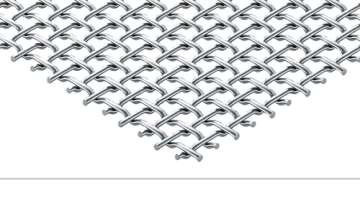
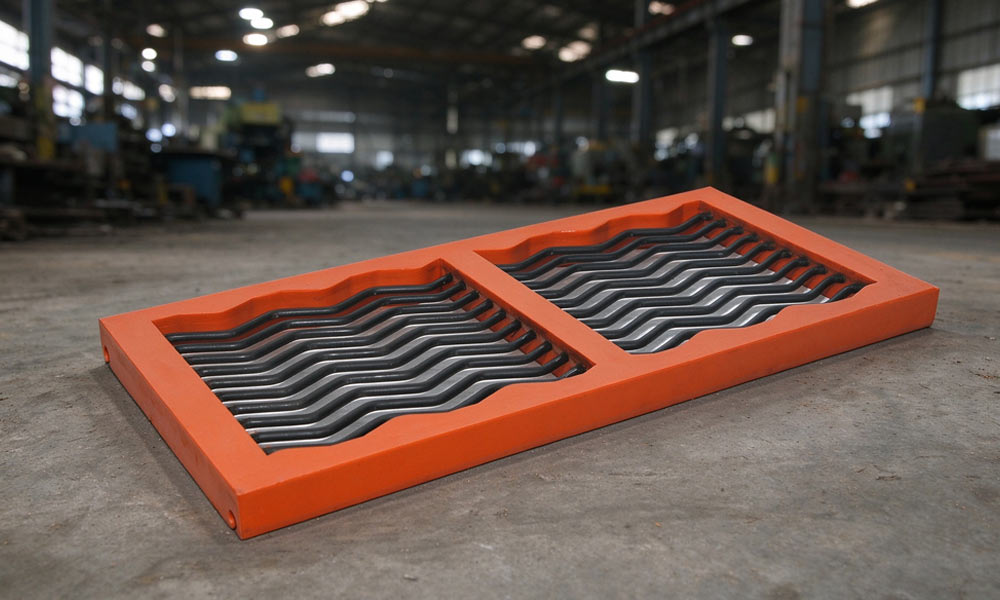
There’s also a clever, underrated geometric tweak that most generic mesh producers never even consider: weaving the full panel at a 15-degree offset angle instead of the usual standard 90-degree square weave pattern. Standard square weave forces every sharp ore particle to scrape across two perpendicular wire surfaces as it slides down the deck, doubling total friction and total abrasive contact time for every single particle that passes over the mining screen mesh. The 15-degree angled weave guides sharp ore particles to slide smoothly across the rounded top curve of each wire instead of dragging across sharp right-angle intersections, chopping total abrasive contact time by about 30% across the full deck surface. When mine operations ran these angled panels side by side against standard square weave panels on identical decks with identical material feed, the offset design lasted nearly 50% longer under the exact same workload, with zero extra material or treatment upgrades.
Tungsten Carbide Overlays Fight Localized Wear at the Feed End
Finally, nothing on your whole mining screen deck takes more of a beating than the narrow feed end zone right below the discharge point of your ore feeder. That’s where 100% of all incoming high-velocity ore slams down onto the mesh first—and that’s almost always the exact spot where your panel wears through 3 times faster than the rest of the surface, forcing you to scrap an otherwise perfectly good panel when only 10% of it is worn out. The simple, highly effective fix? Thin, precision-cut tungsten carbide wear strips fused directly onto the highest-wear 20 cm section of the mesh at the feed end. These overlays are incredibly hard (over 70 HRC), harder than almost every natural hard ore particle, so even high-velocity sharp boulders barely leave a scratch on them. Mines that used these targeted overlays managed to stretch each panel’s total usable life an extra 3 or 4 weeks, slashing their total yearly mining screen consumable costs drastically.
So, if you focus on these four fully field-proven design and material features—high-chromium alloy wire, ceramic-infused surface coating, 15-degree offset weave, and targeted tungsten carbide feed end overlays—rather than just automatically picking the cheapest available option on your next purchase order, you’ll keep your whole mineral processing operation running far smoother. You’ll spend far less on frequent panel replacements, dodge almost all unplanned mid-shift breakdowns, and keep your ore separation circuit humming along at full consistent throughput, shift after shift, month after month.