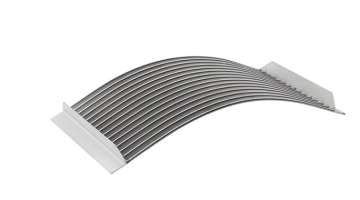
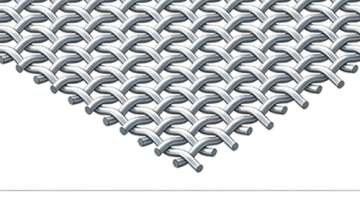
Metal Woven Screen Mesh For Industrial Sorting And Dewatering
As noted previously, industrial sorting and dewatering are amongst the harshest continuous processes applied in many industrial sectors. Any unforeseen change to the characteristics of the screening media used can lead to significant degradation in output quality, reduced production rates, and lengthy periods of unscheduled plant stoppage. For many years now, Metal Woven Screen Mesh has filled this role satisfactorily, providing a degree of permanence and reliability to the screen deck which cannot be achieved using alternative media types such as polymers or punched plates. Furthermore, it can readily be adapted to accommodate a very wide variety of wet and dry industrial duties. In this article we look at why Metal Woven Screen Mesh allows operators to achieve good levels of particle classification alongside rapid dewatering; cope with a combination of wet and dry feed conditions; withstand the normal rigours encountered in an industrial setting; and continue to provide a known and reliable period of service.
Good Balance Between Classification and Dewatering Capability
The ability of Metal Woven Screen Mesh to deliver an appropriate balance between classification and dewatering stems from the fact that it can be manufactured with a proportion of free-to-drain area and particle-holding area that will meet the particular needs of each individual duty. Punched plates typically do not offer sufficient free draining area, and finer mesh filters tend to leave an undesirable moisture content within the classified output. By having clearly defined apertures formed between the woven wires, large volumes of water can pass rapidly through the deck, while preventing any material smaller than the desired cut size from passing. As a result, the screen can perform both the required degree of particle classification and remove the bulk of the water from the product in one continuous step. Operators have frequently observed a reduction in the residual moisture in the final product when transitioning from a punched plate deck to an equivalent woven mesh deck.
Unaffected by Changes to Feed Moisture Content
Because the whole screen deck is formed from metal wires, the performance of a Metal Woven Screen Mesh is not compromised by any of the issues associated with using polymer-based media. In many industrial duties, the feed condition to the screen can vary greatly between fully dry and very wet, often accompanied by changes in feed temperature and sometimes contact with low concentrations of harsh process liquids. Under these circumstances, polymer media will gradually alter their properties and cause the screen deck to degrade. With a woven metal mesh however, there is no risk that the screen will be impacted by the feed condition. The cut-size, free draining area and tensile strength of the deck will remain unchanged regardless of the variation in process parameters. Operators can therefore operate their plant for extended periods without fearing a loss of dewatering or classification rate due to the media absorbing liquid or expanding in response to elevated temperatures.
Woven Construction Provides Resistance to Process Wear
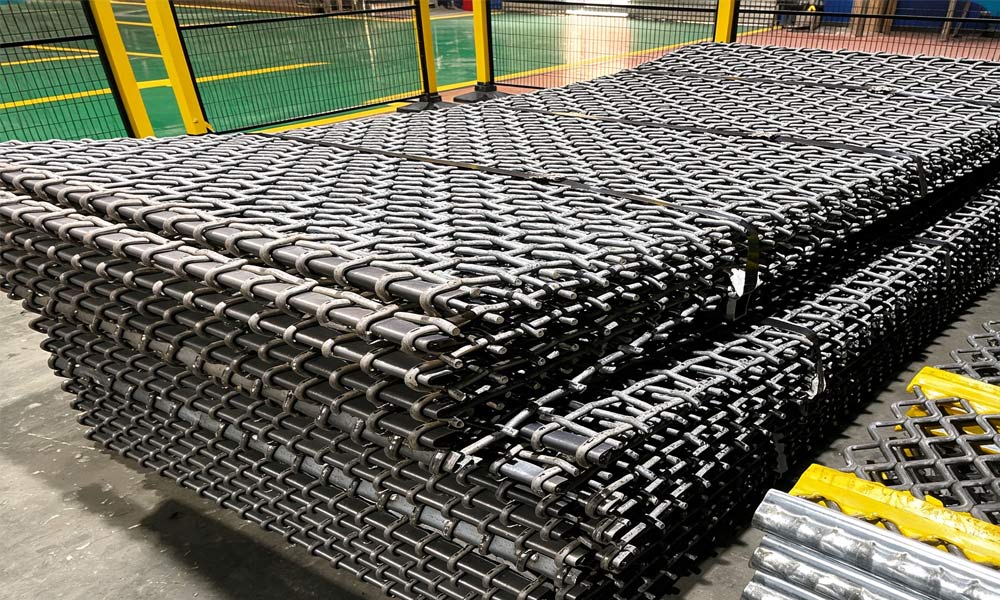
The woven construction of the screen deck ensures that the stresses imposed on it by the process are distributed around all of the woven wires. In contrast, punched plate media will generally exhibit significant localised deterioration under the point of highest material flow, leading to unpredictable screen failure. Similarly, the woven nature of the mesh allows the wires to take up the dynamic forces generated by the process, precluding the risk of fracture and breakage of the screen that could occur with a punched plate. Collectively, these features allow the screen deck to continue to serve for a significantly longer time, and enable the user to assess the expected remaining life of the mesh with a high degree of certainty. This facilitates the scheduling of deck replacement during routine plant maintenance.
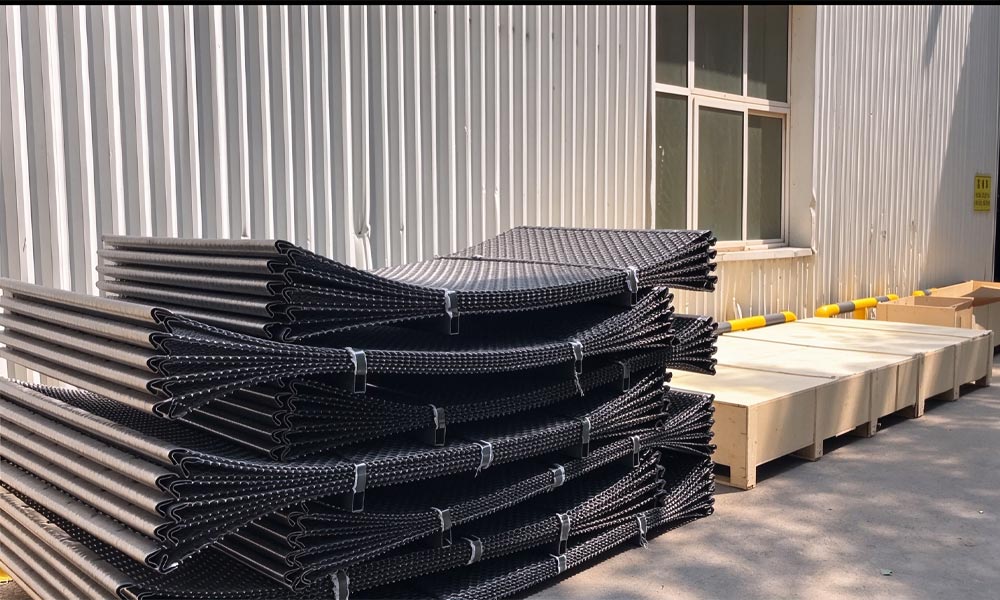
Suitable Materials Available to Suit Specific Duties
Finally, the range of metals from which the woven mesh can be fabricated enables the screen deck to be used for a broad spectrum of industrial classification and dewatering processes. From general purpose black steel for typical rock and ore handling, through various stainless steels suitable for food, chemicals or other aggressive services, to exotic alloys that can tolerate high operating temperatures and severe corrosion - all can be supplied to form a compatible woven mesh screen. In addition, there is no requirement for any modifications to the existing plant configuration to facilitate this change, and the site personnel will be familiar with the procedure for fitting and managing the new media.
In summary, it is clear that operators seeking to implement a high-performance and robust solution for industrial classification and dewatering need not look further than Metal Woven Screen Mesh. It offers all of the benefits discussed above: good compromise of particle classification and dewatering rates; immunity to adverse effects from a range of wet-dry process scenarios; durable woven construction to maximize period of service; and a comprehensive choice of materials to tailor the mesh to the specific service. While obviously not applicable to all duty conditions requiring extremely tight tolerances on the final product size distribution, it is an ideal and tried-and-tested media type for the large proportion of industrial processes that involve wet and dry screening.