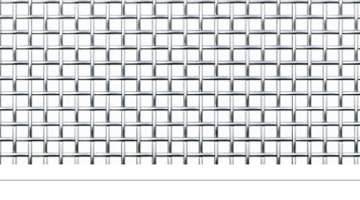
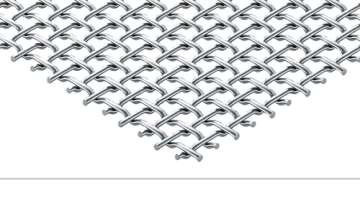
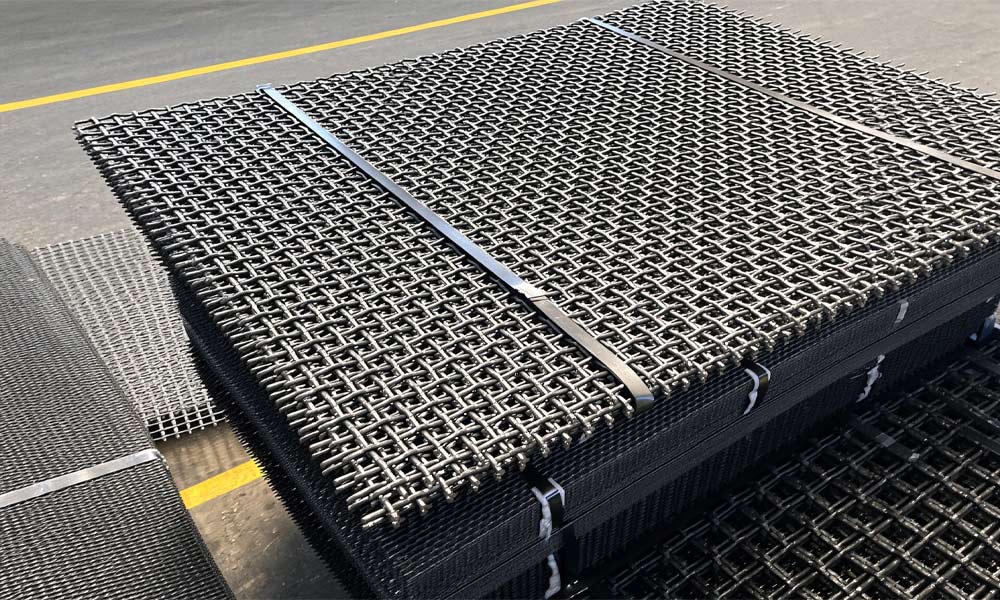
Manganese Steel Woven Mesh For Mining Heavy-Duty Screening
If there is one application on Earth that places the harshest demand on a screened deck, it is the mining industry. Huge pieces of jagged blasted rock, extremely abrasive minerals and the continuous 24hr operation of a mine all act to degrade conventional screens within just a few days. Manganese Steel Woven Mesh is therefore ideally suited to meet these requirements, having been in use since early days of both underground and open cut mines as the primary robust screen media. It's worth noting here that Mn Steel Woven Mesh is not a 'specialty' or high-end product. Rather, it is a tried and tested screen geometry and material which has evolved and improved upon itself since its inception, providing a level of combined impact and abrasion resistance far superior to any other readily available screen option. Here we will discuss the properties of Mn Steel, how it is able to withstand significant heavy rock impact, continue to build its hardness throughout its operational life and perform in a prolonged period of typical mining service.
Superior Properties of Manganese Steel Woven Mesh
The basis of the superior properties of Manganese Steel Woven Mesh is due to the specific form of Mn Steel used in the woven product. A high concentration of Mn in the steel gives rise to a 100% Austenitic micro-structure, which provides great toughness in the as-fabricated condition. Consequently, if large masses of rock fall on to the mesh, it will be able to take the impact and simply bend to accommodate them, rather than suffer instantaneous fracture. Furthermore, the mesh will not develop any dangerously acute fractured ends of wire following such events. This is highly advantageous given the degree of variability in rock size that can occur when feeding material into the screen.
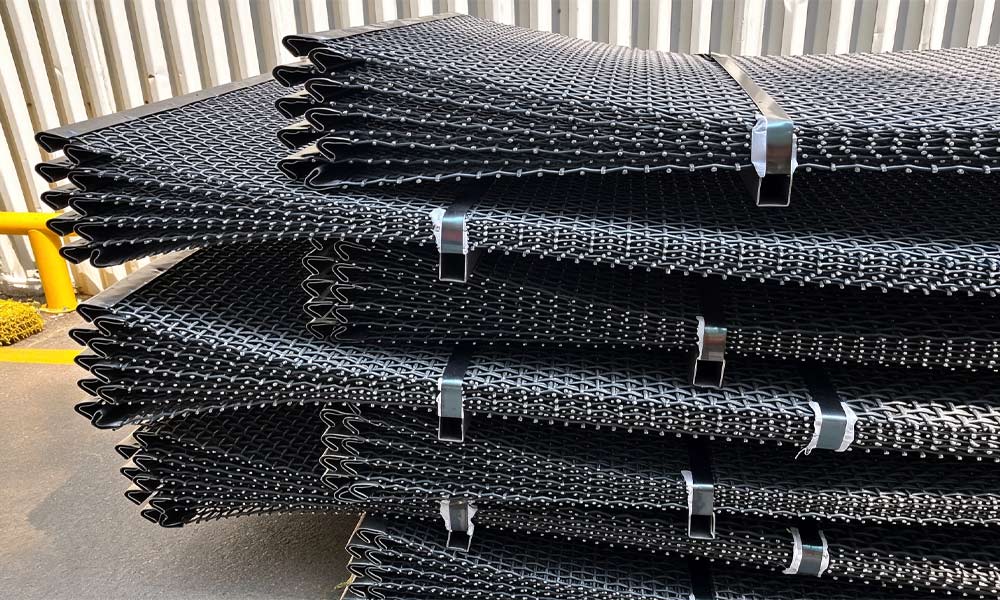
Tolerates Large Amounts of Oversize Blasted Rock
The second key feature of a Manganese Steel Woven Mesh is that it will readily accommodate a significant proportion of oversize blasted rock in the feed stream. In practice, it is difficult if not impossible to ensure that NO oversize will ever arrive at the primary screening screen. Typically, the dropping of even a 10-15kg rock ~2m above the screen face will result in the instant destruction of a conventional screen panel, i.e. the rock will penetrate the complete thickness of the mesh and exit the rear. However, as described previously, the Mn Steel will distort to allow the rock to pass through, leaving only a minor depression in the surface of the screen. Therefore the mesh is likely to be subjected to many further rocks of similar or greater mass before ultimately being breached.
Continuously Increases Hardness During Operation
Finally, a Manganese Steel Woven Mesh continues to increase in hardness as it undergoes normal operation on a mining screen. The progressive interaction between the sharp mineral edges and the austenitic wire surface causes the outer portion of each wire to convert to a very hard Martensitic structure. Depending upon the operating duty, the surface of the mesh can achieve >500BHN, while retaining its original high toughness internal structure. Therefore there is no risk of the mesh developing areas of excessive brittleness and fracturing. As the hardened surface layer gradually reduces in thickness, the underlying virgin wire will continue to transform to the high hardness Martensite, ensuring a sustained period of good abrasive resistance over the life of the mesh. As a result, the overall service life of a Mn Steel Woven Mesh on a given mining duty is typically 2-3x that of a comparable high-carbon steel product.
Screen Choice for Virtually All Mine Sites
As a consequence of the foregoing, it comes as little surprise that Manganese Steel Woven Mesh is still the preferred screen choice for virtually all mine sites around the world, despite the introduction of a range of competing products in recent years. There is an established database of experience at each individual operation detailing the expected screen life at various points along the circuit, e.g. scalping screen at head of process vs secondary screens towards tail of circuit. The requisite skills and equipment are also readily available to the site personnel to install, monitor and renew the screens as necessary. By contrast, some novel screen products may exhibit periods of premature failure that are difficult to predict and manage.
There is consequently no need for a mining operation to adopt a 'premium' or otherwise untested alternative to Mn Steel Woven Mesh if they wish to maximize the impact and abrasion resistance of their screens. Indeed, Mn Steel offers the clear benefits of being able to safely pass substantial amounts of oversize rock, progressively harden to resist the abrasive duty imposed, and provide a known, repeatable service life in a vast array of mining applications. Of course, this type of screen will not be appropriate where a greater number of very small apertures are required, but for the majority of mining scalpers and primary screens it is unsurpassed in terms of the cost per unit time of service provided.