High Performance Screening Media: Types and Selection Guide for Mineral Processing
If you’ve ever scrapped a perfectly good vibrating screen frame just because your low-cost screen media wore through in 10 days, blinding up every shift and dumping 15% of your valuable fine product straight into the tailings pile, you know how much the wrong choice of screening parts can wreck your whole operation’s profitability. I’ve talked to dozens of quarry and mineral processing maintenance supervisors across northern China over the years, and nearly all of them used to treat screen media as a throwaway low-priority consumable, until they ran a full annual cost audit and realized their poor media choices were costing them 40% more in lost production and overtime labor than the actual purchase price of the panels. This practical, field-tested guide breaks down the most common types of High Performance Screening Media, how they work in real plant conditions, and how to pick the right one for your exact workflow, no empty marketing buzzwords or exaggerated performance claims included.
High-Tensile Woven Wire Mesh Delivers Maximum Open Area for Coarse Sizing
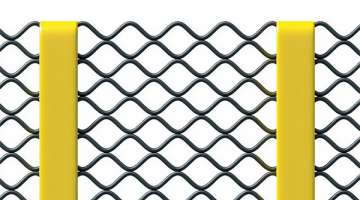
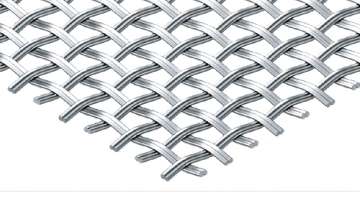
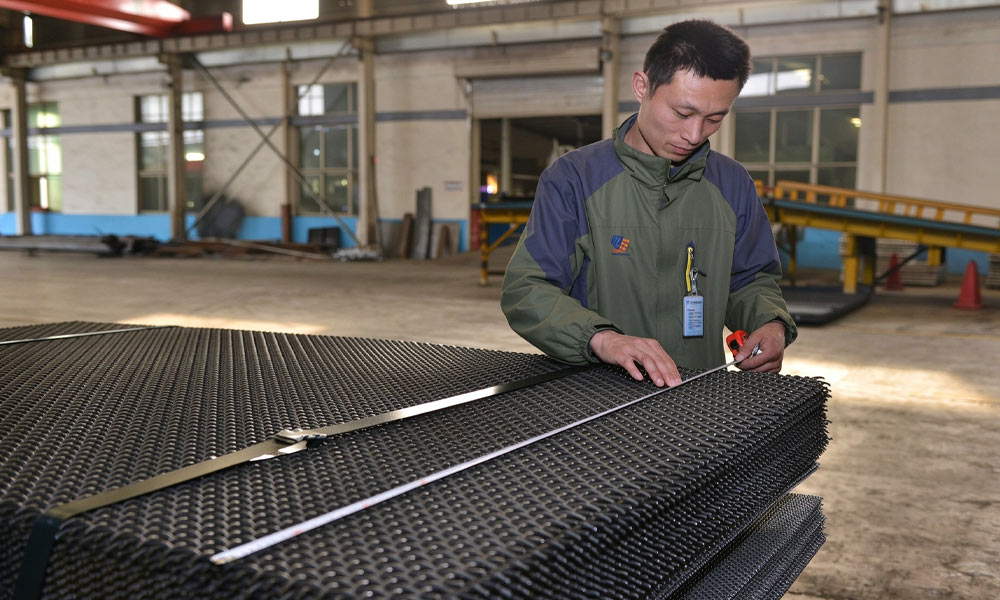
The first widely used type of High Performance Screening Media you will encounter on most aggregate and hard rock quarries is high-tensile manganese alloy woven wire mesh, engineered specifically to prioritize maximum open area and heavy impact resistance for coarse and medium sizing applications. Unlike generic low-carbon mild steel mesh that dents, stretches and wears through in less than two weeks under heavy falling ore impact, this purpose-built mesh uses carefully tempered manganese chromium alloy wire with surface hardness over 55 HRC, paired with a full inter-crimped weave structure that locks every wire firmly in place to prevent shifting and deformation under high tonnage loads. It delivers far more open area than any other heavy-duty screen media type, letting more undersize material pass through faster to boost your overall circuit throughput, making it the perfect fit for primary and secondary sizing decks processing 100mm down to 2mm hard rock aggregate. Quarries that swapped from generic mild steel mesh to this upgraded woven wire saw their average panel service life jump from 12 days to 6 to 8 weeks, with no drop in total hourly throughput.
Modular Polyurethane Panels Excel at Abrasion Resistance and Anti-Blinding
The second extremely popular type of High Performance Screening Media that dominates most fine sizing and high-abrasion processing lines is modular cast polyurethane screen panels, the go-to choice for operations that prioritize long wear life and minimal blinding over maximum open area. These panels are cast from specially formulated wear-resistant polyurethane compounds with different hardness ratings tuned to match specific material properties, and they come pre-machined with precision laser-cut apertures that never shift or deform even after months of continuous 24/7 operation. The flexible, slightly bouncy surface constantly vibrates at a different frequency than the main screen frame, which stops near-size particles from wedging into apertures and causing blinding, a problem that plagues almost all rigid steel mesh running damp fine material. Most coal preparation plants and silica sand operations that switched to these polyurethane panels found that their total panel service life was 3 to 4 times longer than standard woven wire, and mid-shift blinding cleaning stops were almost completely eliminated.
Perforated Plate Media Delivers Unmatched Aperture Consistency for Heavy Loads
The third heavy-duty type of High Performance Screening Media built for extreme impact and heavy sharp abrasive material is thick perforated steel plate screening media, designed for the harshest primary scalping applications where no other media type can survive more than a few days. These panels are laser cut from 6mm to 20mm thick high-hardness quenched steel plate, with every aperture precision machined to exact uniform dimensions, so there are no weak points, loose wires or deformation even when 300mm+ raw run-of-mine ore chunks fall directly onto the deck from the primary crusher discharge. The thick solid plate construction can absorb extreme heavy impact that would instantly tear apart woven wire or polyurethane panels, making it the ideal choice for primary scalping decks in iron ore, copper ore and large granite quarries. Mines that use this perforated plate media for their scalping decks reported that their average panel service life stretched to 6 to 12 months, eliminating the constant weekly panel replacement work that used to waste hours of maintenance labor.
Wedge Wire Screens Deliver Ultra-Precise Fine Separation for Dewatering
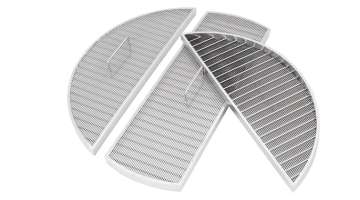
The fourth high-precision type of High Performance Screening Media built for fine dewatering and ultra-fine sizing applications is profile wedge wire screen media, constructed from V-shaped profile wires arranged in parallel with exact uniform slot openings between every wire. The unique V-shaped cross section means that the slot opening is widest at the bottom of the panel, so no fine particle can wedge itself into the slot and get stuck, completely eliminating blinding even when processing very fine damp slurry material. It has extremely high structural strength even with very small 0.1mm slot openings, making it the perfect choice for fine coal dewatering, mineral processing tailings recovery and water treatment operations that need extremely precise consistent separation down to very fine cut sizes. Operations that deployed this wedge wire media for their dewatering decks found that their final fine product moisture content dropped by 3 to 5 percentage points, drastically reducing the fuel cost needed for downstream drying processes.
By matching the right type of High Performance Screening Media to your specific material properties, cut size and operating conditions, you can drastically cut your total annual screen consumable costs, eliminate almost all unplanned downtime, and boost your overall circuit throughput and final product quality far beyond what generic low-cost media can ever deliver.