Heavy Duty Rubber Screens For High-Impact Mining
High-impact mining sieving is easily one of the most punishing screening duties on the planet, where large sharp blasted rock lumps, heavy continuous ore flow, and thousands of high-frequency vibration cycles every minute combine to destroy ordinary screening media in days, not weeks. Heavy Duty Rubber Screens are purpose-built specifically to thrive in this unforgiving environment, designed from the ground up to absorb extreme impact, resist constant abrasive wear, and survive operating conditions that would shatter steel woven mesh in a single shift. These are not the lightweight general-purpose rubber screens used for low-stress fine aggregate sizing, they are over-engineered mining-grade panels built to take the full brute force of coarse blasted ore directly off the primary crusher. This article breaks down how their high-toughness rubber compound absorbs extreme impact, their reinforced core structure prevents catastrophic tear failure, their anti-blinding design maintains consistent throughput, and how they cut total mining operating costs over their long service life.
High-Toughness Rubber Formulation Absorbs Extreme Ore Impact
High-toughness rubber formulation absorbs extreme ore impact, because Heavy Duty Rubber Screens use a specialized mining-grade compound that balances extreme surface hardness with deep, shock-absorbing elasticity that no standard rubber product can match. The formulation blends high-performance natural rubber with carefully selected synthetic additives to create a material that will not crack, shatter, or permanently dent even when hit directly by 10kg oversized blasted rock lumps falling from several meters above the deck. Instead of resisting the impact like a rigid steel panel, the rubber deforms slightly on contact to dissipate the full force of the blow across a wide area of the panel, then springs back completely to its original flat shape without leaving any lasting damage. This eliminates the all-too-common failure mode seen on steel scalping decks, where a single heavy oversize rock impact punches a full hole straight through the mesh and forces an immediate unplanned shutdown.
Embedded Reinforcement Layer Prevents Catastrophic Tear Failure
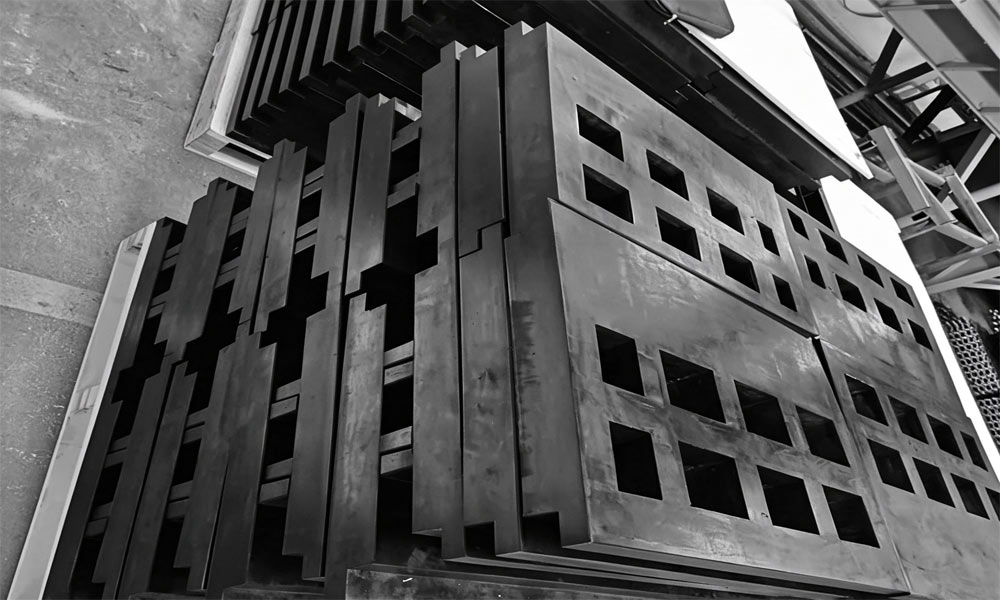
Embedded reinforcement layer prevents catastrophic tear failure, because Heavy Duty Rubber Screens do not rely on rubber alone to resist extreme mining stress. The best mining-grade panels have a high-tensile multi-layer synthetic fabric or full steel wire reinforcement core embedded completely inside the rubber matrix, creating a strong continuous load-bearing skeleton that runs across the full area of the panel. Even if a sharp rock edge does somehow manage to cut through the outer rubber surface, the internal reinforcement layer stops the tear from spreading any further across the panel, so you never end up with a huge gaping ripped section of the deck that can no longer hold back ore. This means small local surface damage stays small and localized, instead of spreading and destroying the entire panel in seconds, giving your maintenance team plenty of time to schedule a panel change during the next planned break instead of dealing with a total sudden deck failure mid-shift.
Flexible Aperture Walls Resist Near-Size Ore Blinding
Flexible aperture walls resist near-size ore blinding, because Heavy Duty Rubber Screens use thick, tapered, fully flexible openings that flex and deform slightly with every single vibration cycle the deck makes. Unlike rigid steel apertures where sharp hard ore particles can wedge permanently in the opening and plug up the deck, the flexible rubber walls squeeze and shift every time the screen moves, gently prying any trapped near-size ore particles loose and letting them fall through the aperture freely. This keeps the total open area of the deck consistently high across the full service life of the panel, so your mining operation never sees unexpected sudden drops in throughput caused by a heavily blinded scalping deck. Your process team does not need to send workers up onto a running high-impact deck to manually clear lodged ore, eliminating a common safety hazard that comes with maintaining high-tonnage mining screening circuits.
Robust Modular Mounting System Cuts Maintenance Downtime
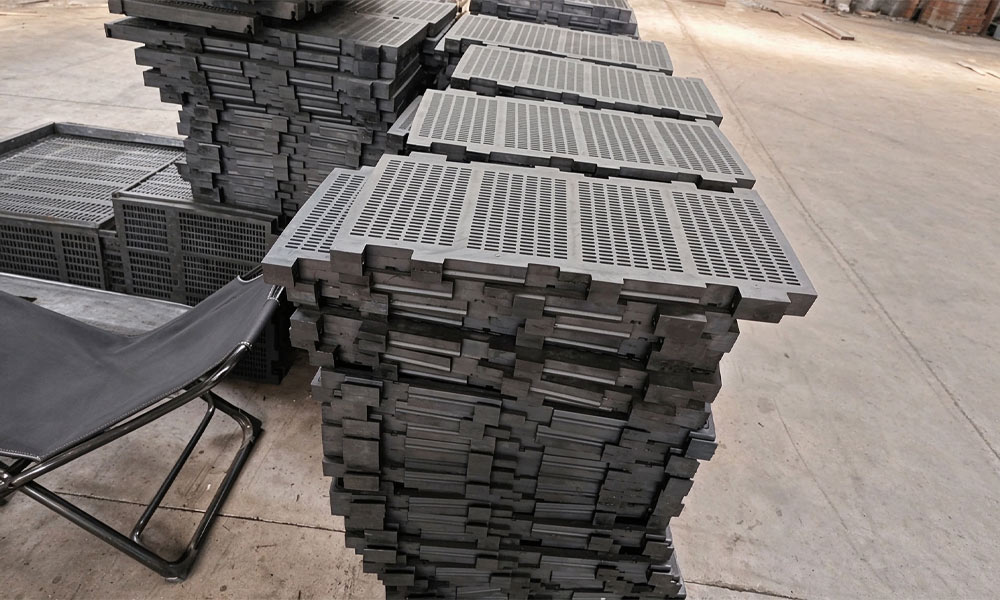
Robust modular mounting system cuts maintenance downtime, because Heavy Duty Rubber Screens use heavy-duty reinforced steel inserts moulded directly into the body of every panel, instead of weak welded hooks that can snap off under extreme mining stress. These inserts lock the panel firmly to the deck support frame, so it will not shift, come loose, or tear free even under the heaviest continuous ore flow and maximum deck vibration. When a panel eventually wears out at the high-impact feed end of the deck, your maintenance team can unclip the old worn unit and bolt a new one into place in a matter of minutes, no specialized tensioning tools, no hot work welding, and no hours of difficult on-site fabrication work required. This cuts the total time required for a full scalping deck media change from a full 8-hour shift down to less than two hours, drastically reducing the amount of lost production time that your mine loses every time you need to replace worn screening media.
High-impact mining sieving operations no longer have to accept frequent catastrophic screen failure and endless unplanned downtime as an unavoidable cost of running a high-tonnage circuit, and heavy duty rubber screens solve almost all the persistent pain points that come with using traditional steel mesh on these punishing decks. Their high-toughness rubber compound dissipates extreme rock impact without damage, their embedded internal reinforcement stops small cuts from turning into full panel tears, their flexible apertures resist blinding to keep throughput consistent, and their robust modular mounting system slashes media change downtime dramatically. For extremely heavy duty primary scalping decks handling boulders over 50kg, heavy manganese steel mesh will still be the better choice, but for almost all secondary and tertiary high-impact mining sieving duties, these rubber panels deliver a level of reliable, low-fuss performance that no traditional steel screen can match.