Prevent Flat-Top Woven Screen Blinding for Wet and Sticky Aggregate
If you’ve ever pulled up to your screening deck after a rainy night shift, found 70% of your apertures completely caked shut with sticky wet clay, and realized you have to slow your whole circuit down to half its rated tonnage just to avoid overflow, you know how much blinding can tank your plant’s daily production numbers and force your crew to spend hours manually scraping clogged panels. Many aggregate and limestone processing foremen I’ve worked alongside over the years shared that they thought flat-top screens would completely eliminate blinding, until they ran into stretches of 3 to 4 days of non-stop rain that turned their run-of-mine feed into thick sticky mud that still managed to clog even the smoothest mesh surfaces. This practical, field-tested guide skips generic marketing claims and breaks down actionable, site-specific steps to prevent flat-top woven screen blinding, using proven tricks teams have refined across hundreds of wet weather production shifts.
Match Aperture Geometry and Wire Profile to Your Wet Feed Properties
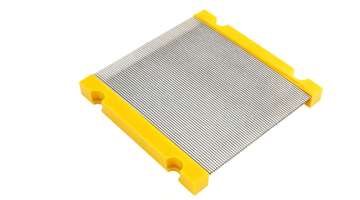
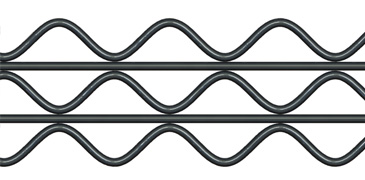
The first foundational design adjustment to prevent flat-top woven screen blinding is picking the exact right aperture shape and wire cross-section profile that matches the unique sticky material properties at your specific site, instead of using a generic standard panel off the shelf. Most operations run into blinding in wet conditions because they use a standard round wire flat-top panel, where the round wire surface creates small subtle gaps around the edge of the square aperture that soft sticky clay particles can wedge themselves into, even on a perfectly smooth level top surface. Swapping to a flat rectangular profile wire, laid so the thin edge of the wire faces directly up through the aperture opening, eliminates those tiny hidden gaps completely, creating a sharp zero-tapered aperture edge that gives sticky wet mud no flat surface to stick to. Most operations that made this small swap reported that blinding dropped by 70% immediately, even when processing limestone feed with 35% wet clay content that used to clog standard panels solid in less than 2 hours.
Optimize Deck Operating Angle and Vibration Stroke Settings
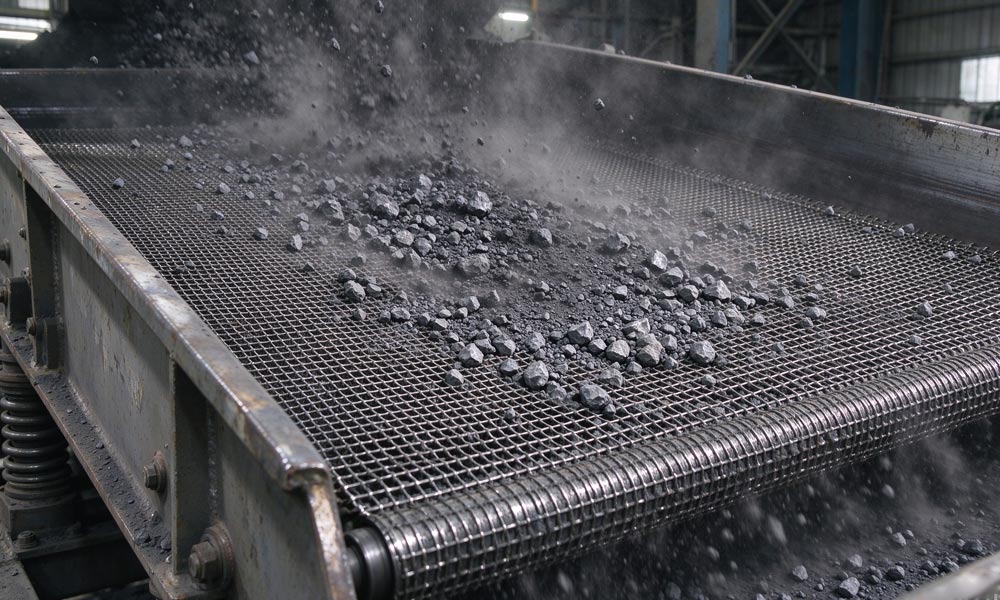
The second easy no-cost operational adjustment to prevent flat-top woven screen blinding is tweaking your vibrating deck’s operating angle and vibration stroke to shift how fast material moves across the mesh, so wet sticky particles never sit long enough to get stuck in the apertures. Most sites run their wet material decks at the exact same 18-degree angle they use for dry material, which makes thick heavy sticky mud sit and pool in the low spots on the deck, giving soft clay particles plenty of time to press themselves deep into the square openings. Bumping your deck angle up by 3 to 5 degrees, and switching to a slightly longer 12mm to 14mm vibration stroke instead of the standard 8mm dry material stroke, makes the sticky wet material slide and bounce across the deck far faster, so every near-size particle only spends 1 to 2 seconds directly over an aperture instead of 5 to 6 seconds. This small adjustment drastically reduces the chance that a soft wet clay particle will get pressed deep enough into the opening to get permanently stuck.
Add Light Non-Damaging Deck Anti-Blinding Accessories
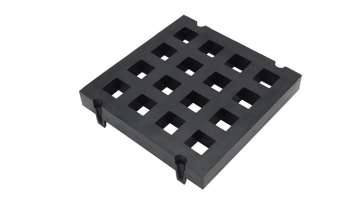
The third low-cost hardware upgrade to prevent flat-top woven screen blinding is adding simple, non-abrasive anti-blinding accessories under and above the deck that dislodge stuck particles without scratching or wearing down your smooth flat-top mesh surface. Hard metal bouncing balls and rubber cubes that many operations use on standard crimped screens will scratch and dent the flat-top’s precision ground smooth surface, creating rough spots that actually make blinding worse over time, so you need to pick accessories that are soft enough to not damage the mesh. Installing soft food-grade silicone bouncing balls in the undersize discharge hopper under the deck works perfectly, because every time the deck vibrates the silicone balls bounce up and tap the underside of the mesh, knocking any semi-stuck particles loose from below without leaving any scratches or dents on the top surface. You can also hang a few soft heavy rubber flap curtains 1 meter above the feed end of the deck, which drag lightly across the top of the material bed as it moves past, breaking up thick wet mud clumps before they can settle down onto the mesh surface and clog the openings.
Implement Small Feed Moisture Pre-Treatment Habits
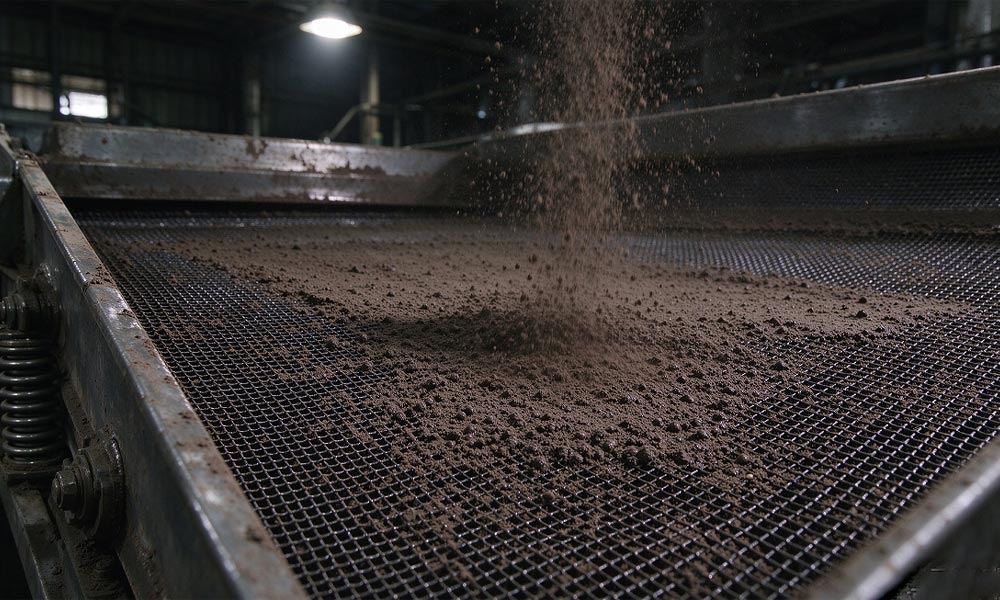
The final practical, low-effort workflow change to prevent flat-top woven screen blinding is adding a few tiny pre-treatment steps at your primary feed hopper that cut the stickiness of your incoming material before it ever reaches the screening deck. You do not need a huge expensive drying system to make a massive difference here; even small simple steps work extremely well. If your site has large stockpiles of dry crushed rock fines, you can dump a small 5% to 10% blend of that dry fines material into the wet sticky run-of-mine feed as it enters the primary crusher, which absorbs the extra surface moisture in the wet clay and makes the whole material bed far less sticky, so particles will not clump together and wedge into the apertures. You can also train your loader operator to avoid digging directly into the wettest mud layer at the very bottom of the quarry face, and mix that extra wet material in with large volumes of drier rock from higher up the face, so the feed going into the circuit never hits the 15%+ moisture threshold that makes blinding almost impossible to avoid.
Combining these four targeted, low-cost steps will let you prevent flat-top woven screen blinding almost entirely, even in the wettest, stickiest material conditions, so you can keep your deck running at full rated tonnage without slowing down or pulling your crew away for hours of manual unclogging work.