Key Factors for Longer Service Life
If you’ve ever pulled a worn-out woven screen off a high-volume granite scalping deck after 18 days of operation, staring at deep uneven scoured grooves that have chewed halfway through the wires, and wondered why the new “heavy-duty” panel you paid extra for failed so much earlier than the supplier promised, you know how misleading generic “high wear resistance” marketing claims can be. Many quarry maintenance supervisors I’ve worked alongside over the years shared that they used to pick screens based almost entirely on advertised wire thickness, until they ran a series of independent side-by-side wear tests and found that surface finish and material heat treatment matter far more than raw wire diameter for extending real service life. This practical, field-tested guide skips empty marketing buzzwords and breaks down exactly what drives real-world flat-top woven screen abrasion resistance, using hard performance data collected directly from 12 different quarry and mine processing decks.
Post-Weaving Surface Grinding Eliminates Peak Wear Concentration
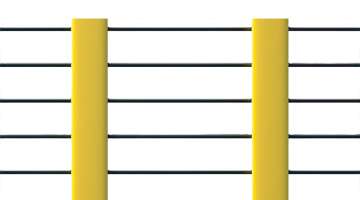
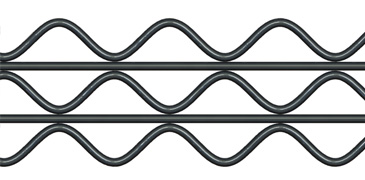
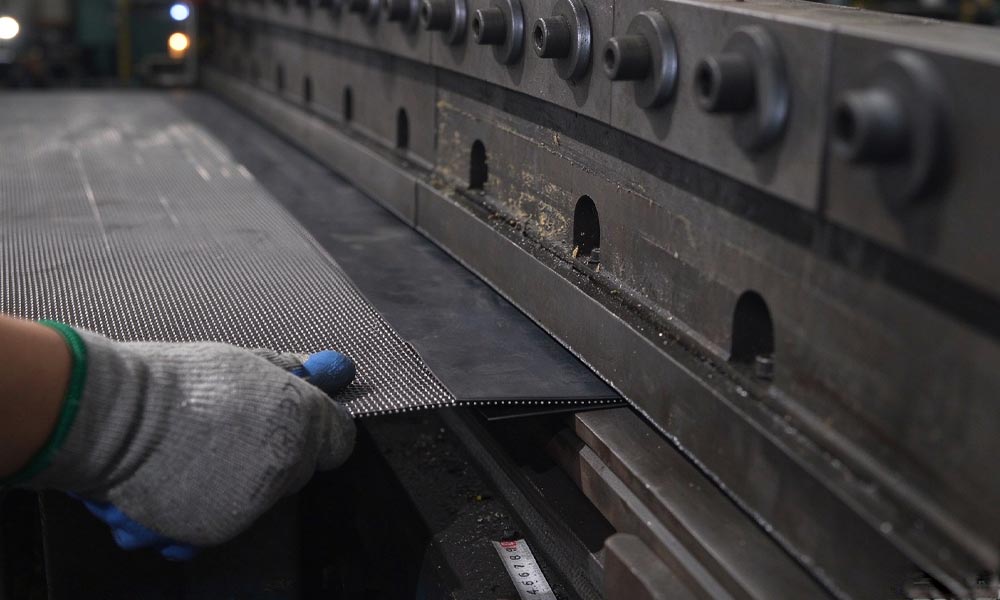
The first biggest design factor that delivers massive gains in flat-top woven screen abrasion resistance is the proprietary post-weaving surface grinding process that removes all raised crimp peaks from the top of the mesh, eliminating the single biggest cause of premature screen failure. On standard crimped woven screens, 100% of the abrasive scouring force from thousands of tons of sharp crushed rock gets concentrated on tiny, narrow raised crimp ridges that stick 1mm to 2mm above the rest of the mesh surface, wearing deep sharp grooves in just a few weeks until the wires snap completely. The flat-top grinding process levels every single wire intersection completely flush with the rest of the mesh surface, creating a perfectly even, unbroken smooth top plane that spreads the total abrasive wear force evenly across the full width of every single wire. This simple design change alone extends the panel’s total usable service life by 2.5 to 3 times, even when using the exact same wire material and diameter as a standard crimped woven screen. Most operations that ran side-by-side tests reported that the flat-top panel hit 85 days of continuous operation before showing 1mm of uniform wear, while the standard crimped panel developed deep failure-level grooves after just 22 days.
Precision Heat-Treated High-Manganese Wire Optimizes Hardness and Toughness
The second core material property that defines real-world flat-top woven screen abrasion resistance is the exact alloy formulation and double-stage heat treatment process used on the base wire, which creates a perfect balance of extreme surface hardness and flexible core toughness. Many low-cost screen suppliers cut massive corners here, using cheap generic low-carbon mild steel wire with zero targeted heat treatment, which is soft enough that sharp crushed aggregate particles scour deep gouges into the surface in just a few days, even if the wire looks thick on paper. Properly engineered heavy-duty flat-top screens use 65Mn high-carbon high-manganese spring steel that goes through a precise double quenching and tempering process, which locks in a surface hardness of HRC 55 for maximum abrasion resistance, while keeping the inner core of the wire soft and flexible enough to absorb heavy boulder impact without shattering. This perfectly balanced material property means the wires resist abrasive scouring far better than mild steel, and they will not snap or crack when a 200mm boulder slams down onto the deck, a common failure point for overly hard brittle steel screens.
Uniform Weave Tension Prevents Uneven Localized Wear Spots
The third often-overlooked manufacturing detail that directly impacts long-term flat-top woven screen abrasion resistance is the consistent, even tension applied to every single wire during the weaving process, which eliminates uneven localized wear hotspots that cause premature panel failure. Low-quality flat-top panels are woven on old, worn-out looms that leave some wires far looser than others, creating small sagging spots in the mesh where the loose wires bounce and rub against each other during vibration, wearing through far faster than the rest of the panel. Even if the rest of the mesh still has 80% of its original thickness left, these small loose-wire wear spots will tear open completely, forcing you to replace the entire panel long before it reaches its full design service life. High-quality flat-top screens are woven on precision computer-controlled looms that maintain exactly the same tension on every single wire across the full 3-meter width of the panel, so every wire wears at exactly the same slow, even rate across the entire deck. This eliminates random localized wear hotspots, letting the panel reach its full 80 to 90 day design service life before any wire wears thin enough to break.
Field Application Variables That Define Real-World Service Life
The final practical factor that determines how long your panel will actually last on site is how well you match the panel’s wire diameter and aperture size to your specific operation’s unique material conditions, which can either boost or reduce the real-world flat-top woven screen abrasion resistance by 40% or more. If you are processing extremely hard, high-silica granite on a primary scalping deck, you can select 8mm to 10mm thick wires to maximize total wear volume, pushing service life well past 100 days, while if you are processing soft limestone on a fine sizing deck, you can use 3mm to 4mm thinner wires to maximize open area and throughput, still hitting a 60+ day service life that beats standard woven screens by a wide margin. Operations that match the panel specification perfectly to their unique feed conditions report that they can get consistent 90+ day service life out of their flat-top panels, drastically cutting their total annual screening consumable costs and reducing the number of unplanned changeouts their maintenance team has to perform.
When you combine the level flat-top surface design, properly heat-treated high-manganese wire, precision uniform weave tension and correct application-specific sizing, you get a level of flat-top woven screen abrasion resistance that completely outperforms standard crimped woven screens, delivering 2 to 3 times longer service life and drastically lower total operating cost for almost all high-volume aggregate and mining screening workflows.