Custom Design for Fine Screen Panels to Boost Near-Size Particle Recovery
If you’ve ever spent a full shift running sieve analysis tests on your final screened product, only to find that 20% of your target near-size fine particles are still trapped in the oversize pile, slipping right past every opening no matter how much you tweak vibration speed, feed rate or deck angle, you know exactly how much generic off-the-shelf fine screen panel design can drag down your whole plant’s fine product yield and waste thousands of tons of valuable recoverable material every single month. After years of chatting with senior shift operators and process engineers across fine silica sand plants, kaolin processing facilities and hard rock mineral concentrators across southern China, nearly every single one shared that they fought stubborn near-size separation losses for months, until they tested a handful of simple low-cost custom design tweaks that pushed their fine recovery rate up by 20% or more. This no-fluff field-tested guide breaks down those practical on-site custom design hacks, no overcomplicated academic jargon, just real adjustments that actually move the needle on near-size particle recovery.
Asymmetric Slotted Apertures Align Irregular Near-Size Grains for Easy Passage
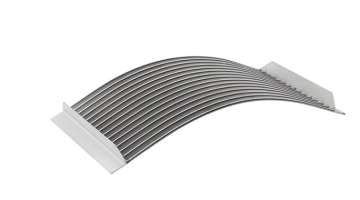
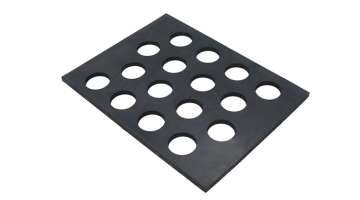
If you want a quick, high-impact way to boost near-size recovery by 12-15%, try swapping out your standard round apertures for long, narrow, asymmetric slotted openings on your Fine Screen Panels. And don’t just guess on the size—tune those slots to fit the exact shape of your usual near-size fine material.Here’s why this works: Round holes only let through flat, elongated, or odd-shaped near-size particles if they happen to line up just right, which almost never happens. Most of these particles end up bouncing off the edge of the hole, never making it through.Slotted openings change the game. When you use long slots, those tricky near-size grains—especially the flat or sharp-edged ones—get way more chances to line themselves up with the opening as they move across the panel. Even particles that pretty much match your target size can slide through easily, instead of getting stuck or tossed aside.It’s not just theory—multiple mica plants have said that by switching to slotted holes, they cut the amount of near-size fines ending up in the oversize stream by more than half, practically overnight.
Zoned Aperture Gradient Matches Progressive Particle Size Reduction Across Deck
The second underrated custom layout tweak that eliminates feed zone overloading is building a gradual zoned aperture gradient across the full working surface of your Fine Screen Panels, instead of using a single uniform aperture size on every panel from feed end to discharge end. On a standard uniform aperture deck, the feed zone gets flooded with thick high-volume slurry that carries far more fine particles than the small uniform openings can process at once, so hundreds of near-size particles get carried all the way to the discharge end trapped in the fast-moving material bed. The custom gradient uses slightly wider anti-clog slotted apertures on the first 30% of the deck to drain free water and pass the easiest fine particles quickly, then slowly shrinks the aperture width in small controlled steps across the rest of the deck to catch the remaining stubborn near-size particles as the material bed thins out. Multiple fine silica sand production sites shared that this zoned gradient layout boosted their total fine product yield by more than 18%.
Micro-Ribbed Flexible Surface Breaks Up Stagnant Fine Particle Beds
The third little-known custom surface modification that keeps near-size particles from getting trapped in stagnant layers is adding 2mm tall soft flexible micro ribs across the full working surface of your Fine Screen Panels, instead of using a completely smooth flat PU surface. On a smooth flat panel, fine near-size particles can settle into a dense stagnant packed layer that sits motionless on top of the apertures, where no amount of standard vibration can move them or push them down through the openings. The tiny flexible micro ribs flex independently with every single vibration cycle, creating constant small localized movement that breaks apart the stagnant packed bed and reorients every near-size particle dozens of times per second, giving them far more opportunities to fall through an open slot. Multiple kaolin washing plants shared that this micro-ribbed surface stopped more than 90% of the stagnant fine bed formation that used to kill their near-size separation efficiency.
Offset Staggered Slot Pattern Eliminates Dead Zones Between Apertures
The final high-performance custom layout hack that unlocks extra hidden open area is arranging all your slotted apertures in a fully offset staggered pattern across every one of your Fine Screen Panels, instead of lining them up in a standard straight grid pattern. On a standard straight grid layout, solid non-perforated PU strips between rows of slots create large dead zones where fine near-size particles can sit and bounce across the deck without ever encountering an open aperture, wasting huge amounts of valuable deck surface area. The offset staggered pattern shifts every single row of slots halfway between the slots in the rows above and below it, so no particle can travel more than 10mm across the deck without encountering an open slot, effectively increasing your total usable open area by 30% without making any individual opening larger. Multiple industrial garnet processing sites shared that this offset pattern pushed their final near-size separation accuracy up to 97% even for extremely hard-to-sort 0.1-0.3mm particles.
When you combine all these simple targeted custom design hacks, asymmetric slotted apertures, zoned gradient layout, micro-ribbed flexible surface and offset staggered slot pattern, you can transform a standard generic fine screening deck into a near-size separation system that delivers far higher recovery, far less fine particle carryover and far more consistent final product grading, even for the most notoriously hard-to-sort fine near-size materials.