Fine Polyurethane Shaker Screen For Oilfield Solids Control
Shale shakers are the first line of defence in solids control, and the screen they carry decides how much drilled solids stay in the mud and how much is thrown away with the cuttings. A fine polyurethane shaker screenhas become a familiar sight on rigs that run demanding mud programs, because it offers a combination of fine cut, wet resilience, and service life that conventional wire cloth struggles to match in this duty. Drilling fluid is abrasive, often hot, and loaded with fine solids that blind ordinary screens quickly, so the media has to do more than simply hold an aperture. This article explains what this type of screen is, why its features suit drilling mud treatment, how it performs in the main solids control duties, and what rig crews need to do to get the most from it.
What A Fine Polyurethane Shaker Screen Is
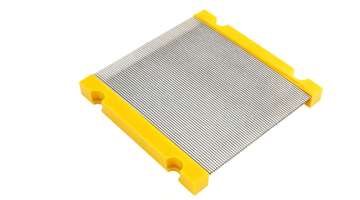
The product is a screen panel for a shale shaker, built around a molded polyurethane screening surface rather than woven wire cloth, and sized for the fine end of solids control. A Fine Polyurethane Shaker Screen typically combines a fine aperture molded screen with a supporting frame or backing that gives it the stiffness needed to survive shaker motion, and the panel is designed to be tensioned or fixed onto the shaker bed in the same way as conventional screens. The polyurethane surface is molded, so apertures are formed by tooling and held to a consistent size, and the material is selected for resistance to abrasion, hydrolysis, and the chemical environment of drilling fluids. Panels are usually modular so that a damaged section can be replaced without scrapping the whole deck, and the construction is aimed at the fine mesh duties where wire cloth tends to fail first.
Why Drilling Mud Is A Demanding Duty For Screen Media
Drilling fluid punishes screen media in ways that are quite different from dry aggregate or mineral screening, and understanding this explains why polyurethane has found a home in solids control. A Fine Polyurethane Shaker Screen has to cope with an abrasive slurry of cuttings and weighting agents moving at high velocity under strong shaker motion, with fluid that is often hot and chemically active, and with fine solids that pack into apertures rather than bouncing clear. Wire cloth in this duty suffers from rapid abrasion, from corrosion, and from blinding as fine particles and mud additives lodge in the openings, and a blinded screen sends solids downstream to the desander and centrifuge, which increases cost and reduces mud quality. The shaker also runs continuously, so the media has to hold its cut point through long shifts without attention. These conditions favour a material that resists adhesion, tolerates chemicals, and wears gradually rather than breaking.
Performance In The Main Solids Control Duties
Fine polyurethane screens are used across several positions on the shaker train, and their behaviour differs somewhat depending on where they sit. A Fine Polyurethane Shaker Screen is often chosen for the fine mesh position on the main shaker, where the aim is to remove as much drilled solid as possible without losing valuable fluid, and its low friction surface helps keep damp fines moving rather than blinding the apertures. In the scalping position, where the load is heavier and the cut is coarser, polyurethane still performs well but the case is less clear cut, since wire or coarser media may be adequate. On linear motion shakers running fine screens, the flexibility of the panel helps clear near-size particles and supports the screening action, while on some older elliptical machines the motion may not suit flexible media as well. The material is also used in mud cleaner duties, where a fine cut is needed on a smaller deck, and here the consistent aperture size helps hold the cut point as the mud properties change.
Getting The Best From Polyurethane Screens On The Rig
The performance of any screen depends heavily on how it is specified, fitted, and run, and polyurethane is no exception on a drilling rig. A Fine Polyurethane Shaker Screen should be selected against the mud weight, the solids loading, the shaker motion, and the target cut point, because these determine aperture size, panel construction, and the frame type needed to keep the panel stiff under load. Fitting matters enormously, since a panel that is not properly tensioned or seated will flex unevenly, wear prematurely, and lose cut point accuracy, and crews should follow the manufacturer's tensioning procedure rather than improvising. Shaker settings such as vibration amplitude and deck angle should suit the fine screen and the mud condition, and spray or dilution should be used where it helps rather than as a substitute for correct screening. Inspection should focus on aperture condition and partial blinding, and keeping a record of screen life against mud programme makes it easier to judge when a change of specification is warranted.
Fine polyurethane shaker screens have earned their place in oilfield drilling mud treatment because their features address the specific problems that drilling fluid creates for screen media. The molded fine apertures hold a consistent cut, the low friction surface resists the blinding that plagues wire cloth in damp, solids-laden mud, and the material tolerates abrasion and chemical exposure while wearing gradually rather than failing suddenly. They are not a universal answer, and coarser positions or certain shaker motions may still favour other media, so selection has to be matched to the duty. Where the aim is a fine cut on a working shaker with demanding mud, however, polyurethane offers a combination of cut point stability and service life that supports both solids control performance and mud economics, and that is why rig crews who run it tend to keep running it.