Fine Polyurethane Mining Screen For Wet Ore Screening
Wet ore screening is one of the harder jobs in a mineral processing plant, because water changes how the bed behaves, how particles move across the deck, and how quickly apertures can blind under load. A fine polyurethane mining screen is built specifically for this environment, and the features that make it work are not simply a matter of material choice but of how the panel is designed, molded, and supported. Plants that run wet circuits often find that conventional media struggles to hold a fine cut without constant attention, while a properly specified polyurethane panel keeps performing through the shift. This article looks at the features that matter in wet ore screening, why they matter, and how to get the best out of this type of media in a working plant.
Why Wet Ore Screening Is Harder On Screen Media
Water does more than lubricate the bed, it changes the physics of the screening process in ways that put extra demands on the panel. A Fine Polyurethane Mining Screen has to cope with surface tension effects that hold fine particles against aperture edges, with a bed that fluidises and moves faster than dry material, and with the constant presence of moisture that accelerates corrosion in steel media. Wet fines also tend to pack into apertures rather than bounce off them, so blinding becomes a progressive problem rather than an occasional one, and once a section of the deck is blinded the effective screening area drops and the cut point shifts. Abrasion behaves differently too, because the slurry carries fine particles that act almost like a grinding paste across the panel surface. These conditions are why wet duty needs media designed around them rather than media adapted from dry applications.
Features That Make Polyurethane Effective In Wet Duty
The properties that make polyurethane useful in wet ore screening are a combination of surface behaviour, flexibility, and chemical resistance rather than any single standout characteristic. A Fine Polyurethane Mining Screen benefits from a low friction surface that reduces adhesion of wet fines, which directly lowers the tendency to blind at small apertures. The flexibility of the moulded panel allows slight movement under vibration, and this helps break the bond between particle and aperture edge, an effect that is particularly valuable when surface tension is holding fine material in place. Polyurethane also resists hydrolysis and does not corrode, so it holds up in circuits where wash water is present continuously, and it tolerates the abrasive slurry conditions that wear steel media quickly. The material is not as stiff as steel, which is why panel design and support have to compensate, but in wet fine duty the trade off usually works in polyurethane's favour.
Design Details That Support Consistent Performance
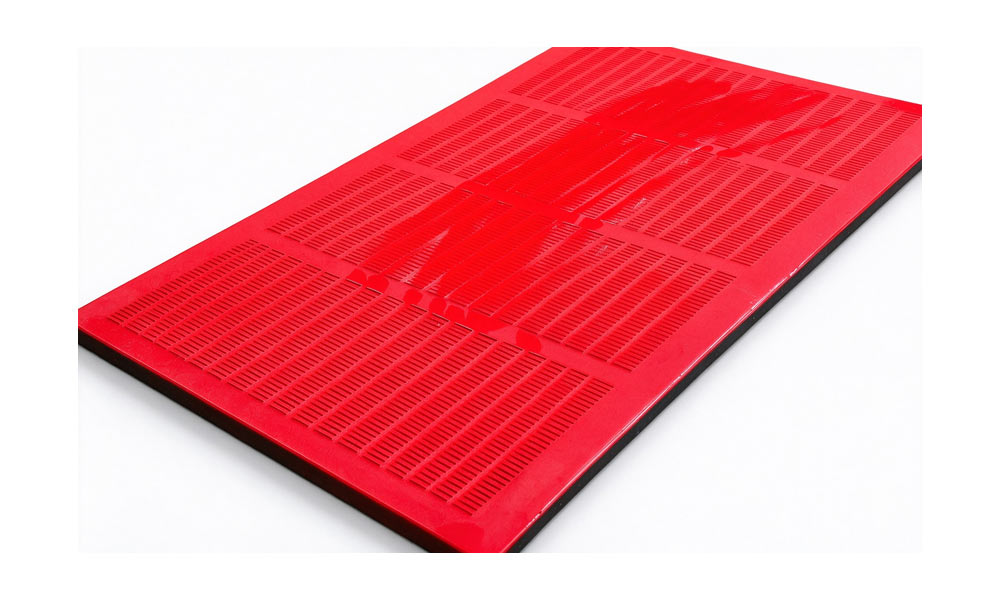
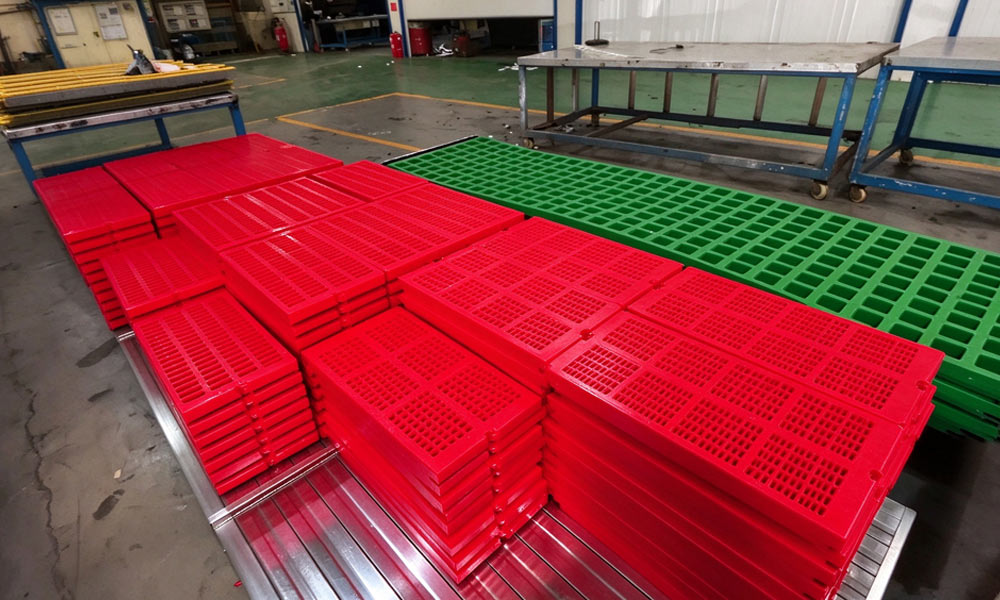
Beyond the material itself, the design of the panel determines how well it performs in a wet circuit, and these details are worth understanding when specifying media. A Fine Polyurethane Mining Screen is normally molded with a tapered aperture profile, wider at the discharge face than at the entry, which reduces wedging of near size particles and helps material clear the opening. The aperture pattern and open area are balanced against panel strength, because a panel with too much open area can deflect under load and lose cut point accuracy, while too little open area limits capacity in a wet bed that is already moving quickly. Reinforced edges and properly designed fixing points keep the panel seated and prevent localized movement that would accelerate wear. Surface finish is controlled during moulding to minimize adhesion, and the compound hardness is selected to suit the abrasion level of the ore, since harder compounds wear better but can be less forgiving in blinding prone conditions.
Specifying And Running Fine Polyurethane Screens In Wet Circuits
Good results in wet ore screening come from matching the panel to the duty and then running the deck in a way that supports the screening action rather than fighting it. A Fine Polyurethane Mining Screen specification should start from the target cut point, the feed size distribution, the solids concentration, and the required capacity, because these determine aperture size and shape, panel thickness, and compound selection. Wash water should be applied where it actually reaches the apertures and dilutes the bed, rather than simply wetting the surface, and the spray pattern should be checked periodically because blocked nozzles are a common cause of localized blinding. Stroke, frequency, and deck angle need to suit a wet fine feed, and settings carried over from a dry or coarse duty often underperform. Inspection should look at aperture condition and partial blinding rather than only at visible damage, and keeping product size records against panel age makes it easier to spot drift before it affects the specification.
Fine polyurethane mining screens earn their place in wet ore screening because their features address the specific problems that water creates, from surface tension blinding to abrasive slurry wear and corrosion. The low friction surface, the flexibility that helps clear apertures, and the chemical resistance of the material all work together, and the molded design details that accompany them determine how well those properties are delivered in practice. None of this removes the need for proper specification, sensible operating settings, and regular inspection, and plants that treat these as part of the job get far more from the media than those who simply fit a panel and hope. In a wet circuit where cut point stability and uptime both matter, that combination of material and attention is what keeps the deck performing shift after shift.