4 Practical Ways to Extend Square Woven Screen Service Life for Mineral Processing
If you’ve ever stood on a mineral processing plant’s screening deck staring at a brand new square woven screen that wore through completely in less than two weeks, knowing you have to shut down the circuit for a full panel changeout in the middle of a peak production week, you know exactly how frustrating and costly premature screen failure can be for your whole operation. Many plant maintenance supervisors I’ve collaborated with over the years shared that they used to treat square woven screens as disposable consumables that you just swap out when they break, until they started implementing small, targeted operational tweaks that let them double or even triple the average service life of every new panel they install. This practical, field-tested guide skips generic marketing talking points and focuses on the real-world, actionable steps you can take today to extend square woven screen life, no expensive equipment upgrades or custom screen modifications required.
Feed Distribution and Impact Energy Reduction
The first highest-impact, lowest-effort change you can make to immediately extend square woven screen life is fixing your feed distribution system to cut down the concentrated high-impact forces that cause 70% of all premature screen failures in mineral processing. Most mineral processing plants run their feed directly off the end of a conveyor belt, dropping 100kg+ sharp blasted ore boulders from 2 to 3 meters straight down onto the same small 300mm section of the screen’s feed end, creating a localized high-wear zone that wears through the wires 4 to 5 times faster than the rest of the panel. The simple fix that will drastically extend square woven screen life is installing a curved impact rock box or a series of staggered dead-bed feed chutes at the screen’s feed inlet, which creates a layer of settled ore that incoming falling material slides down, absorbing 90% of the heavy impact energy before it ever touches the screen surface. You also add a simple adjustable spreader baffle that distributes incoming feed evenly across the full entire width of the screen deck, so no single narrow strip of the mesh takes 60% to 70% of all the abrasive scouring force.
Proactive Tension and Deck Support Maintenance
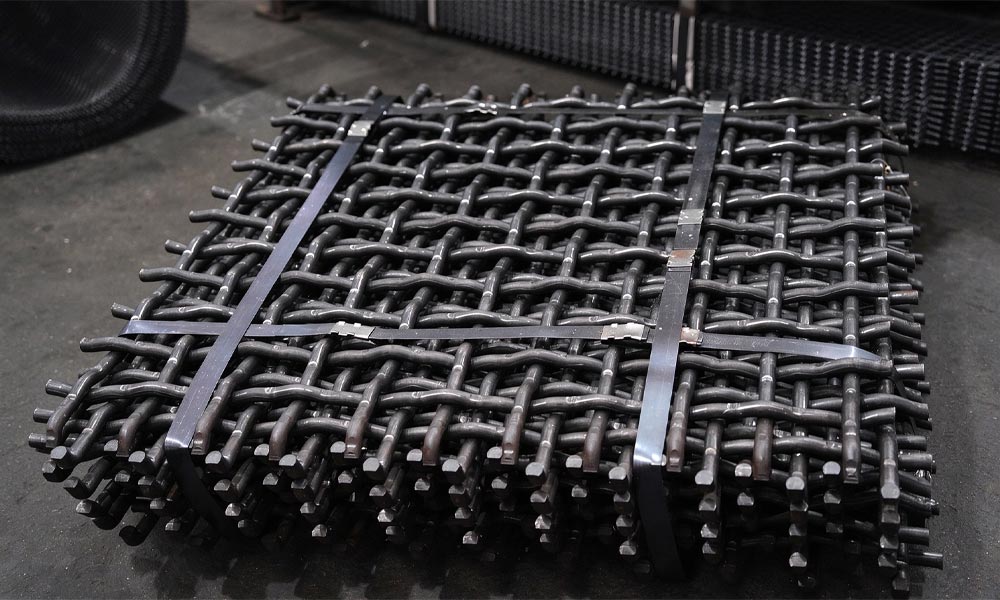
The second critical ongoing maintenance practice that will reliably extend square woven screen life across every single deck in your plant is a weekly tension check and deck support bar audit, a small routine task that most teams completely overlook until a panel tears apart mid-shift. Even a perfectly installed square woven screen will slowly lose a small amount of tension over 100+ hours of continuous high-frequency vibration, creating tiny loose spots across the mesh that start flexing up and down independently of the deck, generating rapid wire fatigue that leads to unexpected tearing. The simple routine that will drastically extend square woven screen life is scheduling a 15-minute tension check every single week during your pre-planned maintenance window, where your maintenance crew walks across every screen deck and gives every tension bolt a small incremental half-turn to maintain the exact correct tautness that keeps the panel sitting completely flush against every support bar. During this same weekly check, they also run their hand across every single deck support bar to check for worn rubber lining, bent sections or loose mounting bolts, because even one loose or misaligned support bar will leave a large unsupported span of wire that flexes thousands of times per minute, wearing through the mesh in a tiny fraction of its normal expected service life.
Material Gradation and Near-Size Particle Calibration
The third underrated operational adjustment that will extend square woven screen life far beyond its typical advertised service life is calibrating your upstream crushing circuit to reduce the percentage of sharp near-size particles that hit the screening deck, which drastically cuts down on abrasive scouring and pegging wear. Most mineral processing plants run their crushers at maximum open side setting to push for higher throughput, which sends 40%+ near-size particles that are very close to the screen’s aperture dimension onto the screening deck. These near-size sharp particles get wedged into every square opening, creating permanent pegs that rub against the surrounding wires every single time the deck vibrates, wearing a sharp localized groove that cuts through the wire thickness in a fraction of the normal expected lifespan. The practical tweak that will massively extend square woven screen life is narrowing your secondary crusher’s open side setting by 10% to 15%, which reduces the share of near-size particles in your screen feed down below 20%, drastically cutting down on pegging risk and the constant abrasive scouring that wears down the screen wires. This small adjustment will slightly increase your crusher’s recirculating load, but the massive reduction in screen replacement labor, unplanned downtime and consumable costs will deliver a far larger net operational gain for your whole plant.
Seasonal Moisture and Operating Parameter Tuning
The final high-impact operational tweak that will extend square woven screen life across all seasonal operating conditions is adjusting your deck angle, vibration amplitude and stroke profile to match the seasonal moisture content of your incoming ore feed, instead of running the exact same fixed parameters all year round. During rainy high-humidity seasons when your feed moisture content climbs above 6%, fine sticky clay and silt particles stick to the surface of the screen wires, creating a thick abrasive paste that scours through the mesh far faster than dry free-flowing ore, drastically accelerating uniform surface wear across the entire panel. The simple adjustment that will extend square woven screen life in these high-moisture conditions is increasing your deck angle by 2 to 3 degrees, slightly raising your vibration amplitude and shortening your stroke profile, which makes the material bed move across the screen surface faster, preventing that sticky abrasive paste from building up and sitting on the wires for extended periods of time. During dry low-humidity seasons when your feed moisture content drops below 1%, you can slightly reduce your deck angle and increase stroke length to give fine dry particles more time to stratify and pass through the apertures, without creating extra unnecessary abrasive friction that wears down the screen wires faster. This small seasonal parameter calibration prevents your screen from being exposed to unnecessary extra abrasive wear during the toughest operating conditions.
When you combine these four practical, low-cost operational and maintenance practices, you can reliably extend square woven screen life by 100% to 150% in most hard rock mineral processing operations, drastically cutting your annual screening consumable costs, reducing unplanned downtime and making your whole plant’s operation far more predictable and profitable.