Crusher Screen Mesh: Heavy-Duty Design for Crushing Circuits
If you’ve ever stood beside a primary crushing plant’s scalping deck after a 12-hour shift, staring at a brand new screen panel that got torn apart by 300mm sharp granite boulders in less than a week, you know how much a flimsy, low-quality mesh can derail your whole quarry’s production schedule and eat straight into your profit margin. I’ve spent a lot of time on quarry sites with crushing circuit supervisors, and almost every single one of them has a wild story about a cheap off-brand screen that failed catastrophically in the middle of a peak production week, forcing the whole circuit to shut down for 6 hours while the maintenance crew scrambled to rig up a temporary replacement. This practical, field-tested guide breaks down exactly what makes a true heavy-duty Crusher Screen Mesh hold up to the nonstop, high-impact abuse of a modern hard rock crushing circuit, with no empty marketing fluff, just real insights pulled from hundreds of panel changeouts across granite, basalt and limestone quarry operations.
High-Impact Alloy Wire Resists Sharp Boulder Penetration and Breakage
The first non-negotiable core feature that separates a real heavy-duty Crusher Screen Mesh from generic light-duty alternatives is its specially formulated high-impact silicon-manganese alloy wire, engineered to absorb repeated blows from 200-400mm sharp crushed boulders without denting, snapping or tearing. Standard mild steel mesh dents and punctures easily when large sharp rock chunks slam down onto it from the feeder, and it can get completely torn apart in less than a week of full operation. This heavy-duty alloy wire goes through a three-stage heat treatment process that locks in a perfect balance of extreme surface hardness and deep inner toughness, so it doesn’t puncture even when a 300mm sharp granite boulder falls directly onto it from 2 meters high. Quarries that switched to this alloy wire for their primary scalping decks reported that their average panel service life jumped from 7 days to 5 to 6 weeks, even when processing extremely abrasive high-silica hard rock.
Reinforced Overlap Edge Binding Eliminates Tear-Out at Mounting Points
The second easily overlooked durability feature that stops most panels from failing early is a full double-layer reinforced overlap edge binding, the part of a heavy-duty Crusher Screen Mesh that almost always rips loose first on low-quality panels. Most budget crusher mesh options just bend the raw wire ends over a single thin strip of steel to form the mounting edge, and the constant heavy impact and vibration of the scalping deck makes the wires pull loose and tear out from the edge after only a few days of operation. The heavy-duty version wraps the full edge of the mesh in two thick layers of hardened steel plate, then clamps every single wire end completely between them with heavy rivets, so no wire can ever pull loose or tear out no matter how much heavy impact it takes. Operations that upgraded to this reinforced edge design found that they completely eliminated the extremely common premature edge tear-out failure that used to ruin perfectly good panels halfway through their expected service life.
Triple Crimp Interlock Pattern Prevents Wire Shifting Under Full Load
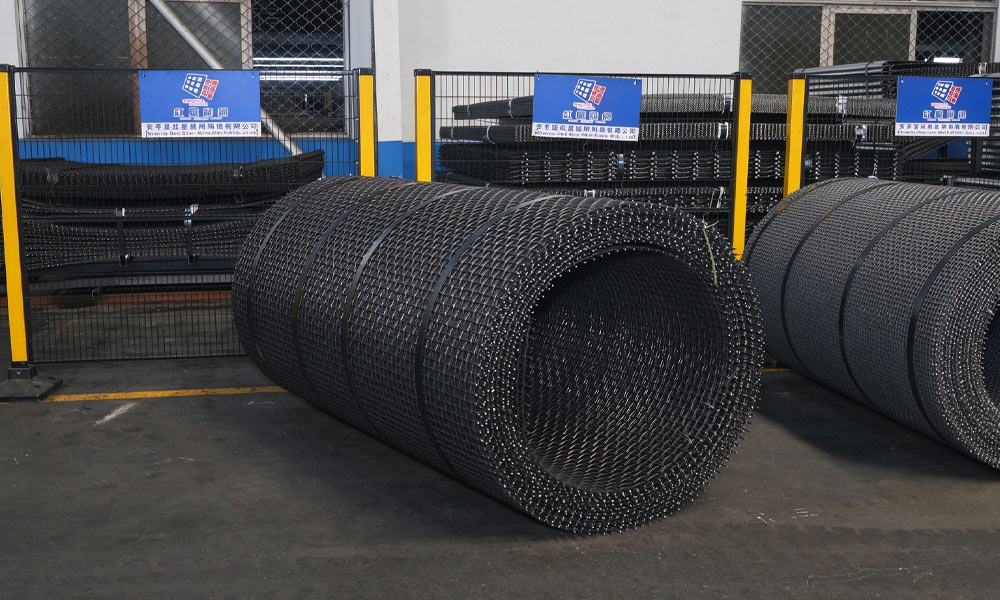
The third critical design detail that keeps your product gradation consistent from day one to the end of the panel’s life is a full triple crimp interlock pattern, the locking system in a heavy-duty Crusher Screen Mesh that stops individual wires from sliding and shifting apart under constant heavy abrasive load. Cheap single-crimp mesh lets the interlaced wires move and drift after a couple of weeks of heavy rock scouring, creating random distorted oversized gaps that let tons of oversize rock slip straight through into your finished aggregate product, ruining your gradation and triggering costly customer rejections. The triple crimp design bends each wire on both sides of every single intersection point three separate times, locking every wire completely immovable no matter how much heavy rock slides across its surface. Quarries that upgraded to this crimp pattern reported that their finished aggregate gradation stayed perfectly consistent for the full service life of every panel, with zero unexpected off-spec batches.
Thick Cross-Support Reinforcing Ribs Stop Full Panel Sagging
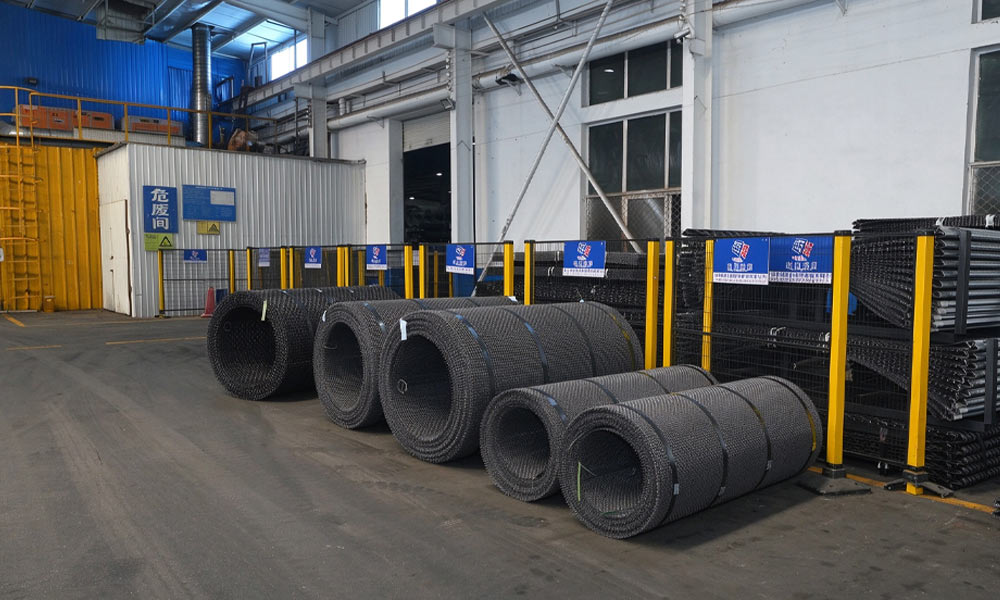
The final make-or-break heavy-duty feature that no light-duty mesh can match is integrated thick high-tensile cross-support ribs, the hidden structural part of a heavy-duty Crusher Screen Mesh that stops the whole panel from sagging and bending in the middle under maximum tonnage load. Generic wide-span mesh panels will sag down in the middle after a few weeks of 500+ tons per hour continuous operation, creating uneven material flow that piles up in the center of the deck and causes massive blinding and uneven wear. The heavy-duty design builds 10mm thick high-tensile steel reinforcing ribs directly into the weave every 300mm across the full width of the panel, adding enough structural rigidity that the panel will stay perfectly flat and level even under maximum full-load operation. Most crushing circuits that installed this reinforced mesh found that their total deck throughput jumped by 20%, and uneven localized wear across the panel was completely eliminated.
By prioritizing these four underrated, field-proven heavy-duty design features instead of just ordering the cheapest Crusher Screen Mesh you can find, you will drastically cut your total annual screen consumable costs, eliminate almost all unplanned mid-shift crushing circuit downtime, and keep your whole crushing and screening line running at peak consistent throughput month after month.