Gental Comparison of Cost and Service Life: Woven Metal Mesh and Wedge Wire Screens
When selecting screening media for mineral processing, the decision often comes down to woven wire screens or wedge wire screens. The real question extends beyond the initial price tag. To make a sound choice, you must consider the total cost of ownership, which hinges on service life, maintenance frequency, and performance under your specific conditions, such as processing abrasive chromite or sticky, wet bauxite.
Initial Cost and Structural Differences
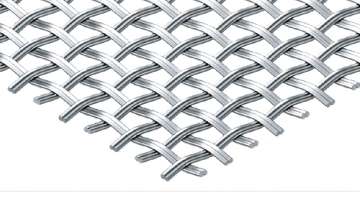
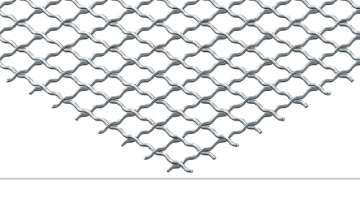
In terms of initial cost, woven wire screens typically offer an advantage. They are manufactured by weaving wires together, a standardized process that keeps costs lower for common mesh sizes. Wedge wire screens, constructed by welding individual trapezoidal profile wires onto support rods, involve a more complex fabrication process. This is especially true for custom slot sizes or panel shapes, leading to higher material and labor costs and a greater upfront investment.
Buying Price vs. Total Cost of Ownership
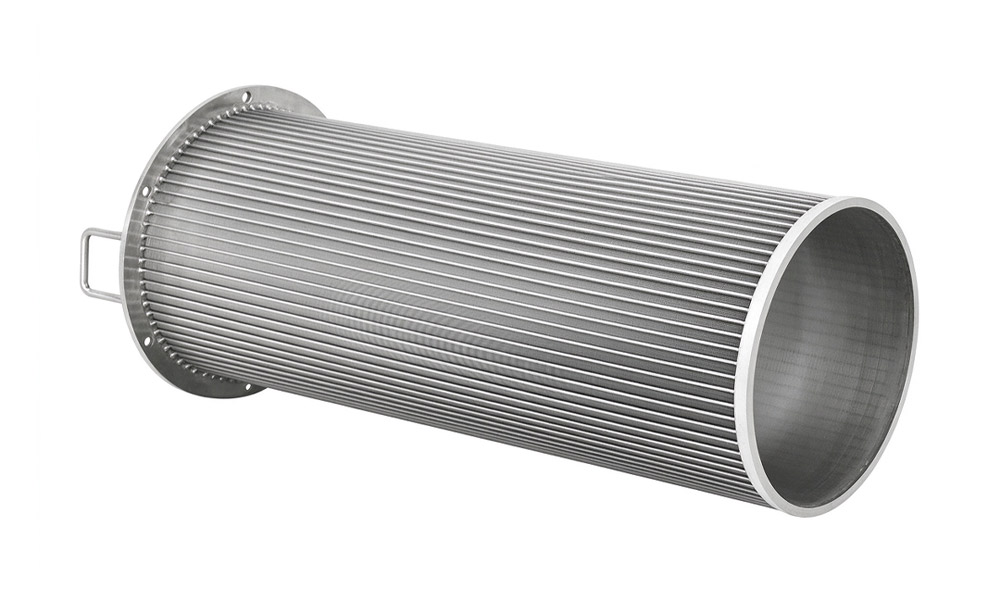
The invoice tells you what you paid on Tuesday; it says nothing about what the screen costs across the quarter, and that gap is where most purchasing mistakes live. A woven metal mesh panel is comparatively cheap to produce, easy to stock in standard sizes, and simple to swap when something tears, so on a tight capex week it feels like the responsible choice. Wedge Wire Screens, by contrast, are built from profiled wires welded or looped onto support rods or frames, often custom-shaped to the deck, and that manufacturing intensity shows up in the quote before a single ton of material has passed through. But total cost of ownership changes the story: wedge wire usually blinds less, holds aperture accuracy longer, resists pegging in sticky or fibrous feeds, and survives abrasion that would shred plain weave mesh in a fraction of the time. If a cheaper mesh needs four changeouts while one wedge wire panel does the same job once, the “expensive” option may actually be the bargain, especially when downtime on a critical screen costs more per hour than the panel itself. The gentle way to compare them is not “which is cheaper” but “which one disappears from the maintenance report.”
Abrasion, Blinding, and the Quiet Death of Aperture Accuracy
Service life is never just a matter of metal thickness, because a screen dies when it stops sizing correctly, not when it finally falls out of the frame, and that distinction matters enormously in this comparison. Woven mesh relies on crimped wire crossings that can loosen under vibration, stretch under impact, and slowly migrate until a 10 mm opening quietly becomes 11.5 mm and your product spec starts drifting without anyone noticing. Wedge Wire Screens present a continuous, smooth surface along the slot direction, so particles tend to ride and release instead of wedging into square corners, and the profile wire keeps the opening geometry far more stable over thousands of operating hours. In sticky bauxite, moist coal, sugar juice, wastewater screenings, or mineral dewatering, wedge wire often looks almost bored by material that would clog woven mesh into early retirement. That said, woven mesh is no pushover in dry, free-flowing, non-abrasive duties where apertures are large, feed is kind, and the plant simply needs air and tonnage movement at low capital risk. The realistic rule of thumb is simple: woven mesh is the economical generalist, while wedge wire is the long-game specialist that protects gradation and cuts cleaning labor in nasty service.
Where Each Screen Actually Pays Back
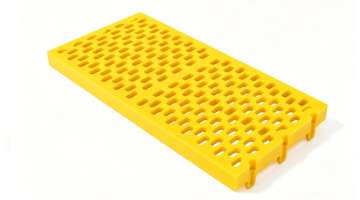
Instead of asking which screen is “best,” it helps to picture the two technologies as different kinds of employees—one is the dependable temp you can rotate anywhere, the other is the senior technician you hire for the job that keeps breaking. Woven metal mesh shines in quarry scalping, coarse sorting, temporary circuits, pilot plants, agricultural grading, and operations where mesh size changes frequently and panels are swapped to follow the product mix; here, cheap repeatability beats long-life rigidity. Wedge Wire Screens earn their money in dewatering bins, centrifuge feed pans, mineral processing decks, pulp and juice screening, ash handling, and any line where blinding, corrosion, and precise slot control decide product value or regulatory compliance. Maintenance culture also tips the scale: a site with a skilled crew and spare panels on the rack can run woven mesh very cheaply, while a lean operation with no appetite for frequent stoppages may save more money by paying upfront for wedge wire and barely touching the deck for a season. The gentlest, most honest recommendation is to stop forcing one technology to do everything and instead build a screen strategy where each duty gets the mesh it actually deserves.
Service Life and Durability in Operation
Service life is critical and highly application-dependent. Woven wire screens are durable, but their potential weak point is the wear at the wire crossovers (crimps) under highly abrasive loads, like those from hard chromite ore. Wedge wire screens excel in longevity for challenging duties. Their continuous slot design eliminates crossover wear points, the profile wires are often thicker and made from wear-resistant alloys, and the welded structure provides superior resistance to deformation under high tension and impact. In severe abrasive applications, the extended service life of wedge wire can offset its higher initial cost by reducing replacement frequency and downtime.
Total Cost of Ownership and Application Fit
A true comparison requires evaluating the total cost of ownership. This includes the purchase price plus all associated costs: downtime for changes, labor, and disposal. For high-abrasion, high-tonnage coarse screening, the superior durability of wedge wire screens often results in a lower TCO over time. For less severe duties, such as fine screening of less abrasive materials, woven wire screens provide a reliable and cost-effective solution. The goal is not to find a universally superior product, but to select the screen that delivers the best cost-to-performance ratio for your specific material, throughput, and operational priorities, ensuring the lowest cost per ton processed.
The final decision should be based on a detailed analysis of your screening task. Key factors include the abrasiveness of your material like the chromite or bauxite we've discussed, the required aperture size, deck tension, and the operational impact of downtime. By conducting this comprehensive cost and service life analysis, you can choose the screening media that offers the greatest reliability and value for your operation. Reach out to our screening specialists to compare woven wire and wedge wire options tailored for your mineral processing circuit.