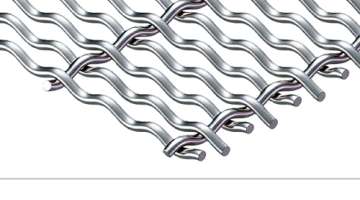
Carbon Steel Woven Screen For Aggregate and Mining Screening
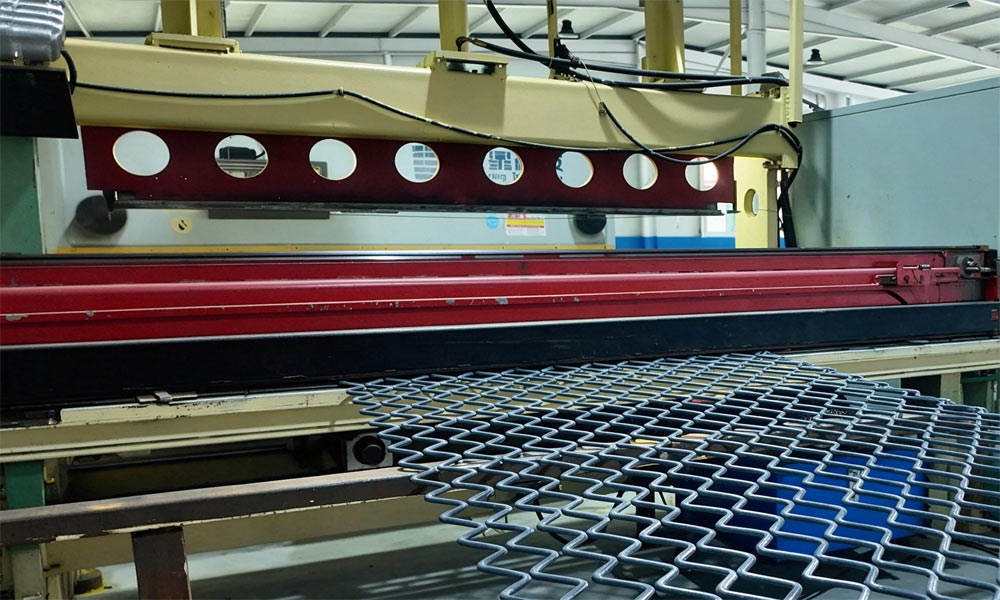
There is little room for clever advertising or "marketing fluff" around aggregate and mining screen separations. All that matters is a robust, proven product which can take the relentless abrasive action, high kinetic energy and day-to-day unpredictability of reducing blasted material from an opencast mine or quarry. Carbon Steel Woven Screen has been the go-to solution for this task for many years. It may not be the latest development or technological innovation, nor one that commands the headlines and press releases of other products, but for the simple reason that it offers an optimal combination of key characteristics required by aggregate and mining screening, it continues to dominate specification in this field worldwide. In this article we look at the inherent benefits of using Carbon Steel Woven Screen, its ability to withstand the impact of heavy oversize rock, maintain a fixed screening aperture throughout its life, and some tips to extend its overall running time in your plant.
Why Carbon Steel Is So Well Suited To Aggregates And Mining
There are a number of reasons why Carbon Steel Woven Screen continues to feature so prominently in the aggregate and mining sector, despite the continual arrival of competing specialist products. A range of medium carbon steels can be produced to meet specific requirements, offering a good mix of yield and elongation to give adequate resistance to the sharp, abrasive action of the reduced aggregate and mineral being screened. However the material will still be sufficiently flexible to cope with the impact of any significant oversize passing through the feed end of a screen. Many of the competing materials may succumb to unpredictable attack or rapid deterioration under certain operating conditions. By contrast, the mechanical characteristics of carbon steel are very well established, and known and understood by all who specify, procure and run this type of equipment. Furthermore, the material is largely unaffected by ambient conditions, the nature of the minerals processed or low levels of hydrocarbon contamination.
Takes Heavy Impact From Oversized Feed
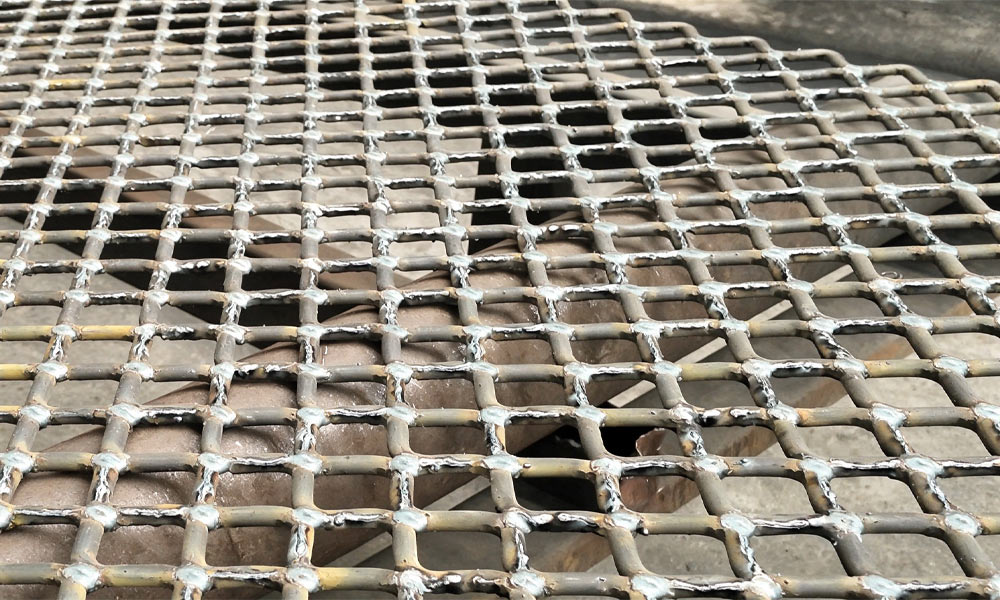
As noted above, one of the principal benefits of Carbon Steel Woven Screen is its capacity to accept heavy impact from oversized material at the feed end of the screen. It is common for a proportion of oversize to pass the primary reduction stage and fall onto the screening surface, often exceeding the nominal maximum feed specification for the screen. Depending on the type of screen cloth, this can result in either the screen fracturing or being breached completely. With a woven construction, the applied load is shared between several neighbouring strands of the mesh, allowing the carbon steel to yield slightly under the impact and continue to function. As a result, occasional runs of unusually high oversize can be tolerated without forcing the plant to shut down and replace the complete screen.
Fixed Screening Cut Point Throughout Product Life
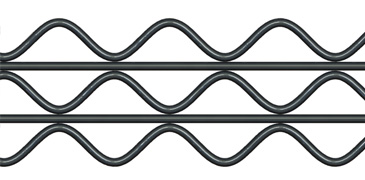
Another benefit is that the screening aperture will remain essentially unchanged from new condition until the screen reaches the end of its useful service life. The regular pattern of the weave ensures that each opening maintains a consistent profile and cross-section, resisting distortion due to the loads imposed during screening. This therefore allows the user to fix the desired cut-point for the product stream to the screen at the outset, and know that it will be maintained throughout the period that the screen is in use. With other forms of screen e.g. perforated metal or injection-molded plastic, the openings can become progressively distorted and non-uniform as the product progresses through the screen's life, leading to significant quantities of off-spec material requiring reprocessing. Of course, with a woven screen the user must plan to change the mesh once a predictable degree of wear has occurred.
Ensure Correct Fit To Prolong Running Time
Finally, to benefit from the above attributes and achieve the maximum possible running life, it is important that the screen is fitted correctly. Firstly, the mesh should be evenly stretched across the full area of the screen, avoiding any low areas where the screen could rub on the underlying screen bearers and wear through. Secondly, the bearers should be spaced appropriately for the dimensions of the particular mesh being used, to avoid excessive deflection of the screen and consequent premature failure. Additionally, when commissioning a new screen it is worth applying a light top dressing of small material to allow the screen to bed in to the incoming feed. If the above points are addressed, a suitably selected Carbon Steel Woven Screen can provide a substantially extended period of satisfactory operation.
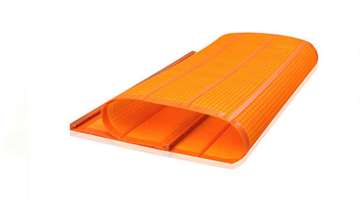
Overall, where an uncomplicated, tried-and-tested product is needed to screen and separate heavy aggregates and mined minerals, there is currently no superior option to Carbon Steel Woven Screen. Not only will the material outlast many rival high-cost products when subjected to abrasive and impacting action, but the fixed aperture of the screen will allow the user to maintain a steady product output. Naturally, there are specialist circumstances (e.g. fines, high moisture content, aggressive chemicals) where other materials such as Polyurethane or Stainless Steel may be preferred, but for routine screening of aggregates and minerals, the benefits of a Carbon Steel Woven Screen are hard to beat.