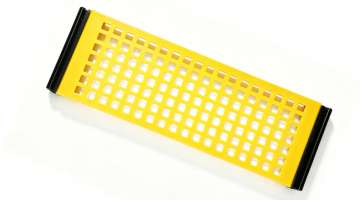
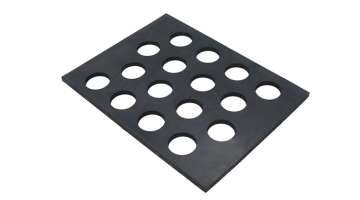
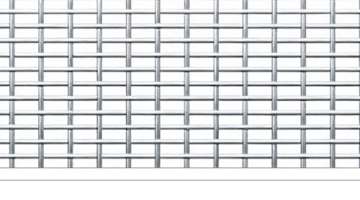
Anti-Clogging Screen Panel For Low-Maintenance Continuous Screening
Continuous production operations live or die by unbroken runtime, and the last thing a plant needs is a screening deck that forces the team to stop the line every few hours for manual cleaning, prying out lodged particles, or patching up prematurely failed sections of mesh. Anti-Clogging Screen Panel designs are built specifically for this reality, delivering stable long-running performance that cuts almost all the routine hands-on maintenance work that conventional decks demand. This is not just a small incremental improvement, it is a shift that rewrites the maintenance routine of the entire screening circuit, turning a high-labour, high-downtime duty into a set-and-forget system that keeps running shift after shift without interruption. This article breaks down the hidden maintenance costs of conventional panels, how the anti-clogging design eliminates routine cleaning, how it reduces unexpected failures, and how plants can integrate it into a continuous production workflow.
The Hidden Maintenance Burden Of Conventional Screen Panels
The hidden maintenance burden of conventional screen panels is something every continuous production plant learns to accept as unavoidable, but an Anti-Clogging Screen Panel eliminates almost all of it completely. On a standard static mesh deck, operators have to patrol the screen every hour, watch for the first signs of blinding, and stop production regularly to spray down the deck, brush out lodged particles, or dig out pegged material that the wash water cannot dislodge. The maintenance team also has to carry a full stock of spare wire, clamps, and tensioning tools on site at all times, because localized blinding creates overloaded zones that wear through unexpectedly, creating sudden failures that need immediate patching to avoid losing hours of production. Most plants never add up the total cost of this work, but the combined labour, spare parts, and lost production time makes conventional panels far more expensive to run than their initial purchase price suggests.
How Anti-Clogging Geometry Eliminates Routine Manual Cleaning
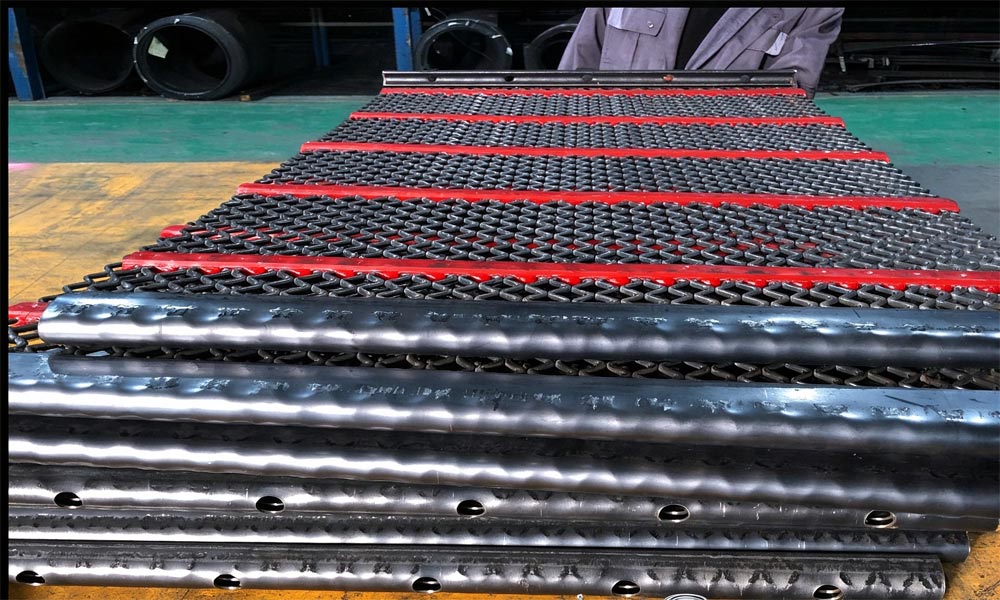
Anti-clogging geometry eliminates routine manual cleaning because an Anti-Clogging Screen Panel does not give particles a stable place to lodge or build up a blinding mat in the first place. The dynamically flexing profiled wires gently disturb any near-size particle that tries to wedge itself in an aperture, ejecting it back into the mainstream material flow before it can lock into a permanent peg. There are no flat continuous surfaces for damp fines and sticky residue to spread across, so the cohesive blinding mat that forces operators to stop and wash the deck never gets the chance to form. This means the screen can run for full shifts, and even multiple consecutive days, without needing any manual cleaning at all. The plant no longer has to schedule dedicated downtime for deck brushing, high-pressure washing, or manual peg removal, and operators can shift their attention to other parts of the process that actually need active monitoring.
Reducing Unexpected Failures And Unplanned Intervention
Reducing unexpected failures and unplanned intervention is the next big low-maintenance benefit, because an Anti-Clogging Screen Panel never develops the localized overloaded zones that cause conventional panels to fail without warning. When a conventional deck blinds across half its surface, all the incoming material gets diverted onto a tiny narrow strip of still-open mesh, and that concentrated tonnage wears that small section of wire through in a fraction of the expected service life. The anti-clogging panel keeps nearly its entire surface active at all times, so the load and abrasion are spread evenly across every part of the deck, and no single section of wire has to carry more than its fair share of tonnage. This means the panel wears slowly and uniformly, with no hidden overloaded spots that can fail suddenly in the middle of a production run. The maintenance team no longer has to make unexpected emergency visits to the screening deck in the middle of the night to patch a broken wire and get production back online.
Integrating Low-Maintenance Panels Into Continuous Workflows
Integrating low-maintenance panels into continuous workflows is the final step that unlocks the full value, because an Anti-Clogging Screen Panel will never deliver its full low-maintenance benefit if the plant keeps applying old conventional screen operating habits to it. Teams no longer need to assign a dedicated operator to patrol the screening deck and watch for blinding, they can instead rely on the stable, consistent performance of the anti-clogging design to hold throughput and separation quality steady. The plant can also extend the interval between full deck inspections, because the even wear pattern means there are no surprise failures to catch, and the maintenance team only needs to check the panels during scheduled full process shutdowns that were already planned for other parts of the plant. Over time, this turns the screening circuit from one of the highest-maintenance parts of the operation into one of the most reliable, low-friction units in the whole continuous production line.
Continuous production operations do not have to accept frequent manual cleaning, unexpected panel failures, and constant unplanned downtime as the unavoidable cost of running a screening circuit, and anti-clogging screen panel designs eliminate almost all of that unnecessary maintenance work. The anti-clogging geometry stops pegging and blinding before it ever starts, removes the need for routine mid-shift manual cleaning, spreads abrasion evenly across the full deck to prevent sudden failures, and integrates seamlessly into a low-intervention continuous production workflow. This is not a one-size-fits-all solution for every small batch operation, and sites that only run their screen for a few hours a week may not see the full labour saving, but for any plant that demands unbroken, low-friction runtime 24 hours a day, this design is one of the most impactful upgrades they can make to their screening circuit.