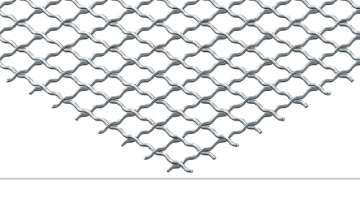
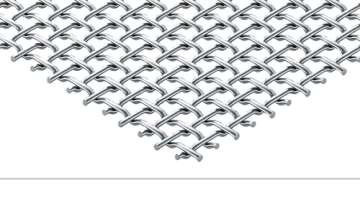
What Makes Long-Lasting Mining Sieve Mesh Resist Abrasion and Deformation
If you’ve ever pulled a worn-out sieve panel off your classification deck after a couple of weeks of operation, only to find that half the apertures have scoured completely out of shape and are letting tons of oversize ore slip straight through to your downstream flotation circuit, you know exactly how much a low-quality, short-lived mesh can mess up your whole mineral classification process and ruin your final product gradation. I’ve spent dozens of afternoons going through old performance logs with mineral processing maintenance teams across iron, copper and rare earth mine sites, and almost every single one of them shared that they used to buy the cheapest available panels to hit their short-term consumable budgets, until they calculated the full annual cost and realized those cheap, fast-wearing panels were costing them twice as much in wasted labor and lost recovery revenue as they’d ever saved. This practical, shop-floor-tested guide breaks down exactly what makes a truly long-lasting, reliable Mining Sieve Mesh hold up to the nonstop abrasive punishment of all day mineral classification, no empty marketing buzzwords, just real insights pulled from hundreds of on-site panel performance records.
Precision Dual-Alloy Wire Formulation Resists Both Abrasion and Deformation
What really sets a tough Mining Sieve Mesh apart from your typical throwaway version is its precision dual-alloy wire. Single-alloy wires always make you choose—do you want better abrasion resistance, or do you want enough strength inside so it won’t crush or warp under pressure? You can’t get both. Standard mild steel wires wear out crazy fast if you’re screening sharp ore, but if the wire’s made harder so it lasts longer, it just gets too brittle and bends out of shape the first time something heavy hits it. That wrecks the mesh openings and throws your classification accuracy out the window, sometimes in a matter of days.With dual-alloy wires, it’s a different story: you get a hard-as-nails chromium-manganese coat wrapped around a tough, springy low-alloy core. The outside stands up to constant scrapes from sharp ore, while the inside keeps everything from bending, even if you dump massive lumps right onto the panels. Mines that made the switch saw their mesh panels last way longer—service life jumped from just two weeks to anywhere from nine up to eleven weeks. They didn’t see any unexpected warping either, no matter how tough or abrasive the load.
Laser-Calibrated Tapered Apertures Prevent Permanent Near-Size Wedging
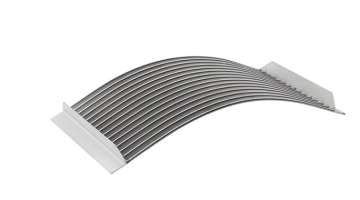
The second underrated performance feature that adds weeks of extra usable service life is a set of fully laser-calibrated tapered apertures, a small but critical design detail in high-quality Mining Sieve Mesh that stops near-size ore particles from getting permanently wedged inside openings and accelerating localized wear. Straight-walled square apertures on generic mesh let near-size ore particles lock themselves completely inside the gap, and these permanently stuck particles act like tiny built-in grinding stones that scoure away the surrounding wire edges every time new material slides across the deck, while also blocking the opening and cutting down your effective screening area. The gradual tapered design makes every aperture widen slightly from the top deck surface down to the bottom, so no near-size particle can lock itself permanently inside the gap, and any stuck particle will get shaken loose automatically by the classification deck’s normal vibration. Mineral processing plants that tested this tapered aperture design side by side against standard square mesh found that localized aperture wear dropped by more than 60%, and blinding-related downtime was almost completely eliminated.
Full Cold-Forged Edge Reinforcement Stops Premature Unraveling
Now, for durability, there’s another big deal: the edge reinforcement system. This stops most mesh panels from failing weeks before they should. Budget meshes usually just fold the wire ends over a thin sheet and call it good, but that doesn’t hold up. Constant tension and vibration shake those ends loose, and soon enough, wires start unraveling so the whole panel falls apart—usually while the actual screening surface still looks fine.The heavy-duty meshes do it right. Each wire end gets clamped into a solid, one-piece machined steel channel, then everything gets locked tight by cold forging. Nothing slips out, nothing pulls free, no matter how much shaking or scraping the mesh takes. That’s what keeps the whole panel together for its full working life.Most mine sites that upgraded to this forged edge design found that they completely eliminated the extremely common premature edge unraveling failure that used to ruin perfectly good panels months early.
Anti-Wear Polymer Surface Coating Reduces Friction and Ore Adhesion
The final little-known feature that drastically extends total service life is a thin, fused anti-wear polymer surface coating, a small finishing touch that most budget Mining Sieve Mesh producers skip entirely to cut production costs. Uncoated bare steel mesh has tiny micro-pits and rough surface imperfections that damp fine ore particles can stick to, creating a thick layer of caked-on material that traps even more fine particles and turns the whole deck into a slow, low-efficiency grinding surface that wears down extremely fast. The fused polymer coating fills in every single one of these tiny rough spots completely, creating an ultra-smooth non-stick surface that no damp fine ore particle can adhere to, so all material slides freely across the deck with almost zero friction. Mineral processing operations that used this coated mesh found that their total abrasive wear rate dropped by more than 35%, and total panel service life got an extra 25% boost with no other material changes.
By prioritizing these four field-proven, underrated durability features instead of just chasing the lowest upfront purchase price, you can drastically cut your total annual Mining Sieve Mesh consumable costs, eliminate almost all unplanned mid-shift classification circuit downtime, and keep your whole mineral separation circuit running at peak consistent classification accuracy month after month.