Woven Screen for Coal Processing
If you’ve ever stood beside a coal preparation plant’s wet classification deck during a high-moisture winter shift, watching your crew spend hours scraping caked fine coal slime and sticky clay out of a blinded screen that completely stopped processing material in less than two hours, you know exactly how frustrating and costly these constant clogging incidents are, dragging down your plant’s clean coal yield, wasting huge amounts of labor and leaving your final coal product with inconsistent sizing that ruins downstream washing efficiency. Many coal plant operations supervisors I’ve worked alongside over the years shared that they spent years testing all kinds of non-metallic screening media for wet coal processing, only to find that none of them could balance long wear life, consistent anti-clogging performance and reliable sizing accuracy in the messy, high-abrasion environment of wet coal classification.
Abrasion and Clay-Resistant Wire Formulation
The first core design feature that makes a specialized woven screen for coal Processing perfectly suited for wet coal classification work is its carefully calibrated wire material formulation, which balances excellent impact toughness with extreme resistance to the unique abrasives and sticky contaminants found in raw coal feed. Unlike standard general-purpose mining screens that use ultra-hard brittle wire prone to sudden fracture under repeated impact from sharp shale and irregular coal fragments, a high-quality woven screen for coal Processing uses double-tempered 65Mn spring steel that delivers surface hardness up to HRC52 while retaining enough core flexibility to absorb repeated impact from 25kg+ raw coal boulders without shattering. For coal processing operations that handle high-clay raw coal with high levels of sticky mud, the wire surface can also be treated with a specialized smooth polished passivation process, which eliminates the tiny rough burrs that would otherwise catch and hold wet clay particles, drastically reducing the rate at which sticky material builds up on the screen surface. This targeted material tuning eliminates the two most common premature failure modes that plague generic screens in coal washing plants: sudden brittle fracture from shale impact and rapid abrasive thinning from sharp quartz and pyrite particles mixed in with the raw coal.
Dual-Offset Anti-Blind Lock-Crimp Weave Structure
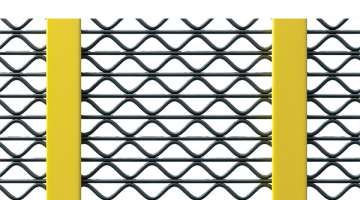
The second key performance advantage that solves the most persistent pain point in wet coal processing is the unique dual-offset anti-blind lock-crimp weave structure built into every well-engineered woven screen for coal Processing, which drastically reduces the pegging and blinding that constantly plagues standard screens in high-moisture high-clay coal conditions. Ordinary plain woven mesh uses straight, perfectly aligned apertures that let wet near-size coal particles and sticky clay chunks wedge tightly into the openings, locking in place and sealing off the flow path so fine coal particles can no longer pass through, even when you run the deck at full vibration intensity. A purpose-built woven screen for coal Processing offsets every adjacent row of crimped wires by half an aperture width, creating a staggered non-straight flow path that breaks apart sticky clay clumps as material moves across the deck, while the subtle tapered inner profile of each opening prevents near-size coal particles from getting permanently wedged in place. The interlocked crimp design also lets every individual wire make tiny independent micro-movements under continuous high-frequency vibration, which shakes loose any semi-stuck fine coal or clay particles before they can harden into a permanent clog.
High Open Area for Maximum Classification Efficiency
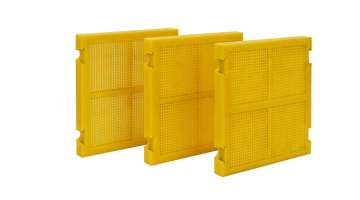
The third critical operational benefit that directly boosts your entire coal plant’s clean coal yield is the carefully optimized high total open area of a professional-grade woven screen for coal Processing, which delivers far faster, more accurate wet classification than most non-metallic dewatering and sizing screening media on the market. Most polyurethane wet coal screen panels with the same nominal aperture size have 30% to 40% less total open area, because their thick heavy support structure takes up a huge amount of surface space that could otherwise be used for material to pass through. A well-designed woven screen for coal Processing uses precisely calculated wire diameters that balance excellent abrasion resistance with maximum possible open area, delivering total open area figures between 38% and 48% that lets fine undersize coal particles pass through the screen far more quickly, drastically reducing the amount of near-size material that gets unnecessarily carried over into the oversize fraction. Many coal processing operations that switched from PU classification panels to purpose-built woven mesh reported a 3% to 5% increase in their total clean coal yield immediately after the upgrade, with no need to make any expensive modifications to their existing vibrating screen machines or add extra downstream classification equipment. This improved classification accuracy also drastically reduces the amount of misplaced fine slime that gets carried over into the coarse coal fraction.
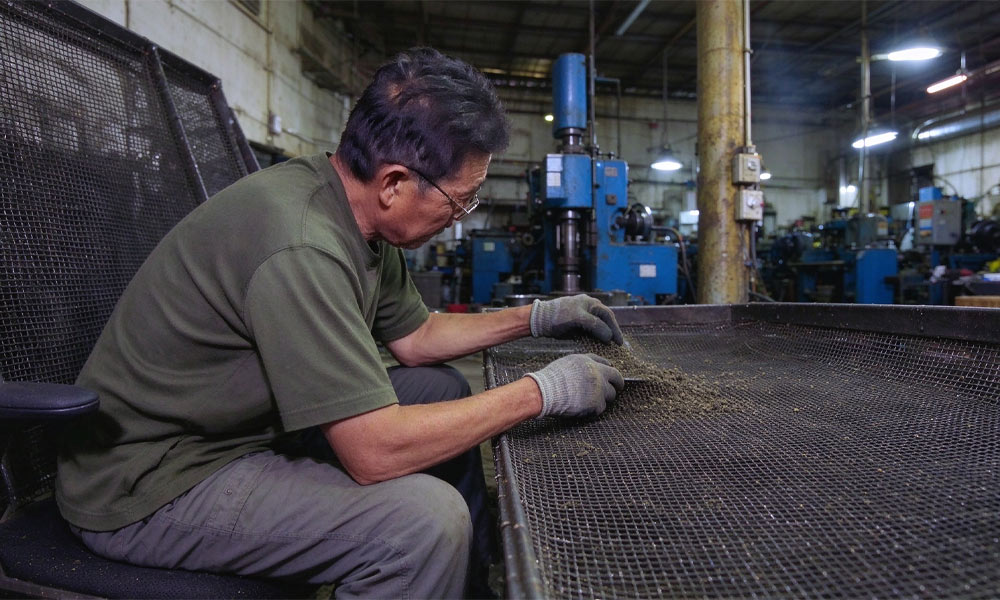
Low-Temperature Resistant Field Adaptability
The final practical operational advantage that makes this screen perfectly suited for harsh coal processing plant conditions is its excellent low-temperature impact resistance and universal on-site adaptability, which lets it perform reliably even in cold winter open-pit coal processing environments where temperatures can drop well below freezing. A properly heat-treated woven screen for coal Processing retains almost all of its core toughness and impact resistance even at temperatures as low as -25°C, so it will not turn brittle and shatter under heavy impact, unlike many polyurethane screening media that lose most of their structural flexibility in extreme cold and crack apart easily when frozen coal chunks hit the surface. Unlike many specialized non-standard wet coal screening media that require custom modified screen decks and special installation tools, this screen is fully compatible with every standard heavy-duty coal processing vibrating screen, and your existing maintenance crew can install and tension a full panel in under 40 minutes using their standard existing tools and procedures, no special training or custom fabrication work required. This rugged, no-fuss design makes it suitable for every stage of your coal preparation plant, from raw coal pre-desliming, to coarse and fine wet classification, to final clean coal dewatering.
Built specifically to stand up to the unique combination of heavy coal impact, sticky clay blinding, high-abrasion shale and pyrite, and extreme temperature swings that define real-world wet coal classification conditions, a purpose-built woven screen for coal Processing drastically reduces blinding-related downtime, improves classification accuracy, and delivers far higher long-term cost efficiency than any generic coal processing screening media on the market.