Square Woven Screen Pros and Cons for Aggregate Processing
If you’ve ever stood beside an aggregate processing plant’s final sizing deck mid-summer, watching your team spend hours manually digging wedged flat aggregate chips out of slotted screens that blinded over completely after a few hours of processing crushed granite or limestone, you know exactly how much this constant unplanned work drags down your plant’s production output and ruins the consistent particle shape of your finished construction aggregate products. Many aggregate plant operations supervisors I’ve worked alongside over the years shared that they have been debating the tradeoffs of different woven screen aperture shapes for decades, trying to find the perfect balance between high throughput, accurate sizing, long service life and low blinding risk. A clear, practical breakdown of square woven screen pros and cons is the best way to understand exactly where this screen type will deliver massive performance gains for your aggregate operation, and where you might be better off sticking with a different aperture shape to avoid predictable operational pain points.
Industry-Leading High Open Area for Maximum Aggregate Throughput
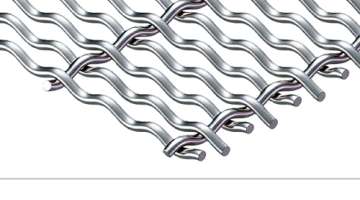
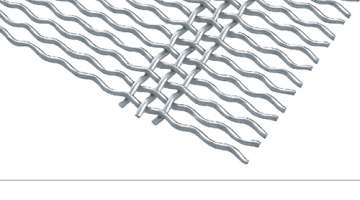
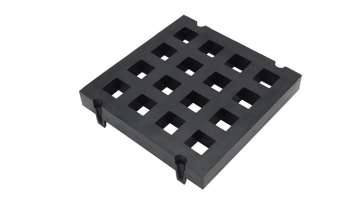
The first major advantage that sits at the top of every list of square woven screen pros and cons is the industry-leading total open area that square aperture design delivers, which immediately boosts your aggregate screening deck’s maximum hourly processing capacity far beyond what slotted or rectangular aperture screens can achieve. On standard slotted woven screens commonly used in aggregate plants, the narrow elongated openings are spaced out with large solid wire gaps between them, resulting in total open area that rarely tops 28% of the total screen surface, leaving huge amounts of unused space that could be used to move undersize aggregate particles through the deck. A well-manufactured square opening woven screen arranges perfectly uniform equal-sided square apertures in a tight repeating grid pattern, delivering total open area between 42% and 52% that no other common aperture shape can match, creating far more unobstructed flow space for crushed rock, sand and gravel particles to pass through.
Unbiased Sizing That Delivers Perfect Cubical Aggregate Shape
The second huge operational benefit that makes square woven screens so popular in aggregate processing is their completely unbiased sizing performance, a key point that always stands out in any honest breakdown of square woven screen pros and cons. Slotted aperture screens only let irregularly shaped aggregate particles pass through if they are perfectly aligned with the long axis of the slot, which traps large volumes of flat, elongated crushed rock chips that are technically undersize but cannot fit through the narrow opening, forcing these unwanted flaky particles to stay in the oversize fraction and get sent back to the crusher for reprocessing. A square woven screen with equal width and height dimensions in every opening lets any aggregate particle that is smaller than the nominal aperture size pass through no matter what orientation it lands in, so you never artificially trap correctly sized particles just because they are flat or elongated. This unbiased sizing drastically reduces the amount of flaky, poorly shaped aggregate that ends up in your final oversize product, delivering a far higher percentage of well-graded cubical aggregate that meets strict highway and construction industry particle shape specifications, no extra crushing or shaping work required. Many aggregate operations that switched to square woven screens reported that their final product’s flakiness index dropped by more than 15% immediately after the upgrade, making their premium graded aggregate product far more marketable and letting them charge a higher price per ton for their finished material.
Higher Pegging Risk for Highly Angular Sharp Aggregate
Now moving to the real operational downsides, the first major disadvantage that cannot be overlooked in any fair breakdown of square woven screen pros and cons is the higher pegging and particle wedging risk that comes with perfectly square openings, when you are processing extremely hard, highly angular sharp crushed aggregate like granite, basalt or trap rock. Unlike slotted screens where narrow openings make it almost impossible for a near-size aggregate particle to wedge completely tight, a square opening gives a sharp angular near-size rock particle four flat solid edges that can lock perfectly into place inside the aperture, creating a permanent peg that cannot be shaken loose even at maximum vibration intensity. For aggregate operations processing high volumes of sharp angular rock at near the exact nominal aperture size, this pegging rate can be high enough that your crew needs to stop production once every shift to manually pry wedged particles out of the screen, which adds extra unplanned labor time and creates small but consistent production delays that add up over the course of a month. This pegging risk is almost completely negligible when processing rounded natural gravel and river rock, but it becomes a very real operational pain point when processing high volumes of sharp crushed angular aggregate.
Slightly Shorter Service Life for Extreme High-Impact Scalping
The second notable disadvantage that is often omitted from overly promotional marketing material, but must be included in a complete, honest breakdown of square woven screen pros and cons, is the slightly shorter average service life that square woven screens deliver compared to heavy-duty slotted screens in extremely high-impact primary scalping applications. On slotted woven screens, the long continuous wires run parallel to the material flow direction, so heavy falling aggregate boulders strike the strong thick wire body instead of landing directly on the edge of an aperture, distributing impact forces across a much larger area and reducing localized stress. On square woven screens, the warp and weft wires intersect at right angles to create the square apertures, so heavy falling boulders can strike directly on the sharp edge of an aperture corner, creating localized stress concentration points that can develop small fatigue cracks over time, especially when processing large heavy 100kg+ aggregate boulders in primary ROM scalping. For secondary and tertiary fine aggregate sizing applications where maximum feed particle size is under 100mm, this difference in service life is almost unnoticeable, and square woven screens will last just as long as equivalent slotted screens.
By weighing these clear, real-world square woven screen pros and cons against your exact aggregate processing workflow, the type of rock you process, your typical feed particle size distribution and your top operational priorities, you can make a fully informed decision that lets you deploy square woven screens in the parts of your circuit where they will deliver massive throughput and product quality gains.