Screen Mesh For Mining: 4 Key Durability Features for Coal and Ore Screening
If you’ve ever yanked a completely shredded, scoured-through screen panel off the sizing deck in a busy coal processing plant—just twelve days after it first went into operation, right in the middle of a frantic winter heating season production rush—you know exactly what that nightmare feels like. Your whole carefully planned weekly production schedule gets thrown completely out the window, you’re bleeding cash fast on emergency overtime repairs and rush shipping fees for replacement panels, and suddenly you’re at real risk of missing those strict non-negotiable delivery deadlines your downstream power plant and steel mill customers demand. I’ve spent years hanging out and chatting with grizzled maintenance supervisors across northern China’s coal and iron ore mining belts, and the story is almost always exactly the same: teams grab the cheapest available screen mesh to save a little money upfront, but when the full yearly cost audit comes around, the numbers slap them right in the face. Constantly replacing prematurely failed screens ends up costing them triple what they ever saved on the initial low-price purchase. That’s why this guide zeroes in on what actually matters for long-term durability of Screen Mesh For Mining—you can forget all the empty marketing buzzwords. These are practical, no-fluff insights straight from hundreds of real-world performance logs and decades of bruised knuckles working on mine floors in the field.
Impact-Resistant Alloy Formulation Handles Real Heavy Falling Ore Shock
First thing: the wire’s balance of surface hardness and inner toughness simply cannot be compromised, no matter how tight your budget might be. Imagine fist-sized chunks of raw run-of-mine ore and raw coal, fresh out of the primary jaw crusher, free-falling 3 meters down directly onto the screening deck at full 1000+ tons per hour production flow. Cheap generic mild steel mesh? It’ll dent, bend, stretch, and tear completely apart in less than two weeks, leaving large ragged gaps in the panel that let oversized unprocessed material sneak through and completely mess up your whole downstream ore and coal separation efficiency. Good purpose-built Screen Mesh For Mining uses a carefully calibrated balanced blend of manganese, molybdenum, and chromium, paired with a multi-stage low-temperature tempering process that delivers an ultra-hard wear-resistant surface but a shock-absorbent tough inner core—so it takes one heavy impact after another and bounces right back without deforming or snapping. Mines that stepped up their alloy formulation game reported that their average panel service life jumped all the way to 7 to 9 weeks instead of barely 10 days, even when processing sharp, high-density raw iron ore landing hard directly on the feed end of the deck.
Anti-Blinding Ceramic-Polymer Surface Coating Cuts Down Hidden Wear
Next up: a proper fused ceramic-infused polymer surface coating makes far more difference to total usable lifespan than most mine teams ever realize. Almost all budget low-cost mining screens skip this coating step entirely to cut manufacturing costs, and you can see the bad results in a caked-on layer of damp fine coal grime and deep scoured wear grooves after barely a week of continuous operation. Uncoated bare steel mesh is covered in tiny micro-pits, rough weld spots and surface imperfections where fine coal dust and sharp abrasive ore fines dig in and wedge themselves tight, turning every tiny flaw into a fixed abrasive anchor point that chews up the surrounding wire material far faster than normal. The right high-quality coating fills in every single one of those tiny imperfections completely, leaving a slick, non-porous surface that nothing clings to or wedges into. All fine material slides off quickly, and the total abrasive wear rate slows down dramatically. Mines using this coated Screen Mesh For Mining saw their total abrasive wear drop by over 40%, and those annoying 2-hour mid-shift blinding cleaning stops that used to happen every other day became extremely rare.
Locked Inter-Crimp Weave Structure Keeps the Whole Deck Solid Under Load
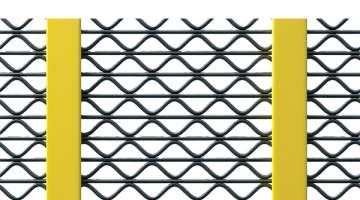
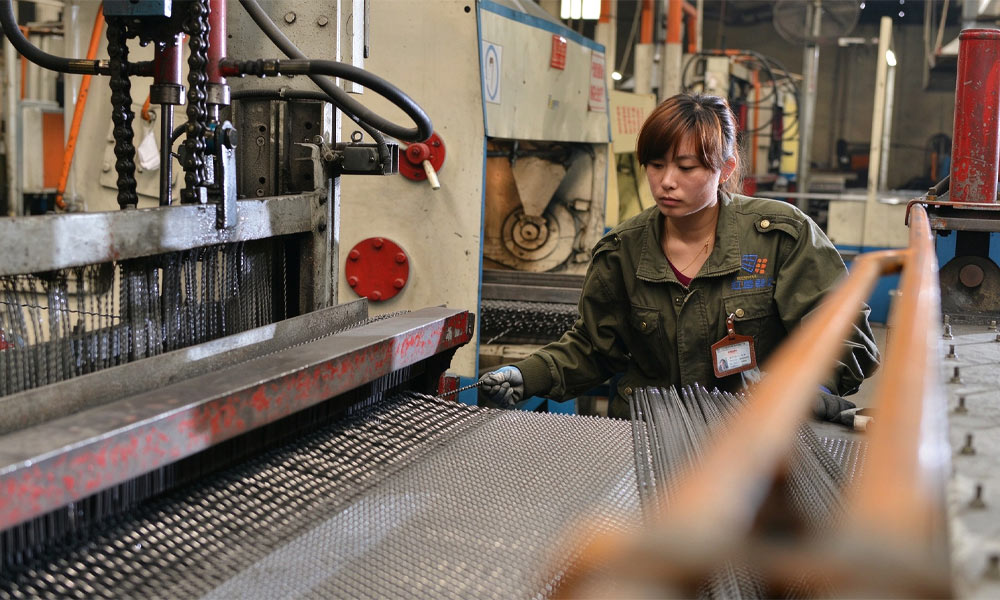
Third, it’s all about the actual weave structure that holds every single wire firmly in place across the full panel. Basic loose plain woven mesh lets individual wires wander, shift and slip out of alignment under months of constant heavy tonnage load, and soon some sections of the deck are stretched thin, sagging and failing way before the rest of the panel ever sees meaningful wear. The full locked inter-crimp design holds every wire tight at every single cross point, so nothing moves, slips or sags no matter how many thousands of tons of sharp ore and coal pour across it. The whole deck stays perfectly rigid and evenly tensioned, even running 24 hours a day for weeks on end. When mines ran side-by-side controlled tests comparing the locked inter-crimp weave against basic plain mesh, the difference was impossible to miss: no sagging spots, no uneven stretched sections, and total panel service life stretched nearly 50% longer under identical heavy production conditions.
Reinforced Forged Hook Edges Protect the Highest-Stress Failure Point
Last, you need a properly reinforced hook edge, because this is the single most common premature failure spot that almost no one talks about. Weak, thin stamped hook edges bend, crack and tear completely apart right where the mesh clamps onto the vibrating screen frame—a classic failure point that makes you junk an otherwise perfectly good panel that still has 70% of its usable wear life left. But heavy-duty forged hook edges, wrapped around a full hardened steel backing plate, spread out all the vibration stress and clamp tension evenly across the whole bend of the hook so nothing cracks, loosens or tears at the clamp site. Mine maintenance teams that upgraded to these reinforced hook edges found that almost all hook-related sudden failures completely disappeared, and every single panel easily reached its full rated service life before needing to be replaced.
If you focus on these four core durability features instead of just chasing the lowest price tag on the market, you’ll spend way less on total annual screen consumables over the year, dodge almost all those frustrating unplanned mid-shift breakdown headaches, and keep your ore and coal separation circuit running completely smooth through every busy high-demand production season.