Select Polyurethane Screens for Aggregate and Sand Processing
If you have ever run an aggregate and sand processing plant, you know how easy it is to pick the wrong polyurethane screen for your circuit, ending up with constant blinding, fast unexpected wear, or inconsistent finished product gradation that ruins your final material quality. After years working with quarry and sand plant operators across Hebei’s aggregate production belt, I have seen far too many operations waste thousands of yuan buying cheap generic polyurethane screens that fail in weeks, simply because they picked a product that was never designed for their specific material and process conditions. This practical, field-tested guide breaks down the step-by-step selection process to pick the perfect polyurethane screen for your unique aggregate and sand processing circuit, drawing on real on-site lessons generic supplier product catalogs never share.
Match Material Hardness To Your Exact Aggregate Abrasion Level
The first foundational selection step is picking the correct Shore A hardness grade of polyurethane that perfectly matches the abrasiveness and impact force of your specific aggregate feed, instead of defaulting to a generic medium-hardness one-size-fits-all product, and this simple choice will double the total service life of your PU Screen right away. If you are processing soft limestone or river sand with relatively low sharpness and impact force, you can pick a softer 60-65 Shore A grade that has maximum aperture flexibility for excellent anti-blinding performance on damp sticky sand, while if you are processing sharp crushed granite or basalt with high impact force and extreme abrasiveness, you should select a harder 75-80 Shore A grade that resists gouging and abrasive shear far longer. Picking a hardness that is too soft for your sharp high-impact aggregate will make the surface wear through in days, while picking a hardness that is too hard for your damp sand feed will make the apertures too rigid, leading to constant blinding that kills your throughput. This simple matching step eliminates the most common premature failure cause for aggregate plant polyurethane screens.
Pick Aperture Shape And Size Aligned To Your Target Product Spec
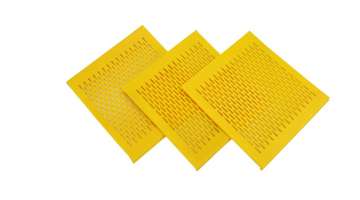
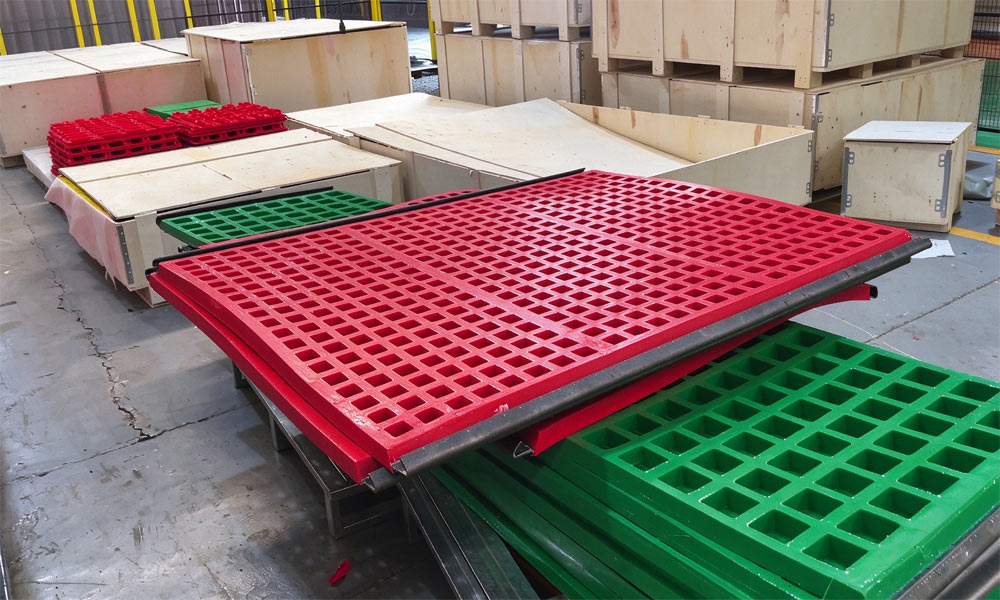
The second critical selection step is choosing the exact aperture shape and size that is calibrated to your finished aggregate and sand product’s required gradation, not just picking a size that roughly matches your target sieve, and this careful calibration will drastically boost your classification precision and finished product quality with your PU Screen. If you are sizing coarse 5-20mm aggregate, you can use square or round apertures that deliver sharp consistent separation with minimal pegging, while if you are processing fine damp manufactured sand, you should select long narrow slotted apertures that maximize water drainage and make it almost impossible for sticky near-size sand particles to wedge tight and blind the opening. You should also always test a small sample of your actual feed material with the supplier before ordering, to confirm that the selected aperture size delivers exactly your target cut point, instead of relying only on theoretical sieve size data that does not account for your real material’s unique particle shape. This level of targeted aperture selection eliminates almost all the oversize contamination and fine material loss that ruins finished aggregate product quality.
Select Panel Construction Style That Matches Your Deck Mount System
The third often-overlooked selection step is picking the exact panel construction and mounting style that is 100% compatible with your existing screening deck’s fastening system, instead of buying a panel that requires custom on-site modifications to fit, and this will eliminate all the fit-related issues that cause premature tearing and poor performance from your PU Screen. If your plant uses standard tensioned hook-style decks for high-speed coarse aggregate scalping, you should select reinforced tension hook panels with embedded steel cables that can handle full high-tension loading without tearing, while if you use modular bolt-down decks for fine sand dewatering, you should pick full flat modular panels with reinforced mounting holes that distribute bolt tension evenly without cracking. You should also always share your exact deck drawing and existing panel dimensions with the supplier before placing an order, to confirm that every edge profile, mounting hole position, and panel dimension matches your existing deck perfectly, with zero gaps, zero overhang, and no misalignment that causes uneven material flow. This perfect fit eliminates almost all the premature panel failures that happen from poor installation.
Zone Different Panel Types For Different Stages Of Your Circuit
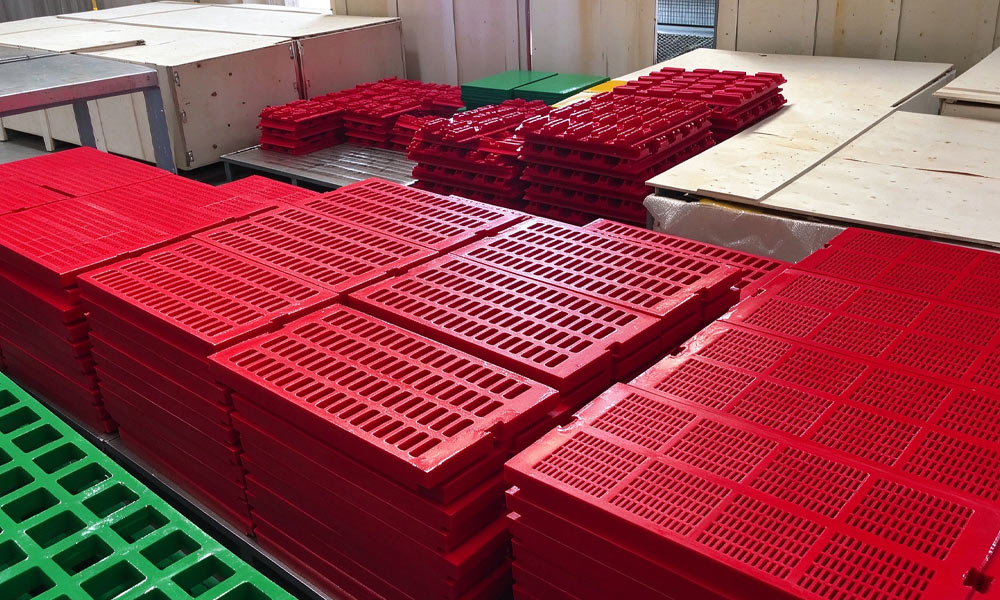
The final, highest-impact selection tip is not covering your entire deck with the exact same panel design, but instead selecting different specialized panels for different functional zones of your aggregate and sand circuit, so each section of the deck is optimized for its specific job, and this zoned selection strategy will unlock maximum total performance from your PU Screen. On the high-impact coarse scalping feed zone, install extra thick high-wear large aperture panels that can absorb heavy aggregate impact without wearing fast, on the middle fine sizing zone use precision-sized anti-blinding panels that deliver your exact target sand gradation, and on the final discharge end use high open-area slotted dewatering panels that cut your final manufactured sand moisture down to your required spec. This zoned approach lets you optimize every part of the deck for its unique duty, instead of forcing a single generic panel design to handle three completely different processing tasks. This simple strategy can boost your total circuit throughput by 20 percent or more, while extending your average overall screen service life by a huge margin.
At the end of the day, selecting the right PU screen for your aggregate and sand processing plant is not about buying the most expensive or the cheapest product on the market; it is about picking a solution that is perfectly matched to your specific material properties, product specs, existing deck design, and process flow. Matching the right material hardness, selecting the correct aperture geometry, confirming perfect deck compatibility, and zoning different panels for different circuit stages combine to slash premature screen failure, eliminate constant blinding, boost classification precision, and drastically cut your long-term operating costs. For aggregate and sand operations tired of dealing with short screen service life, clogged decks, and inconsistent finished product quality, this structured selection approach will deliver immediate, measurable improvements to your entire processing line’s long-term profitability.