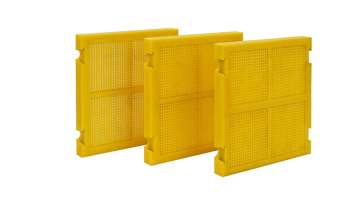
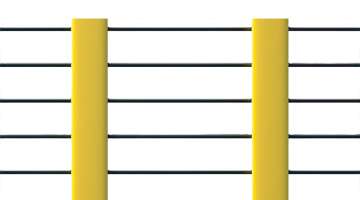
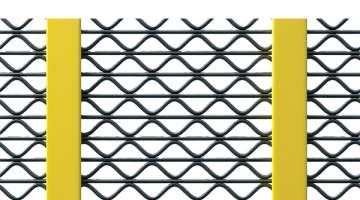
Aperture Selection Guide For Polyurethane Flip Flow Screens In Fine Separation
If you have ever spent weeks troubleshooting a fine separation circuit that keeps delivering inconsistent cut points, persistent near-size pegging, or far lower throughput than your design documents promised, you know most of these issues trace straight back to poor aperture selection that never accounted for your real on-site feed conditions. After years working alongside process engineers and maintenance teams across mineral processing, industrial sand, and fine coal preparation sites to fix underperforming fine screening lines, I have seen far too many operations order generic off-the-shelf apertures for their polyurethane flip flow screens, only to end up with constant blinding, unwanted oversize carryover, or massive fine material loss that ruins their final product quality. This practical, field-validated guide breaks down the complete step-by-step aperture selection logic for fine separation, drawing on hard-won on-site lessons that generic supplier spec sheets never cover in full detail.
Match Aperture Geometry To Your Fine Feed’s Unique Particle Morphology
The first non-negotiable selection principle is picking an aperture shape that aligns perfectly with the specific shape, surface texture, and flow behavior of your target fine particles and near-size contaminants, instead of defaulting to standard square openings that work fine for coarse material but fail completely for difficult fine separation duties, and a properly matched aperture geometry will make high-quality Polyurethane Flip Flow Screen Mesh deliver 20 to 30 percent higher separation efficiency than any generic off-the-shelf option. If you are screening flat flaky mica or layered shale fine particles, long narrow slotted apertures will let these flat particles pass through far more easily than square openings of the same nominal size, while if you are processing sharp angular crushed mineral fines, round or teardrop-shaped apertures will prevent sharp particle tips from catching and getting pegged in the opening. For extremely sticky clay-rich fine feeds, custom tapered self-relieving apertures that widen steadily from top feed surface to bottom discharge side will shake loose stuck near-size particles completely passively, eliminating blinding that even standard flip flow motion cannot solve. Most operations skip this shape matching step entirely, and end up leaving a huge chunk of their potential fine separation performance on the table.
Apply 1.2x Cut Point Offset To Eliminate Near-Size Pegging Risks
The second critical field-proven selection rule is applying a 1.2 nominal aperture offset from your target required separation cut point, instead of ordering apertures that are exactly the same size as your desired product’s maximum allowed particle size, a common mistake that guarantees constant near-size pegging and blinding on fine separation duties, and this simple calculated offset will make well-engineered Polyurethane Flip Flow Screen Mesh stay 100 percent clear and free of stuck particles even when your feed carries a high ratio of near-size fine material. If your target fine separation cut point is 1mm, you should select a 1.2mm nominal aperture size, because the tiny extra opening size gives near-size particles just enough extra room to pass through or get shaken loose easily, instead of wedging tight halfway into the aperture. This small 20 percent size increase will not let unwanted oversize particles slip through, because the flip flow mesh’s bouncing motion stratifies material so only fully liberated fine particles ever make direct contact with the aperture surface. This rule is especially critical for fine separation below 2mm, where even a 0.2mm difference in aperture size makes a massive difference in total open area and anti-clog performance.
Implement Progressive Zoned Aperture Gradient Along Deck Length
The third high-performance selection strategy is using a progressive gradient of carefully calibrated increasing aperture sizes along the full length of the screening deck, instead of using the exact same aperture size on every single mesh panel across the entire deck, and this zoned gradient layout will make premium Polyurethane Flip Flow Screen Mesh drastically boost total fine separation throughput without any loss in final product classification accuracy. On the feed end of the deck, you use slightly larger apertures to quickly drain off all free excess water and let the easiest-to-pass fine material separate immediately, before moving to your exact target cut point aperture size in the middle classification zone where 90 percent of your precise fine separation work happens, then finish with a small set of slightly smaller apertures on the final discharge end to catch any stray near-size particles that almost made it to the oversize tailings stream. This progressive layout prevents the feed end from overloading and blinding, so you can run far higher tonnage while still hitting your exact target fine product cut point consistently. Almost no generic pre-made flip flow decks use this optimized zoned layout, but it is one of the easiest ways to unlock 30 percent extra throughput from your existing shaker without any major equipment modification.
Balance Total Open Area To Optimize Wear Life And Fine Separation Speed
The final make-or-break selection factor is balancing total open area percentage across the mesh surface against the required panel service life for your specific fine feed, instead of just picking the highest possible open area to chase maximum throughput, a mistake that can make your fine separation panels wear through in less than a third of their expected service life, and this careful balance will make well-built Polyurethane Flip Flow Screen Mesh deliver the lowest total cost per ton of fine material processed. For high-abrasion sharp fine mineral feeds, you should keep total open area below 35 percent, so there is enough solid polyurethane material between apertures to resist fast abrasive wear, while for low-abrasion clean industrial sand fine separation, you can safely push total open area up to 45 percent to maximize fine particle passing speed. You should never go above 50 percent total open area on any fine separation duty, because the thin remaining polyurethane ribs between apertures will tear easily under continuous vibration and impact, creating large irregular gaps that ruin your final product gradation. Calculating cost per ton by dividing total panel cost by total fine tons screened during its full service life will always show that this balanced middle ground delivers the best long-term value for your operation.
At the end of the day, selecting the right apertures for fine separation polyurethane flip flow screen mesh is never just picking a single size number from a supplier’s standard spec sheet; it is a layered, practical decision that accounts for particle morphology, calculated cut point offset, deck zoning, and open area balance, all tailored exactly to your unique fine feed properties. Matching aperture shape to particle shape, applying the 1.2x cut point offset, using a progressive zoned aperture gradient, and balancing open area against wear life combine to eliminate almost all the common fine separation pain points that cause inconsistent cut points, constant blinding, and premature panel failure. For processing operations tired of dealing with inconsistent fine product quality, low throughput, and short screen panel life, this structured aperture selection process will deliver immediate, measurable improvements to your entire fine separation circuit’s long-term profitability.