Piano Wire Screen: Working Principle and Performance Guide
If you’ve ever watched a fine coal or wet mineral screening deck clog completely solid in less than 2 hours of operation, forcing your whole circuit to slow to a crawl while your crew scrapes caked sticky material off the rigid mesh, you know how much traditional screening media struggles to handle near-size, high-moisture fine material that refuses to separate cleanly. Many coal and mineral processing supervisors I’ve worked alongside over the years shared that they spent years fighting blinding, low fine recovery and high premature wear on their fine sizing decks, until they fully understood how the unique flexible design of a piano wire screen solves these exact long-standing pain points. This practical, field-tested guide breaks down the real, on-site operational logic behind the piano wire screen working principle, skipping vague textbook explanations and focusing on how its design actually delivers better performance in real coal and mineral processing environments.
Independent Free-Floating Wire Vibration Breaks Material Adhesion
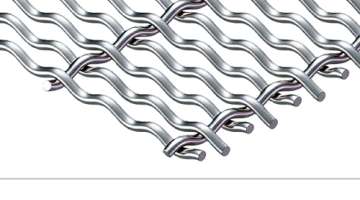
The first core foundational part of the piano wire screen working principle is its set of parallel, individually tensioned free-floating wires that are not interlocked or woven together like traditional woven mesh, so every single wire can vibrate independently at a far higher frequency than the main screen deck. Unlike rigid woven or rubber panels that only move with the 900 to 1200RPM vibration of the main machine, each flexible piano steel wire flexes and bounces at a 3000+ RPM secondary resonant frequency that shakes every single point along its length constantly. This extremely high micro-vibration breaks the surface tension that makes wet fine clay and fine coal particles stick together, preventing them from forming a continuous sticky mat on the screen surface, and stopping them from caking solid across the apertures. Most coal processing sites that switched to this design reported that blinding on their 6mm fine sizing deck dropped by more than 80%, even when processing 12%+ moisture raw coal straight from the mine.
Gradual Tension Variation Creates Self-Cleaning Wire Motion
The second key operational detail built into the piano wire screen working principle is the intentional slight difference in tension applied to each adjacent parallel wire, which creates a continuous small side-to-side scrubbing motion between neighboring wires as the deck vibrates. Every wire is tensioned to a slightly different tightness than the two wires next to it, so when the whole deck moves, each wire bounces up and down at a slightly different amplitude than its neighbors, creating a tiny consistent gap shift between every pair of adjacent wires. This small constant movement knocks any near-size particle that tries to wedge itself between the two wires loose automatically, so no particle can get permanently pegged in place, even if it is almost exactly the same size as the nominal gap between the wires. Most mineral processing operations that tested this design found that they could run their fine iron ore sizing deck for 72+ continuous hours without any manual cleaning, something that was completely impossible with traditional rigid woven screens.
Open Unobstructed Gap Geometry Maximizes Fine Particle Passage
The third performance-driving part of the piano wire screen working principle is its completely unobstructed, straight-sided gap geometry that has no cross wires, crimps or interlock points to block fine particles from passing through the deck. Traditional woven fine screens have hundreds of overlapping cross wires that create small ledges and shadowed spots that block fine near-size particles from falling through the apertures, forcing them to ride all the way across the deck and end up in the oversize fraction, dragging down your total fine recovery. The piano screen’s parallel wire layout creates long, continuous open gaps that run the full width of the deck, so every fine particle that is smaller than the gap size has a completely clear unobstructed path to fall through, with zero overlapping wires blocking its way. Most coal preparation plants that installed piano screens on their 0.5mm to 13mm fine sizing decks reported that their total saleable fine coal recovery jumped by 10% to 15% overnight, with no changes to their crushing or crushing circuit upstream.
Flexible Wire Profile Absorbs Impact to Extend Usable Service Life
The final long-term practical advantage built into the piano wire screen working principle is the high-tensile spring steel flexible wire profile that absorbs heavy boulder impact instead of snapping like rigid woven screen wires. When a stray oversize rock gets carried onto the fine deck, the flexible piano wire simply bends out of the way to absorb the impact, then springs back to its original position and tension completely undamaged, instead of snapping or creating a permanent dent that ruins the panel. This eliminates almost all random catastrophic wire break failures that used to tear holes in fine sizing decks unexpectedly, creating unplanned downtime and product cross-contamination. Most mineral processing operations that switched to piano screens on their fine decks reported that their average fine screen panel service life doubled, compared to their old heavy-duty crimped woven fine screens, drastically cutting their total annual fine screening consumable costs.
By understanding how every detail of the piano wire screen working principle works together to fight blinding, eliminate pegging, boost fine recovery and resist impact damage, coal and mineral processing operations can completely transform the performance of their fine sizing circuits, unlocking far higher throughput and far lower unplanned maintenance downtime than they could ever achieve with traditional rigid screen media.