Many people exporting mining wire mesh have suffered losses due to inadequate
packaging. A single heavy-duty steel wire mesh weighs tens or even hundreds of
kilograms, traveling thousands of kilometers across the ocean. Salt spray,
humidity, and bumpy rides—any problem at any stage can cause major trouble. One
factory shipped goods to Australia using ordinary woven bags, resulting in
completely deformed edges of the mesh, leading to customer rejection. Therefore,
packaging standards are not trivial; they directly affect whether the goods can
be delivered smoothly.
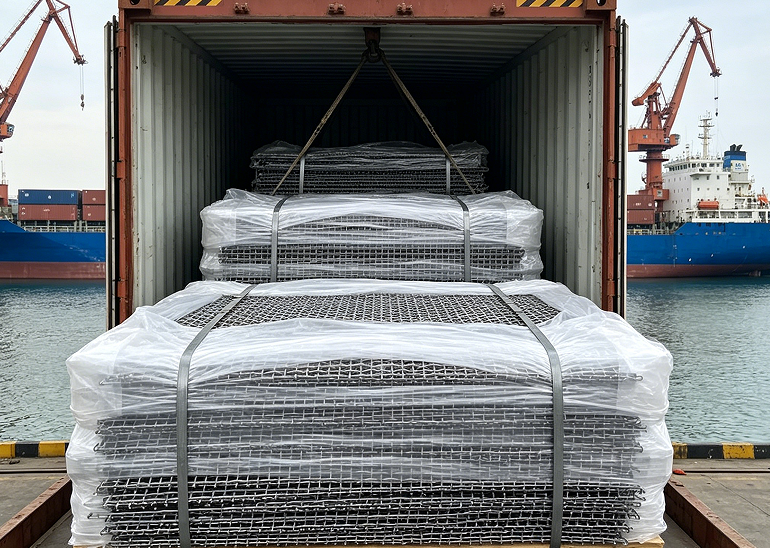
Inner Layer Protection: Rust Prevention and Cushioning
Heavy-duty steel wire mesh is mostly made of carbon steel, which is
susceptible to moisture and rust. A reliable approach is to first spray
rust-preventive oil, then wrap it with VCI vapor phase rust-preventive paper.
This type of paper continuously releases rust-preventive gases, forming a
protective layer. Avoid using inferior foam for cushioning; high-density
polyethylene foam or rubber gaskets are recommended. Especially for the edges
and welded joints of the mesh, extra thick protection is essential; at least
three layers are recommended for safety.
Outer Frame Fixing: Wooden Crate or Steel Frame
For screens with regular dimensions and a weight not exceeding 200 kg,
fumigation-free plywood crates are sufficient, saving money and being
environmentally friendly. Larger sizes or those exceeding 300 kg require a steel
frame structure. Regardless of the type used, the screen must be securely fixed
internally, leaving no room for movement, and locked with fastening straps or
metal clips. Additionally, wooden crates exported to Europe and America must
have an IPPC fumigation mark; otherwise, they will be destroyed upon arrival at
the port.
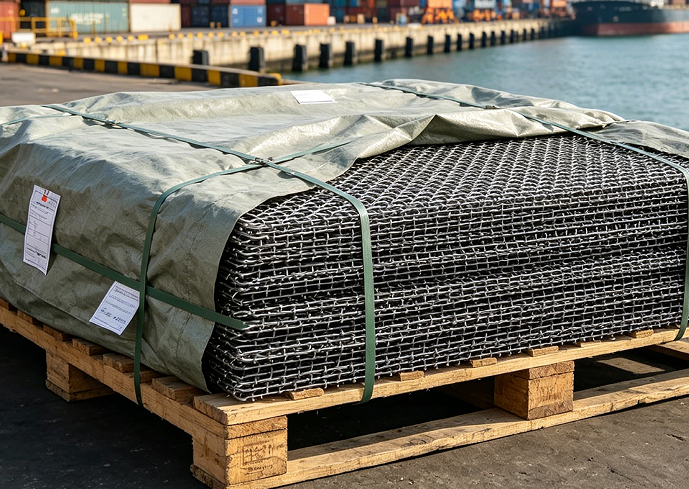
Stacking and Labeling: Pay Attention to Details
When loading containers, heavy-duty screen packaging should ideally be
limited to three layers, with each layer separated by wooden boards to prevent
deformation at the bottom due to pressure. The center of gravity and lifting
points should be clearly marked on the outside of the packaging for easy
handling by port workers. It is also recommended to attach installation
instructions to the outside for easy reference by the customer after
unpacking.
In summary, the core of export packaging for mining screens lies in three
points: adequate rust prevention, secure fixing, and clear labeling. By doing
these things well, heavy-duty steel wire mesh can be safely delivered to
customers worldwide.


Leave A Reply
By using form u agree with the message sorage, you can contact us directly now