Stable Grading and Reliable Sizing for Ore Beneficiation Plants
If you’ve ever stood in a mineral processing plant’s control room staring at a live feed of your fine grading deck mid-shift, watching tons of off-spec ore slip through a warped, worn-out screen and throw off your whole downstream flotation circuit’s feed consistency, you know how much an unreliable, poorly built screen can wreck your whole operation’s metal recovery and monthly profit numbers. I’ve sat through dozens of post-failure performance reviews with mineral processing plant leads across iron, copper and gold mine sites, and more often than not, the root cause of a 12-hour circuit shutdown wasn’t a big fancy crusher failure – it was a cheap, low-quality screen that warped out of shape completely, forcing the whole plant to pause while maintenance crews rushed to swap it out. This practical, field-tested guide breaks down exactly what makes a truly dependable Mineral Processing Screen deliver consistent, trouble-free ore grading performance month after month, with no empty marketing buzzwords, just real insights pulled from years of on-site operational data.
Modular Bolt-Locked Panel Design Eliminates Unintended Aperture Shift
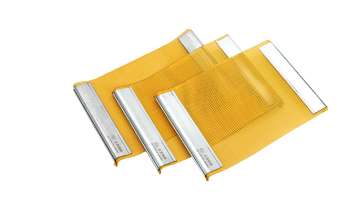
The first core reliability feature that separates a dependable Mineral Processing Screen from flimsy generic alternatives is its full modular bolt-locked panel design, which lets you swap out individual worn sections in minutes instead of tearing apart the whole deck during a changeout. Traditional one-piece woven mesh screens are stretched across the full width of the deck, so when one small localized spot wears through, you have to scrap the entire 3-meter wide panel even though 90% of it is still perfectly usable. The modular bolt-locked design splits the full deck into small 300x300mm independent panels, each secured to the support frame with 4 heavy anti-loosening bolts, so you only need to replace the individual worn panel instead of the whole assembly. Most mineral processing plants that switched to this modular layout found that their total screen changeout downtime dropped by more than 70%, and they could get a full panel swap done in less than 20 minutes without draining the feed hopper.
Gradation-Calibrated Non-Clogging Aperture Geometry Holds Consistent Cut Point
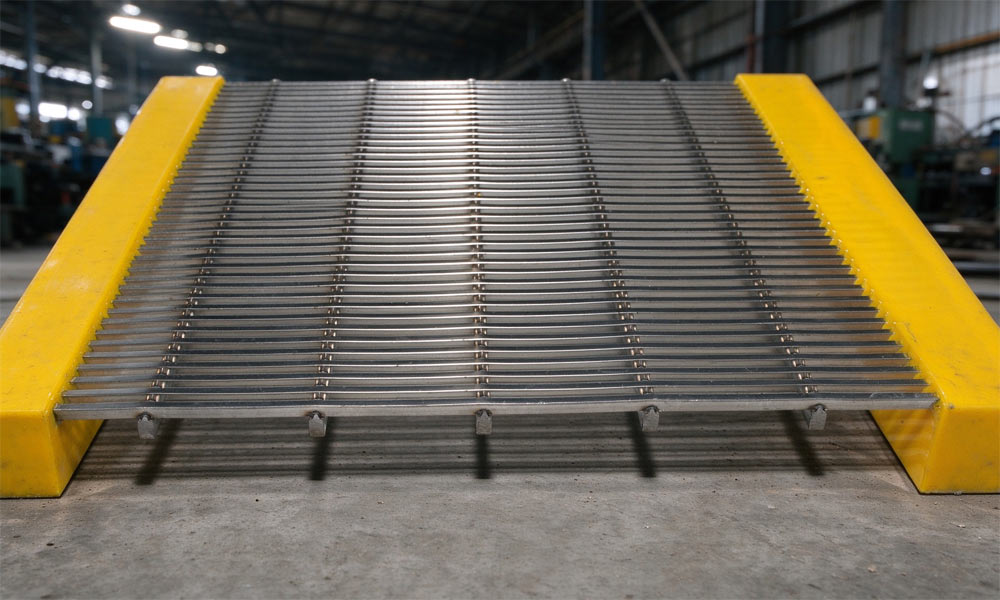
The second critical performance feature that guarantees long-term grading accuracy is a precision-calibrated non-clogging aperture geometry, the core design detail that makes a reliable Mineral Processing Screen deliver perfectly consistent cut point performance even when processing damp, sticky fine ore. Generic low-cost screens use cheap, unstamped apertures that vary in size by as much as 20% across the panel, so you get random oversized gaps that let coarse ore slip through and tiny clogged gaps that trap fine material, making your final ore gradation jump all over the place from hour to hour. The precision non-clogging design uses a unique tapered aperture that gets slightly wider from the top deck surface down to the bottom, so near-size particles can never wedge themselves permanently inside the opening, and every single aperture is calibrated to within 0.1mm of your target cut point. Mine sites that upgraded to this calibrated design reported that their final ore grading accuracy stayed within 2% of their target value 99% of the time, with zero unexpected off-spec batches ruining downstream processing.
Reinforced Under-Deck Support Frame Prevents Full Deck Sagging
The third easily overlooked structural feature that stops unexpected mid-shift failures is a fully reinforced under-deck support frame, the hidden structural backbone that keeps a heavy-duty Mineral Processing Screen perfectly flat and stable even when running at full 1000+ tons per hour throughput. Cheap generic screens skip most of the under-deck support beams to cut material costs, so the whole deck starts to sag in the middle after a few weeks of heavy operation, creating uneven material flow that piles up in the center of the deck, causes massive blinding and wears out the middle panels 3 times faster than the edges. The fully reinforced frame adds extra high-tensile steel support beams every 150mm across the full length and width of the deck, eliminating all sag completely and spreading the heavy ore load evenly across every single panel. Most mineral processing operations that installed this reinforced frame found that their total deck service life doubled, and uneven localized wear was completely eliminated.
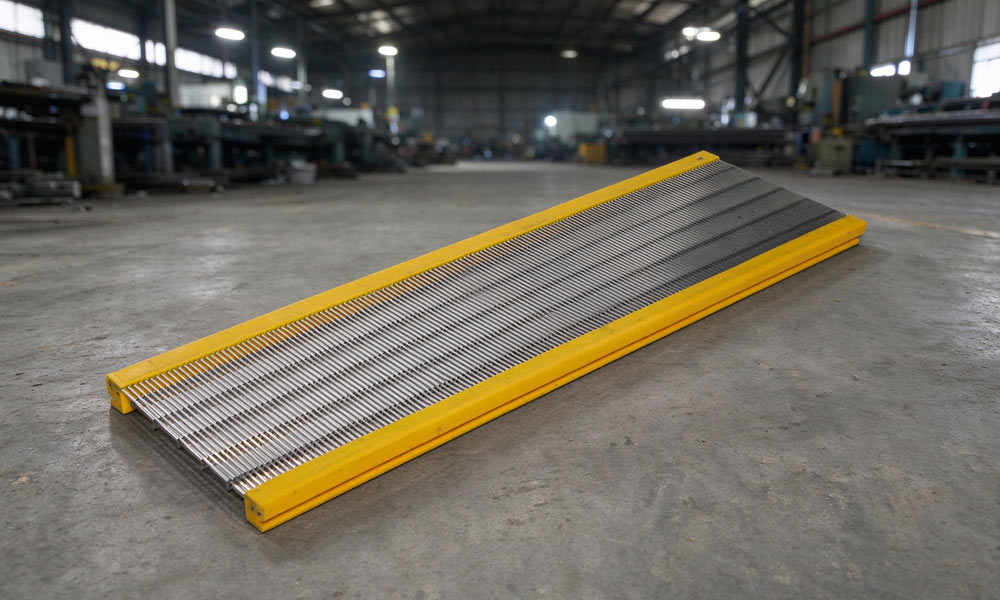
Corrosion-Resistant Surface Treatment Stops Degradation in Wet Slurry Environments
The final make-or-break reliability feature that extends total service life drastically is a dual-stage corrosion-resistant surface treatment, a critical detail that lets a heavy-duty Mineral Processing Screen hold up to constant exposure to wet ore slurry, mild flotation reagents and process water without rusting or pitting. Untreated bare steel screens develop rust spots and surface pits after only a couple of weeks of constant exposure to wet slurry, and these rough corroded spots become perfect anchors for fine ore particles to wedge into, accelerating both blinding and abrasive wear. The dual-stage treatment first applies a hot-dip galvanized anti-rust base layer, then adds a thin wear-resistant polymer top coat that seals every tiny surface imperfection completely, so no moisture or slurry can ever reach the base steel. Most mine sites that used this treated screen found that their total average service life jumped from 6 weeks to 5 months, even when running all day in a high-moisture wet ore grading circuit.
By prioritizing these four underrated, field-proven reliability features instead of just chasing the lowest upfront price, you can drastically cut your total annual Mineral Processing Screen consumable costs, eliminate almost all unplanned mid-shift grading circuit downtime, and keep your whole ore separation circuit running at peak consistent recovery efficiency month after month.