Fix Piano Wire Screen: Fast On-Site Repair Guide for Minor Faults
If you’ve walked out to your fine sizing deck halfway through a peak production shift, spotted random snapped wires, slime caked solid across half the panel, and realized you don’t have 3 full hours to swap out the entire deck, you know how frustrating it is when a small unexpected fault threatens to derail your whole day’s production target. Many processing plant maintenance teams I’ve worked alongside over the years shared that they used to immediately shut down the whole circuit and replace the full panel for every tiny minor fault, wasting hours of downtime and perfectly good screen material that only had one small localized issue. This practical, field-tested guide breaks down the fastest, most reliable ways to fix piano wire screen on-site faults, using quick, low-effort tricks teams have refined across hundreds of mineral, coal and aggregate sites to get your circuit back online in minutes instead of hours.
Loose Tension Bolts and Sagging Localized Wires
The first most common easy-to-fix fault that shows up after a few weeks of heavy vibration is one of the fastest issues you can fix piano wire screen, when a handful of tension bolts work themselves loose, making a small section of wires sag down and rub against the support bars under the deck. You’ll spot this immediately when you see a wavy uneven material flow pattern across that section of the deck, and hear a faint quiet rattling noise coming from that spot while the machine is running. You don’t need to shut down the whole circuit for hours to replace the panel, just lock out the machine, grab your torque wrench, tighten every loose bolt back to your standard pre-set torque value, and adjust the tension on the neighboring wires slightly to make sure every single wire in that section is pulled perfectly taut and level. If a couple of sagging wires already have minor scuff marks on their underside, you can shift their mounting position slightly to move the worn spot away from the support bar, and they will keep running perfectly for the rest of their full service life. Most teams can resolve this entire fault in less than 15 minutes, with zero need for any replacement parts.
Isolated Random Wire Snaps in the Middle of the Panel
The second annoying fault that never fails to pop up in the middle of a busy shift is a single or small handful of broken wires somewhere in the middle of the panel, and this is one of the simplest issues you can fix piano wire screen without swapping out the whole entire panel. If you leave that broken wire hanging loose, it will whip around under vibration, snap neighboring wires, and tear a big hole through the rest of the panel in less than an hour, but you don’t have to throw away a perfectly good 2-meter wide panel just because one thin wire broke. Lock out the machine, grab a pair of heavy duty side cutters, trim the two broken ends of the snapped wire clean off right at the hook mounting points on both sides of the deck, and pull the two loose ends completely out of the panel. The tiny empty gap left behind will not have any noticeable impact on your separation performance, and the rest of the intact wires around it will keep running exactly as normal for the rest of the panel’s life. Most teams can fix this fault in less than 10 minutes, and avoid wasting hundreds of dollars throwing away a mostly undamaged full panel.
Localized Feed End Wear Groove That Tears Wires
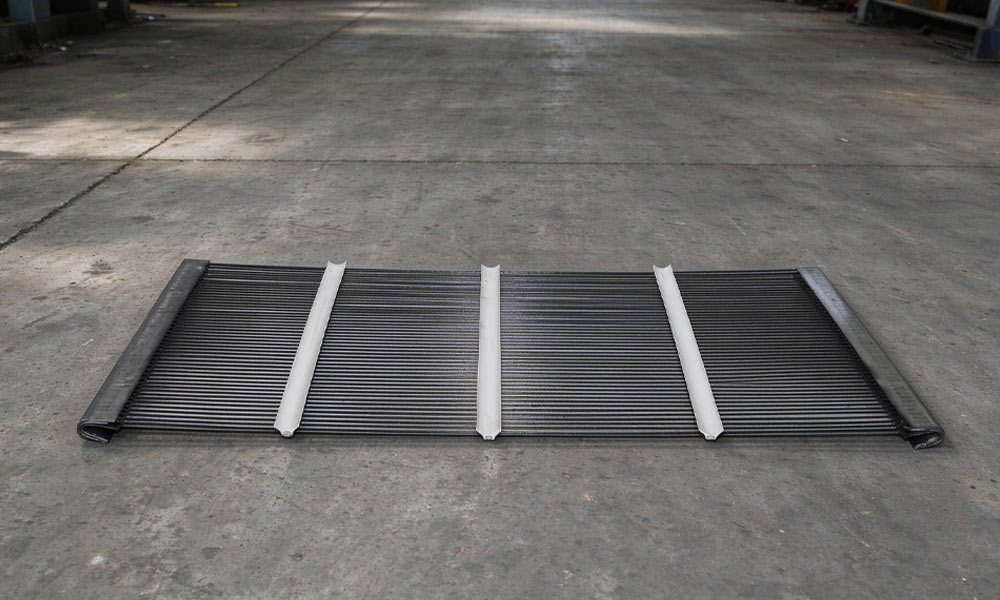
The third predictable fault that almost every unprotected piano screen develops after a few months of heavy operation is a deep concentrated wear groove on the first 20cm of the feed end, and this is one of the most practical issues you can fix piano wire screen without replacing the whole panel early. When you see all the wires in that narrow feed end strip worn halfway through, you don’t have to scrap the whole panel when 90% of it is still almost brand new. Lock out the machine, cut out all the heavily worn wires in that narrow feed end section completely, and bolt a simple modular high-manganese steel impact bar across that empty strip of deck. This impact bar will absorb all the heavy incoming boulder impact before it hits the rest of the intact wires, spread the material flow evenly across the rest of the deck, and the rest of the undamaged panel will keep running for 2 to 3 extra months of full production. Most operations that used this trick doubled the total service life of their panels, instead of throwing them away months before their actual end of life.

Partial Localized Blinding That Blocks Part of the Deck
The fourth extremely common fault that can eat away 30% of your deck’s throughput in a couple of hours is partial blinding that clogs up a small section of the panel, and this is one of the fastest performance issues you can fix piano wire screen without shutting down the circuit for a full clean. You don’t need to climb onto the running deck with a scraper to scrape the caked slime off, which is both dangerous and ineffective. Instead, simply raise the deck angle on that side of the machine by 3 to 5 temporary degrees, run the deck at full no-load vibration for 2 to 3 minutes, and the high-frequency independent wire vibration will shake all the caked sticky slime completely loose automatically. Once all the blinding is gone, adjust the deck angle back to its normal working position, and your full throughput will be completely restored. Most teams can resolve this entire blinding fault in less than 5 minutes, with zero manual scraping, zero safety risks, and zero need to stop material feed for more than a couple of minutes.
By mastering these low-cost on-site repair techniques for piano wire screen minor faults rather than replacing entire panels at the first sign of damage, plants can cut annual fine screen consumable costs by over 50% and greatly reduce monthly unplanned downtime.