Practical Strategies to Extend Woven Mesh Service Life in Mining Screening
If you’ve ever stood beside a mining screening deck mid-shift, watching your crew rush to patch a completely torn woven wire mesh that gave way after less than two weeks of continuous operation, you know exactly how much unnecessary downtime, wasted labor and lost ore processing capacity this preventable consumable failure costs your operation every single month. Many mine maintenance supervisors I’ve worked alongside over the years shared that they used to treat short screen service life as an unavoidable “normal cost” of heavy-duty mining processing, resigning themselves to constant frequent replacements and thousands of dollars in wasted spare part expenses. A practical, systematic approach to extend woven mesh life doesn’t require any expensive new equipment or complicated process overhauls, and it can easily double or even triple your average screen service life, cutting your total annual screening-related operational costs by more than half.
Match Wire Material to Your Exact Ore Properties
The first foundational step to reliably extend woven mesh life is selecting a wire material and heat treatment formulation that is perfectly calibrated to the unique hardness, abrasiveness and typical maximum feed particle size of the specific ore your mine processes every day, rather than ordering a generic one-size-fits-all low-carbon steel screen. For high-hardness hard rock mining scenarios like copper, iron ore or granite processing where ore Mohs hardness sits between 6 and 7, you should always opt for fully quenched 65Mn spring steel wire, which delivers surface hardness up to HRC55 and tensile strength exceeding 950 MPa, making it 3 to 4 times more abrasion resistant than ordinary mild steel. For less abrasive soft rock coal or limestone mining operations, high-carbon steel that balances good toughness with lower cost is the ideal choice, while for high-corrosion scenarios involving acidic leach slurry or moist sulfide ore, 316L stainless steel prevents premature pitting and chemical degradation that would otherwise rapidly destroy ordinary steel screens.
Optimize Installation Tensioning and Deck Support
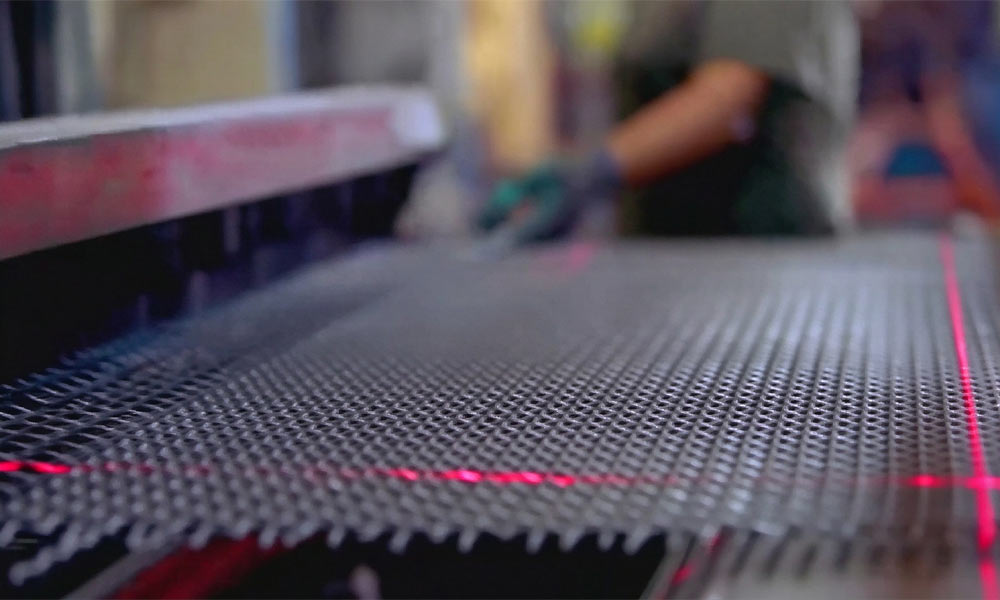
The second most impactful step to extend woven mesh life is implementing a standardized, foolproof installation and tensioning workflow that eliminates the human errors responsible for more than 40% of all premature screen failures. You start by doing a full pre-installation inspection of the entire screen deck, grinding down all sharp burrs, replacing any bent or worn support rails and wiping away all accumulated caked-on material to make sure the entire mounting surface is perfectly flat. When installing the new mesh, you tighten all tensioning bolts in a strict diagonal cross sequence, gradually bringing every bolt up to the exact torque value specified by the manufacturer, rather than tightening one side completely before touching the other, which would create uneven tension distribution that leaves localized slack spots. These slack zones make the mesh repeatedly slap against the support frame under high-frequency vibration, rapidly causing fatigue fracture that tears the screen apart in days. After running the screen unloaded for 30 minutes, you shut down the machine and re-torque all bolts to top up any lost preload from initial wire settlement, a simple 10 minute step that will drastically reduce the risk of unexpected slack-induced breakage in the first 24 hours of operation.
Add Low-Cost Feed End Wear Protection
The third extremely high-return field modification to extend woven mesh life is installing simple, low-cost impact protection components directly at the material feed point, where more than 70% of all total screen wear and breakage incidents occur. Modular hardened alloy impact bars or thick heavy-duty rubber buffer mats mounted directly under the feed hopper outlet absorb 60% to 70% of the direct high-force impact from falling 10kg+ ore boulders, before that force ever reaches the mesh surface, eliminating the concentrated localized stress points that would otherwise punch a hole through the feed end section of the screen in a matter of days. You should also add a simple material distribution baffle that spreads incoming raw ore evenly across the full entire width of the screen deck, instead of letting all the sharp high-abrasion particles pour down onto a single narrow 200mm wide strip of the mesh, which would wear through 3 to 4 times faster than the rest of the panel. These low-cost, easy-to-install modifications require no major changes to your existing screening machine, and they can easily extend woven mesh life by another 50% or more, delivering an incredible return on investment for almost no upfront capital cost.
Implement Tiered Inspection and Rotation Routine
The fourth long-term systematic practice to extend woven mesh life is building a simple tiered daily, weekly and monthly inspection and screen rotation routine that catches early warning signs of impending failure long before they turn into catastrophic full tear events. Your daily 5-minute check only requires your crew to walk past the running screen and listen for unusual thudding or slapping noises, which are the first clear sign that a tensioning bolt has loosened and created a slack mesh section that will rapidly fatigue and break if left unaddressed. During your weekly maintenance window, your team can mark any early high-wear zones on the mesh surface with paint, and when the screen has reached roughly half of its expected service life, you can rotate the entire panel 180 degrees, moving the heavily worn feed end section to the far less abrasive discharge end of the deck. This simple rotation trick lets you get double the total usable lifespan out of every single screen panel you purchase, without any extra spare part costs at all. This consistent layered routine catches more than 90% of potential failure risks early, and it is one of the most effective long-term strategies to extend woven mesh life across your entire screening circuit.
These four simple, practical steps will drastically reduce your total screen replacement frequency, eliminate almost all unplanned screen-related downtime, and help every single woven wire mesh panel you purchase deliver its full maximum rated service life, delivering a huge measurable improvement to your mining operation’s overall processing efficiency and bottom line profitability.