Product Overview
- Self-cleaning screens can also be installed on modular screen decks. No modifications are required.
- Standard sizes and flexible customization are available to accommodate mainstream vibrating screen models.
- The single-piece structure allows for partial replacement, reducing maintenance costs by 50%.
Key Features
Technical Specifications
| Sieve holes (mm) | Wire diameter (mm) | Sieve holes (mm) | Wire diameter (mm) | Sieve holes (mm) | Wire diameter (mm) | Sieve holes (mm) | Wire diameter (mm) |
|---|---|---|---|---|---|---|---|
| 1.8 | 1.2 | 6 | 3 | 13 | 5 | 22 | 4 |
| 2.38 | 1.6 | 4 | 6 | 24 | 5 | ||
| 3.18 | 1.37 | 7 | 2 | 14 | 8 | 25.4 | 5.26 |
| 1.6 | 3 | 4 | 5.7 | ||||
| 2.03 | 3.05 | 5 | 27 | 6 | |||
| 2.34 | 4.11 | 6 | 28 | 6 | |||
| 2.67 | 2.5 | 9.2 | 6 | ||||
| 3.5 | 1.6 | 8 | 2.67 | 15 | 3.5 | 30 | 4 |
| 1.8 | 3 | 4 | 5 | ||||
| 3 | 4 | 5 | 6 | ||||
| 4 | 1.5 | 4.11 | 4.11 | 8 | |||
| 1.6 | 9 | 2 | 16 | 5 | 9 | ||
| 2 | 2.5 | 5.26 | 32 | 5 | |||
| 2.5 | 3.05 | 6 | 8 | ||||
| 3 | 4 | 18 | 4 | 35 | 7 | ||
| 4.5 | 2.34 | 4.11 | 6 | 36 | 9.2 | ||
| 4.76 | 1.8 | 10 | 2.5 | 4.11 | 40 | 4 | |
| 1.82 | 3.05 | 19.05 | 4.5 | 6 | |||
| 2.03 | 4 | 4.88 | 43 | 8 | |||
| 2.34 | 6 | 5 | 45 | 6.3 | |||
| 3.76 | 11 | 4 | 5.26 | 8 | |||
| 5 | 1.8 | 12 | 2.67 | 20 | 4 | 50 | 9 |
| 2.5 | 4 | 5 | 9.2 | ||||
| 3.05 | 5 | 6 | 55 | 10 | |||
| 5.5 | 3.05 | 8 | 9.2 | ||||
| Please contact customer service for other specifications. | |||||||
Structural Type
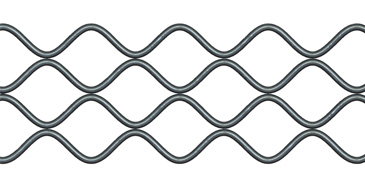
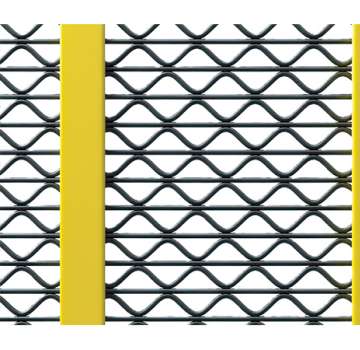
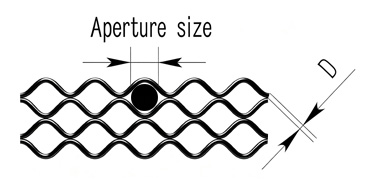
Diamond anti‑clogging screen mesh (also known as diamond self‑cleaning screen mesh or D‑type anti‑clogging screen mesh) is the most widely‑used anti‑clogging type. Its aperture shape is close to square apertures and delivers consistent particle‑size standards for undersize materials. Compared with square‑woven screen mesh of the same specifications, the diamond anti‑clogging screen mesh can effectively improve screening efficiency by 30%.
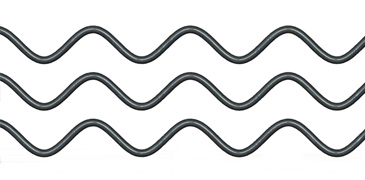
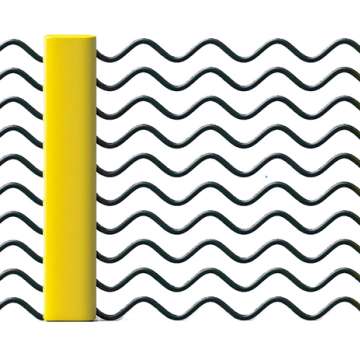
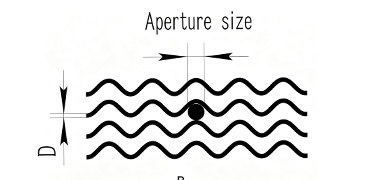
Its aperture features a continuous S‑shape (also referred to as S‑type anti‑clogging screen mesh). It is suitable for round or regular‑cube‑shaped materials, or for applications where precise screening is not required.
Boasting the maximum open‑area percentage, it effectively prevents aperture clogging and reduces fine‑particle content in oversize materials.
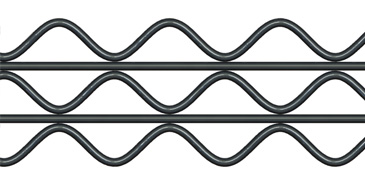
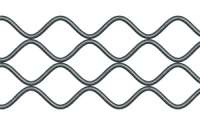
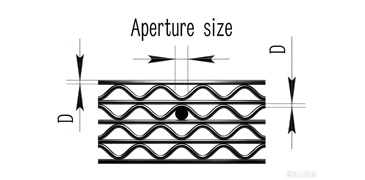
The screen mesh is assembled by alternating one pre‑crimped wire and one straight wire. Triangular apertures are formed between the crimped wires and straight wires (also known as T‑type anti‑clogging screen mesh). This mesh is designed for small apertures in manufactured sand applications and delivers superior anti‑clogging performance.
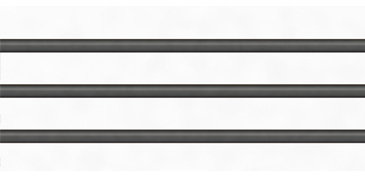
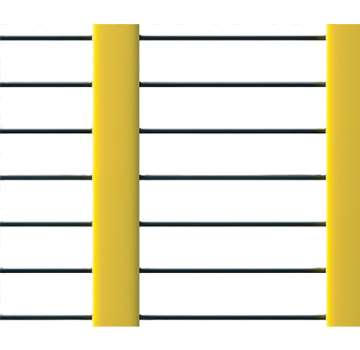
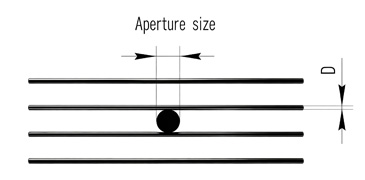
This screen mesh features long slots formed by straight wires (also known as L‑type anti‑clogging screen mesh). It offers the maximum open‑area percentage among all screen mesh types. It is suitable for sand removal and fine‑sized material screening, and boasts a longer service life compared with conventional woven piano‑wire screen mesh. It is recommended for screening fertilizer and top‑soil removal.
Measuring Method
Screen Tensioning Hook Style


Screen Tensioning Hook Direction


Need Custom Self-Cleaning Screen Solutions?
Contact our engineering team today for technical consultation, custom dimensions, and competitive pricing.
Related Products