-
-
-
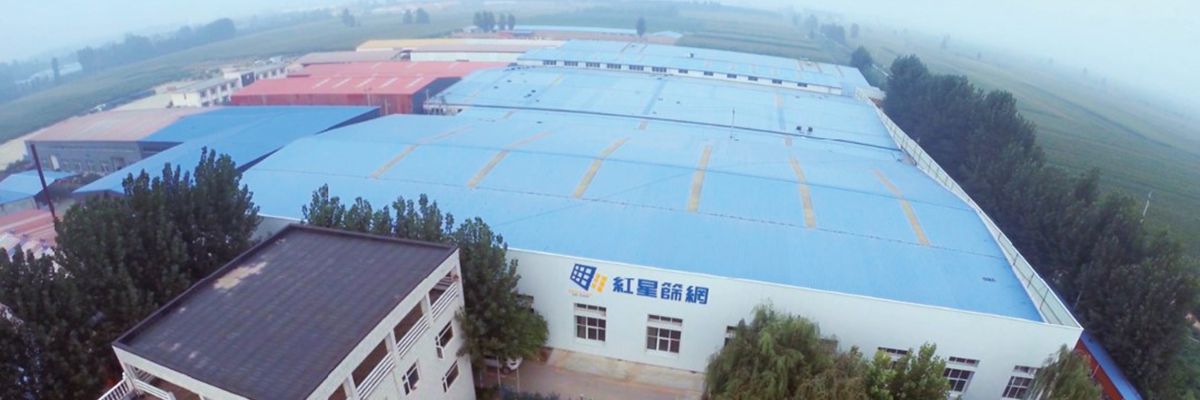
No.1 Redstar Road, Qianpu Development Zone, Hebei China

In 2006, Red Star has invested in a new plant of 50,000 square meters for screen media production. The production plant combines polyurethane screen & self-cleaning screen workshop, woven wire screen workshop, wedge wire screen workshop and raw material & wire drawing workshop. All our workshops are in compliance with requirements of ISO 9001 quality management system.
Independent R&D and manufacturing capabilities are the two most important criteria in evaluating the innovation capacity of a company. At present, Red Star has over 3000 sets of molds, and the increasing quantity of our molds amounts to over 300 sets annually. Our team of engineers is delighted to design custom-tailored products adapted to customer’s individual demands.
Selection depends on material hardness, moisture content, particle size, and impact force:
Wet or sticky materials → Polyurethane mesh (anti-clogging)
High abrasion materials → Manganese steel woven mesh or perforated plate
High-precision screening → Stainless steel woven mesh
Heavy impact materials → Steel-edge PU panels or rubber screen panels
Choosing the correct mesh improves output and reduces downtime.
Service life varies with material abrasiveness, vibration frequency, installation tension, and screen type:
Polyurethane mesh: 3–12 months
Manganese steel mesh: 1–6 months
Stainless steel mesh: 2–8 months
Rubber panels: 4–12 months
Proper tensioning and selecting the right aperture significantly extend lifespan.
Clogging occurs due to moisture, irregular particle shapes, or unsuitable aperture designs. Prevention methods:
Use self-cleaning screens (wave or harp type)
Switch to polyurethane anti-blinding mesh
Adjust vibration amplitude and screen angle
Pre-screen wet or muddy materials
Anti-clogging solutions greatly improve screening efficiency.
Key points during replacement include:
Ensuring consistent tension across the entire screen
Checking the screen frame for deformation
Matching hook types or fastening systems with your screen machine
Cleaning the deck to remove remaining material
Proper installation reduces breakage and improves screening accuracy.
Screening efficiency can be improved by:
Choosing the right aperture and mesh material
Adjusting vibration frequency and screen inclination
Maintaining uniform material feeding
Using multi-stage screening designs
Performing regular maintenance on screen decks and meshes
Efficiency improvements of 10–30% are commonly achievable.