Performance of a polyurethane screen panel hinges on how securely it's
mounted. The attachment system is crucial for stability and minimizing downtime.
This guide analyzes traditional bolt hole design and modern quick-assembly
structures to help you choose the most efficient and reliable system for your
operation.
Traditional Bolt Hole Design Fundamentals
The classic bolt hole design involves precisely molded holes that align
with the screen frame. Key elements include the hole diameter for bolt clearance
and a counterbore to recess the bolt head, preventing wear. The most critical
aspect is reinforcement around the hole, often with embedded steel inserts or
denser polyurethane, to withstand clamping forces and prevent the hole from
elongating under vibration—a common failure known as "egg-shaped" wear. This
design polyurethane panel offers robust, adjustable clamping force but requires
tightening numerous bolts, which is time-consuming.
Evolution to Quick-Assembly Structures
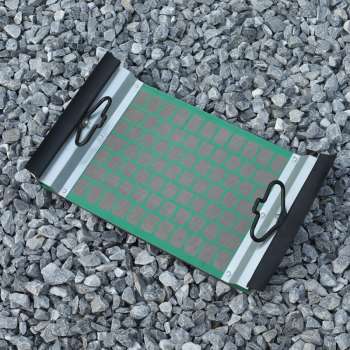
To drastically reduce installation time, quick-assembly structures have
been developed. These systems minimize or eliminate individual bolts. Common
designs include three types, T-Bolt or Wedge Systems: Panels have integrated
T-slots. A single long T-bolt or wedges are driven laterally to clamp multiple
panels at once against a frame rail Modular Clip Systems: Panels feature
molded hooks that engage with frame rails, allowing for tool-less "snapping." A
final locking pin may secure them.Pin-and-Hook Systems: Heavy-duty pins drop
through aligned holes and are secured with a clip.
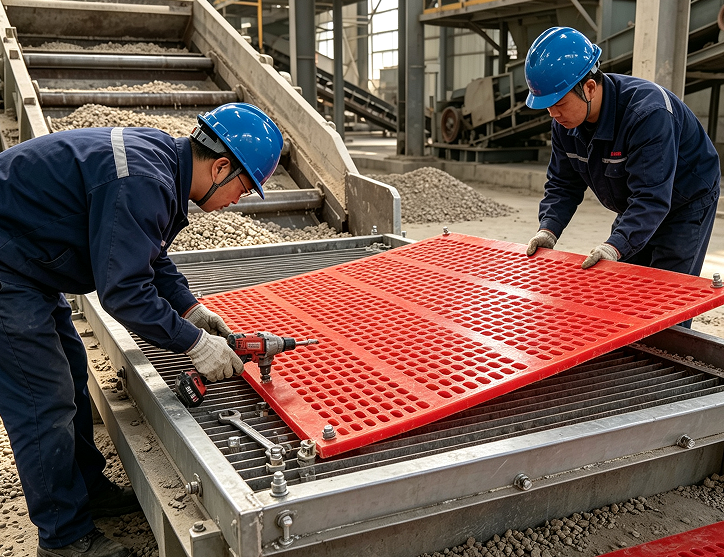
Analyzing the Trade-offs: Comparation of Security and Speed
Each polyurethane screen system involves trade-offs. Traditional bolt hole
design provides maximum, adjustable clamping force and universal compatibility
but is the slowest to install. Quick-assembly structures can cut change-out
time by over 50%, reduce lost fasteners, and enhance safety by minimizing tool
use. However, they may require more precise screen frames and can have a higher
upfront cost. While offering excellent security for most applications, they
might be less suitable for extreme high-impact scenarios where the absolute
rigidity of multiple bolts is critical.
The choice of screen panel configuration depends on specific requirements and
application scenarios. For operations involving panels prone to damage—where
frequent replacement is necessary yet minimizing downtime is a
priority—polyurethane panels with quick-assembly structures can enhance
screening efficiency; conversely, for extreme operating conditions, a robust,
wear-resistant bolt-hole design may be the most suitable choice. A comprehensive
evaluation should be conducted to select an installation method that ensures
panel stability while optimizing production screening efficiency.


Leave A Reply
By using form u agree with the message sorage, you can contact us directly now