Slurry has a way of making every short-sighted decision painfully obvious.
You think you’ve picked the right screen. It looks fine on paper, but the moment
solids loading spikes, or the feed goes from chunky to flat, that “good enough”
screen blinds up fast. Suddenly you’re wrestling with lower throughput, pumps
working overtime, and operators stuck babysitting a piece of equipment that
should have been nearly invisible. So, picking a wedge wire screen for slurry
isn’t just about ticking the box for slot size—it’s about being honest about how
the material behaves, what really happens when things speed up, and how much
cleaning will actually happen when everyone’s strapped for time.
Getting Slot Size and Profile Right for Actual Slurry
Most headaches start when people obsess over just one particle size number.
Here’s the tricky part: even if your slurry’s average particle size is well
above the slot opening, there’s always that fraction of solids—flat bits,
needles, flakes—that clog up the works because they orient the wrong way and
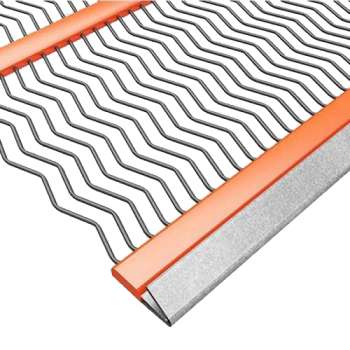
lodge tight. Wedge wire screens help here. Their continuous slot and “V” shape
give solids less to grab onto and let most particles drop straight through, so a
smart slot profile design keeps your open area clear longer than any punched
plate with the same rating. Still, there’s always a trade. Thinner wire means
more open area and higher flow—but less strength. Heavy or uneven loading can
bend fine wires, and then you’re in trouble.
Picking Alloys and Planning for Wear Nobody Talks About
People nearly always let cost steer their choice of wedge wire material, then
regret it later. Corrosion and abrasion rarely show up alone. Standard 304
stainless wedge wire screens can handle most slurries, but when chlorides or low
pH sneak in, 316L really earns its extra cost. For abrasive minerals and
tailings, you’re better off going for duplex or high-chromium alloys—even though
they cost more—because softer grades can lose their slot depth fast, sometimes
in a single season. And you can’t only look at the wire itself; most wear shows
up where the feed slams into the screen and at the support rod welds. That’s
where you need to start your inspections.
Maintenance That Actually Adds Years
Good maintenance isn’t just about scrubbing harder. If you’re blasting the
screen with high-pressure cleaning, you’ll end up rounding off the wire edges
and changing the slot size for good. But if you stick to a regular, gentle
backwash, your wedge wire screen stays closer to its specs. Checking slot width
with a gauge pin every couple of weeks gives you solid data—so you can plan
replacements before the screen fails, not after.
The best setups aren’t always the priciest. They’re just matched to what
actually happens in the plant. Give us your slurry details, flow rate, and
cleaning habits, and we’ll help you pick the right wedge wire mesh, alloy, and
tolerances for what you really need.


Leave A Reply
By using form u agree with the message sorage, you can contact us directly now