Polyurethane Tension Screen: Field Guide to Selecting the Right Aperture Size
If you’ve ever installed a brand new set of tensioned PU screens, only to find that 30% of your fine qualified product gets carried over into the oversize pile because your apertures are too small, or you end up with massive amounts of oversize contamination in your final fine product because you picked apertures that are far too big, you know exactly how much a single wrong aperture choice can ruin your whole site’s fine product yield and waste thousands of dollars in reprocessing work. After years of chatting with operations leads across fine mineral processing sites, manufactured sand quarries and high-moisture coal washing plants across northern China, nearly every single one shared that they used to pick aperture sizes based only on their final product target, until they learned that half a dozen on-site working conditions completely change the real effective size of every opening. This no-fluff field-tested guide breaks down the practical step-by-step rules to pick the perfect aperture size for your site when you invest in a new Polyurethane Tension Screen, no empty technical jargon, just insights pulled straight from hundreds of real on-site operational logs.
Start With Your Actual On-Site Moisture and Sticky Material Ratio
The first most important variable you have to lock in before you even look at any aperture size chart is the real moisture content and share of sticky near-size particles in your raw feed, because these two factors completely change how easily material can pass through an opening on a Polyurethane Tension Screen. If your feed runs at 18%+ moisture with more than 20% sticky near-size clay particles, a standard aperture size that works perfectly for dry free-flowing ore will blind over in less than an hour, so you need to bump your nominal aperture size 10-15% larger than your target separation size to compensate for the slight bridging effect of wet sticky fines. For completely dry free-flowing material with almost no sticky near-size particles, you can go slightly smaller than your target separation size to minimize oversize leakage. Multiple lateritic bauxite processing sites shared that ignoring this moisture rule at first made them pick apertures that blinded over completely in days, and adjusting to a slightly larger size solved 90% of their blinding issues immediately.
Account For Deck Vibration Stroke and Dynamic Aperture Expansion
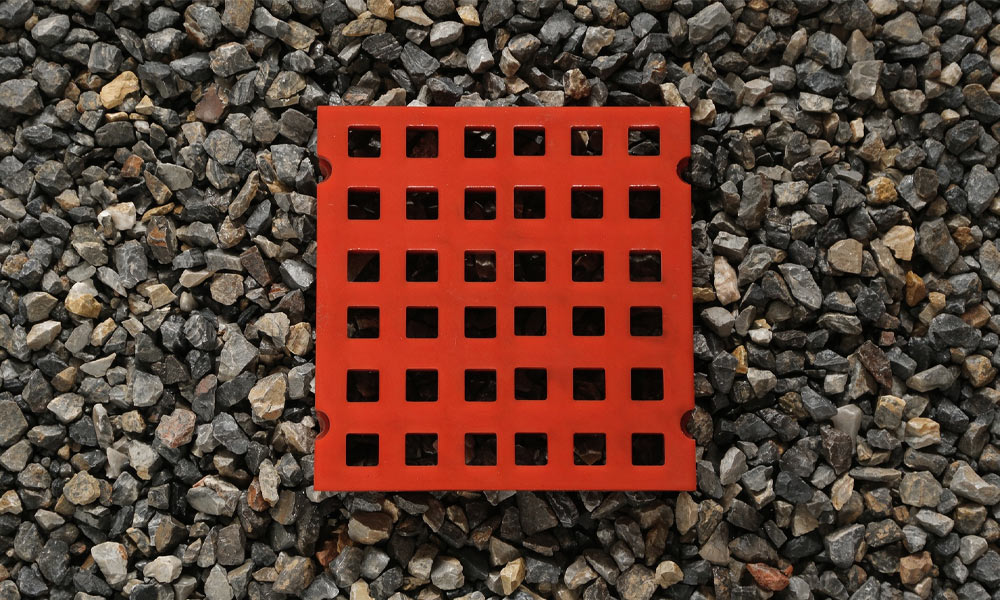
Most teams overlook a key detail: when your Polyurethane Tension Screen runs at full stroke, every opening in the flexible PU panel stretches wider than its static size with each vibration. If you match your static aperture to your target product size, those openings grow about 10–20% larger once the deck is running, and suddenly a ton of oversized material slips through and ends up in your fine product. The fix? Subtract that expected dynamic expansion from your target size to figure out your correct static aperture. You can tweak this calculation if you’re running a longer or shorter stroke than standard. A bunch of manufactured sand quarries said that once they started compensating for this stretch, they cut their oversize contamination by more than 80% overnight.
Match Aperture Taper Direction to Your Material Flow Properties
The third often-overlooked detail that drastically changes real separation performance is the direction of the tapered aperture on your Polyurethane Tension Screen, a small design choice that makes a huge difference depending on whether you are doing dry sizing or wet dewatering. For general dry fine sizing work, you want the slightly narrower opening facing the feed side and the wider taper facing down, so near-size particles that pass through the top can never wedge themselves back into the opening from below and cause blinding. For high-moisture dewatering work, you can flip this layout slightly to create a narrow top opening that holds back fine solids while letting free water drain through far more efficiently, drastically improving your final dewatering effect. Multiple high-moisture coal washing plants shared that flipping the taper direction for dewatering duty cut their final fine product moisture content by nearly 3% with no other equipment changes.
Run 24-Hour Small-Scale Test Before Full Batch Production
The final most reliable step that eliminates almost all costly wrong aperture mistakes is running a 24-hour small-scale test panel on your existing deck before you order a full new set of panels for your Polyurethane Tension Screen. You can install a single test panel with your proposed aperture size in the middle of your deck’s highest material flow zone, run it for a full normal production shift, then check how much blinding happens, test the fine product size distribution, and measure your actual throughput before committing to a full batch purchase. This 24-hour test costs barely any extra time or money, but it lets you catch small unexpected issues that no theoretical calculation can predict, like unique local material properties that make certain aperture shapes blind far faster than expected. Multiple global mineral processing sites shared that this simple test step helped them avoid 100% of costly full-batch aperture mismatch failures.
By accounting for your site’s actual feed moisture, calculating dynamic aperture expansion, matching taper direction to your process goal, and running a small 24-hour test before full production, you can pick the perfect aperture size for your project, eliminate unnecessary blinding and oversize contamination, and lock in the maximum possible throughput and fine product yield from your new screen.