When selecting screening media for mineral processing—whether for
high-frequency vibrating screens or heap-leach pre-screening units—the decision
often comes down to woven wire screens or wedge wire screens. The real
question extends beyond the initial price tag. To make a sound choice, you must
consider the total cost of ownership, which hinges on service life,
maintenance frequency, and performance under your specific conditions, such as
processing abrasive chromite or sticky, wet bauxite.
Initial Cost and Structural Differences
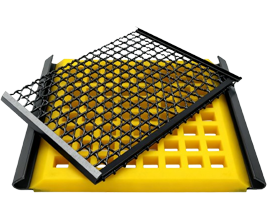
In terms of initial cost, woven wire screens typically offer an
advantage. They are manufactured by weaving wires together, a standardized
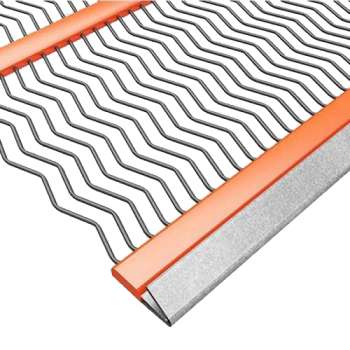
process that keeps costs lower for common mesh sizes. Wedge wire screens,
constructed by welding individual trapezoidal profile wires onto support rods,
involve a more complex fabrication process. This is especially true for custom
slot sizes or panel shapes, leading to higher material and labor costs and a
greater upfront investment.
Service Life and Durability in Operation
Service life is critical and highly application-dependent. Woven wire
screens are durable, but their potential weak point is the wear at the wire
crossovers (crimps) under highly abrasive loads, like those from hard chromite
ore. Wedge wire screens excel in longevity for challenging duties. Their
continuous slot design eliminates crossover wear points, the profile wires are
often thicker and made from wear-resistant alloys, and the welded structure
provides superior resistance to deformation under high tension and impact. In
severe abrasive applications, the extended service life of wedge wire can
offset its higher initial cost by reducing replacement frequency and
downtime.
Total Cost of Ownership and Application Fit
A true comparison requires evaluating the total cost of ownership. This
includes the purchase price plus all associated costs: downtime for changes,
labor, and disposal. For high-abrasion, high-tonnage coarse screening, the
superior durability of wedge wire screens often results in a lower TCO over
time. For less severe duties, such as fine screening of less abrasive materials,
woven wire screens provide a reliable and cost-effective solution. The goal is
not to find a universally superior product, but to select the screen that
delivers the best cost-to-performance ratio for your specific material,
throughput, and operational priorities, ensuring the lowest cost per ton
processed.
The final decision should be based on a detailed analysis of your screening
task. Key factors include the abrasiveness of your material like the chromite or
bauxite we've discussed, the required aperture size, deck tension, and the
operational impact of downtime. By conducting this comprehensive cost and
service life analysis, you can choose the screening media that offers the
greatest reliability and value for your operation.


Leave A Reply
By using form u agree with the message sorage, you can contact us directly now