Processing potash presents a unique screening challenge beyond simple size
separation: the material's tendency to cake. Potash's hygroscopic nature and the
fine dust generated during handling can combine with ambient moisture to form a
hard, cement-like layer on screen surfaces. This caking severely reduces
throughput, compromises sizing accuracy, and demands frequent, disruptive
cleaning. The deployment of self-cleaning screens specifically engineered for
this duty offers a powerful countermeasure. Their design directly targets the
root causes of caking, providing superior anti-caking performance and restoring
screening effectiveness in potash circuits.
The Mechanism: How Self-cleaning Screens Combat Caking
Self-cleaning screens for potash are not merely wear-resistant; they are
functionally designed to prevent adhesion. Their anti-caking performance stems
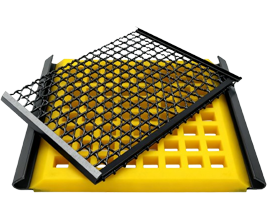
from a combination of material science and mechanical design. The screensurface
is manufactured from a specially formulated polyurethane compound with low
surface energy and hydrophobic properties. This creates a non-stick barrier that
prevents damp potash particles and fines from bonding to the screen.
Furthermore, the screens often incorporate anti-static additives, which
dissipate the electrical charge that attracts and holds fine dust, a primary
contributor to initial caking layers.
Key Design Features for Maximum Effectiveness
The physical design of the screen amplifies its anti-caking properties. A
critical feature is the use of tapered or flared apertures. These openings are
wider on the discharge side than on the feed side, creating a geometry that
prevents near-size particles from becoming mechanically wedged. Combined with
the screen deck's vibration, this design promotes a "pop-out" effect.
Additionally, some panels feature a slightly textured or crowned surface
profile. This subtle contour discourages material from lying flat and
compacting, instead encouraging it to roll and shift, which breaks up incipient
cakes before they can solidify.
Operational Synergy and Long-term Benefits
The effectiveness of self-cleaning screens is maximized when the screening
equipment is properly tuned. Adequate vibration amplitude is crucial to keep the
material bed fluid and to impart the kinetic energy needed for the screen's
self-cleaning action. The result is a dramatic reduction in the rate of cake
formation. This translates directly to longer uninterrupted run times,
consistent product quality, and a significant decrease in the labor and downtime
associated with manual descaling. For potash processors, this means higher
availability, lower operating costs, and more reliable throughput.
For facilities struggling with the costly and persistent issue of caking
during potash screening, self-cleaning screens represent a targeted and
effective engineering solution. By integrating a non-stick material compound
with a clog-resistant physical design, these screens deliver proven anti-caking
performance. Their effectiveness in maintaining open screening area and material
flow directly addresses the core inefficiencies in potash processing. Investing
in this specialized technology is a strategic move that enhances overall circuit
reliability and operational productivity.


Leave A Reply
By using form u agree with the message sorage, you can contact us directly now