Woven Mesh and PU Screen Panel: Which Screening Media Is Better for Your Plant
If you’ve ever stood in your processing plant’s maintenance office staring at two different screen part quotes, trying to figure out whether to stick with the familiar metal screen you’ve used for decades or try the newer polyurethane alternative that every other plant in your industry is talking about, you know exactly how hard it is to pick the right screening media without wasting thousands of dollars on a bad purchase. Many plant operations supervisors I’ve worked alongside over the years shared that they used to make this decision almost entirely based on upfront price, never realizing that the wrong choice could lead to months of unnecessary downtime, higher labor costs and lost production efficiency. A fair, side-by-side comparison of woven mesh and PU screen panel across real-world operating conditions will help you pick the exact media that perfectly matches your plant’s unique processing requirements, rather than following generic industry advice that doesn’t account for your specific material properties, throughput targets and maintenance constraints.
Abrasion Resistance and Service Life
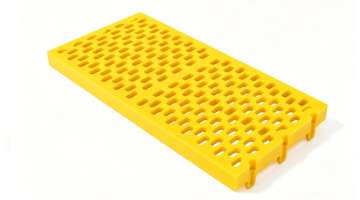
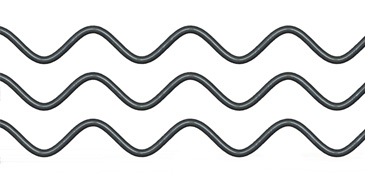
The first and most impactful performance comparison is between the two media’s abrasion resistance and total usable service life, the factor that makes the biggest difference to your long-term operational cost. A properly heat-treated high-tensile woven mesh made from 65Mn spring steel delivers excellent impact resistance for large, sharp, high-hardness ore and aggregate particles, easily absorbing the force of 10kg+ boulders falling from 2 to 3 meter feed heights without suffering immediate catastrophic breakage, and typically lasts 2 to 4 weeks under continuous heavy-duty mining and quarry conditions. A well-formulated PU screen panel, on the other hand, has far better fine-particle scouring abrasion resistance, with measured abrasion loss 3 to 5 times lower than manganese steel, making it last 3 to 6 months in fine wet dewatering and fine classification scenarios, though it is more prone to surface gouging and tearing if hit repeatedly by extra-large sharp boulders. This means for primary coarse screening with large sharp feed particles, woven mesh is the more durable choice, while for secondary and tertiary fine classification and dewatering, PU screen panel delivers far longer service life.
Aperture Accuracy and Screening Efficiency
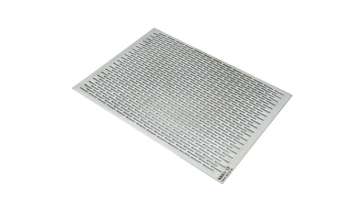
Aperture consistency and how well a screen actually works in practice are huge when it comes to your product quality and how much material your plant can push through. With a high-precision woven mesh, you get really tight aperture tolerances—sometimes as close as ±2%. Because the wires are so thin, you get a lot more open area compared to thick polyurethane panels with the same hole size. That makes woven mesh a great pick when you’re doing dry, coarse sizing and need both high throughput and sharp particle separation. On the flip side, molded PU panels usually have aperture tolerances closer to ±5%, but their secret weapon is the shape of the holes. They’re designed to taper, which means way less clogging and blinding. Even if you’re running wet, sticky, high-moisture material, these panels keep over 90% of their open area most of the time. So, if you’re working with dry, coarse aggregates and want maximum performance, woven mesh is the winner. But if you deal with wet fines, sticky clay, or need to dewater, PU panels outlast and outperform because you don’t need to stop as often for manual cleaning.
Installation, Maintenance and Total Downtime
The third critical operational comparison is installation difficulty, regular maintenance requirements and total downtime impact on your production schedule. A standard heavy-duty woven mesh is far lighter than a full polyurethane panel of the same size, but it requires precise, even tensioning across the entire deck to prevent slack-induced fatigue tearing, and a full panel replacement usually takes 2 to 3 experienced maintenance workers 1 to 2 hours to complete. A modular PU screen panel, by contrast, is designed with a simple bolt-in or snap-in mounting system that lets a single worker swap out a single worn panel in 10 to 15 minutes, no specialized tensioning tools required, and its excellent corrosion resistance means it never suffers the rusting and seizing issues that plague metal screens in high-moisture, high-corrosion environments. If your plant runs 24/7 with very narrow scheduled maintenance windows, the quick-swap modular design of the PU screen panel drastically cuts unplanned downtime, while if you have a large dedicated maintenance crew and prioritize maximum open area for high-volume dry processing, woven mesh remains a very practical, high-performance choice.
Total Lifecycle Cost of Ownership
The final, most important comparison that most plant teams overlook is the full total lifecycle cost of ownership, not just the upfront purchase price. A standard woven mesh has a far lower upfront unit price, but its short service life means you will be purchasing and replacing it 4 to 6 times per month, adding up to very high annual spare part and labor costs over a full year of operation. A PU screen panel has a 2 to 3 times higher upfront purchase price, but its 3 to 6 month service life means you only need to replace it 2 to 3 times per year, and its far lower clogging rate cuts manual cleaning labor requirements by more than 70%, leading to a total annual operational cost that is 30% to 40% lower than relying entirely on metal woven mesh in fine wet processing scenarios. For coarse primary screening with very large sharp feed particles, however, woven mesh’s far better impact resistance means it delivers lower total lifecycle cost, as polyurethane panels would tear through far too quickly under those extreme impact conditions.
There is no universal “one size fits all” winner between woven mesh and PU screen panel, and the best choice for your plant depends entirely on your specific feed material properties, screening stage, throughput targets and maintenance constraints, with many high-performance modern processing plants finding that combining both media on different decks of their screening line delivers the absolute best overall operational results.